



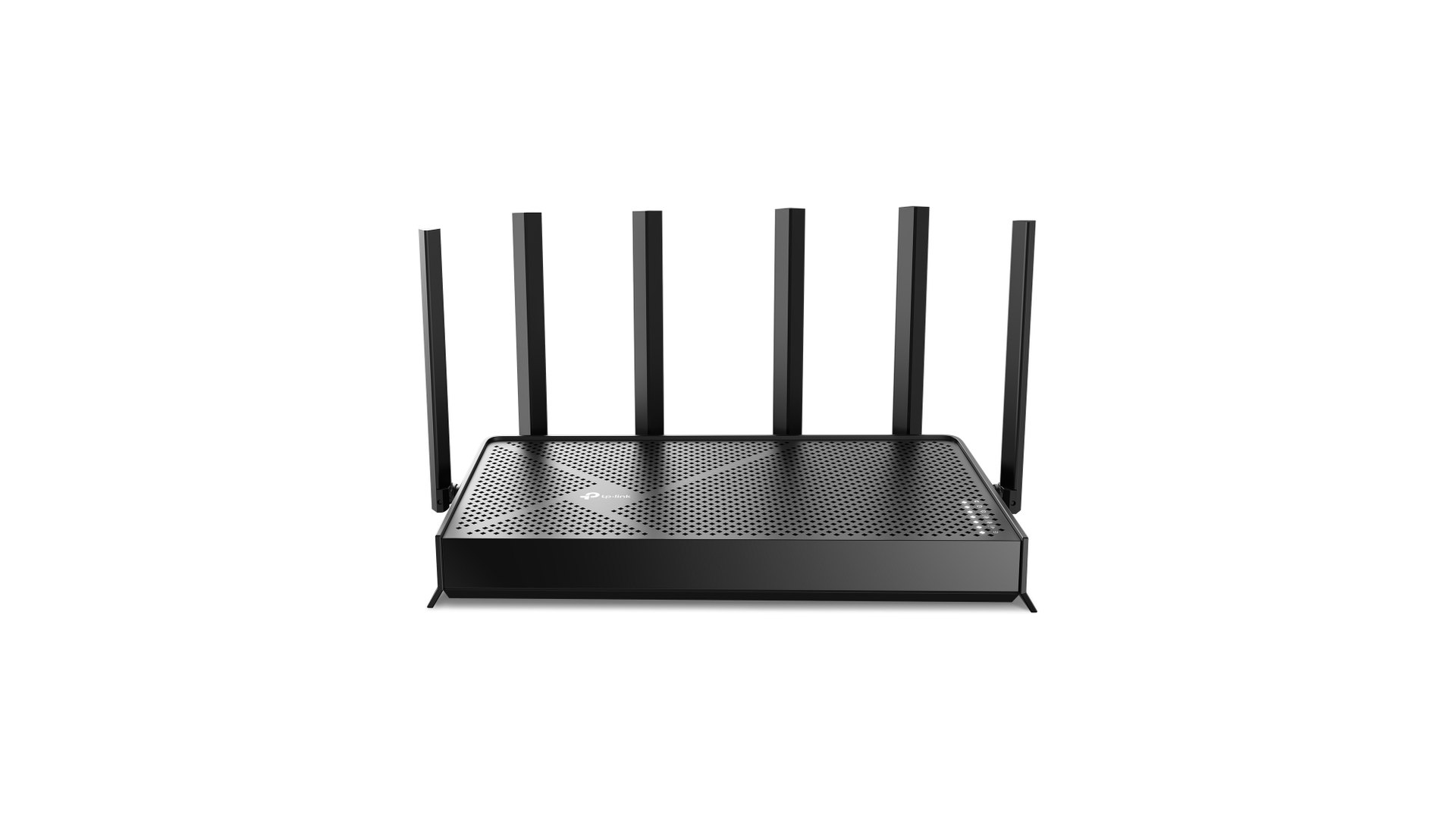
The TP-Link Archer BE670 tri-band Wi-Fi 7 router is listed at $229.99 at Amazon, against a $299.99 list price shown on the same listing. That is a $70.00 cut, or 23.3%, on a router whose headline BE12000 rating describes a speed no single device in the house will ever see.
Amazon names itself as both shipper and seller in the buy box, and marks the router as in stock. Both prices are those shown on the listing at the time of writing.
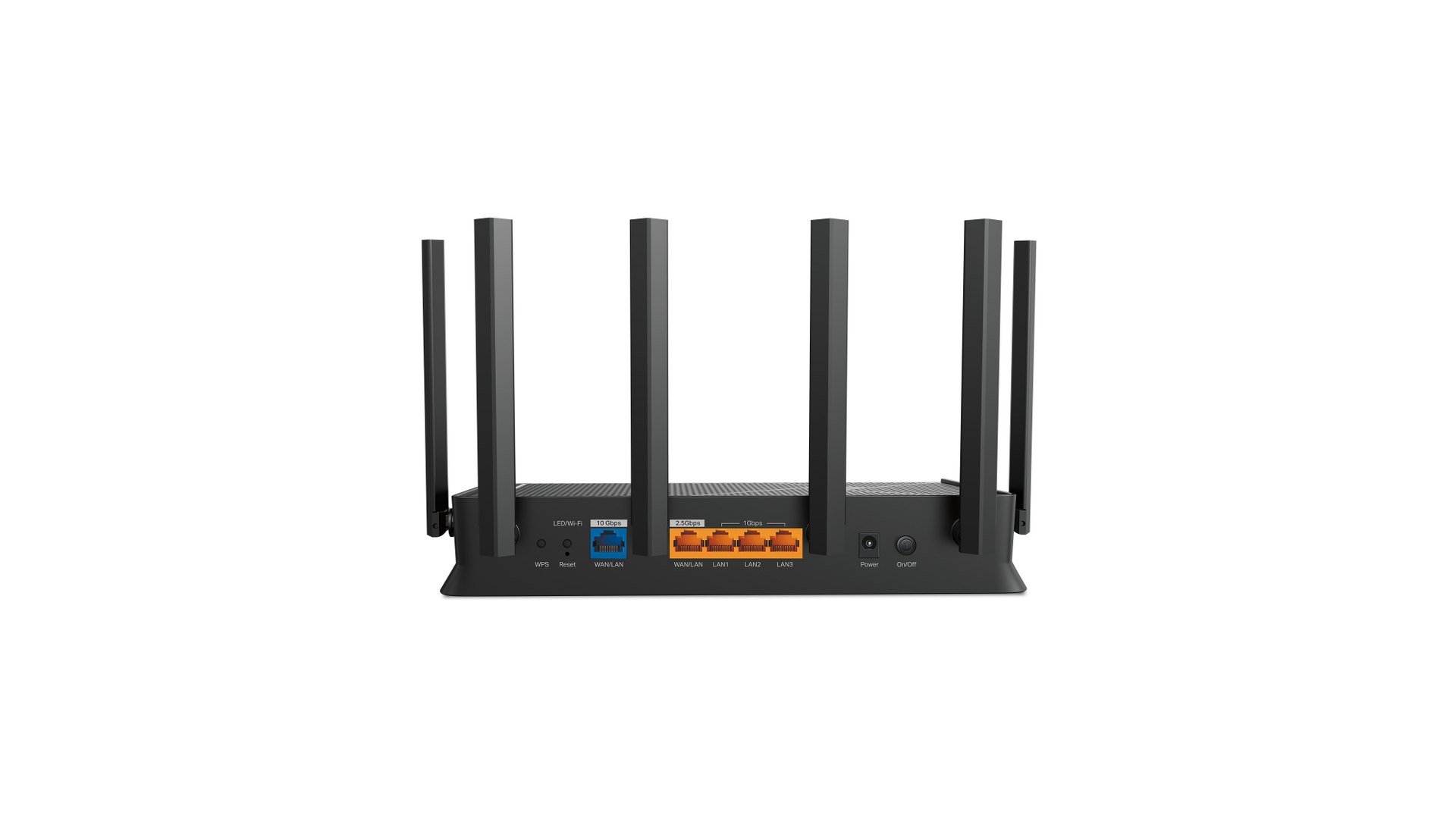
The hardware is a tri-band Wi-Fi 7 unit with six external antennas and five wired ports. One of those ports runs at 10 Gbps, which is the detail that separates the BE670 from the cheaper Wi-Fi 7 routers now filling the same shelf.
What the BE12000 number actually means
BE12000 is not a model number. The model is the Archer BE670, and BE12000 is a marketing class that TP-Link applies to a group of routers with similar combined throughput.
The figure is arrived at by adding the theoretical peak rate of all three radios together. TP-Link's own specification page lists 5765 Mbps on 6 GHz, 5765 Mbps on 5 GHz and 688 Mbps on 2.4 GHz, which comes to 12,218 Mbps.
A laptop or phone does not connect to all three bands at once and split the difference. It lands on one band, so the best case for a single client is the 5765 Mbps on 6 GHz, which is 47.2% of the advertised class.
Even that figure is a signalling rate rather than throughput, so real transfers land lower again. This is the single most misleading number in router marketing, and every maker that stamps a four-digit speed class on the box does the same thing. This guide covers what Wi-Fi 7 actually changes.
TP-Link does say the router supports Multi-Link Operation and 4K-QAM. Notably, 320 MHz channels are not listed as a headline feature on the BE670 page, appearing only in a footnote about features that also require client support.
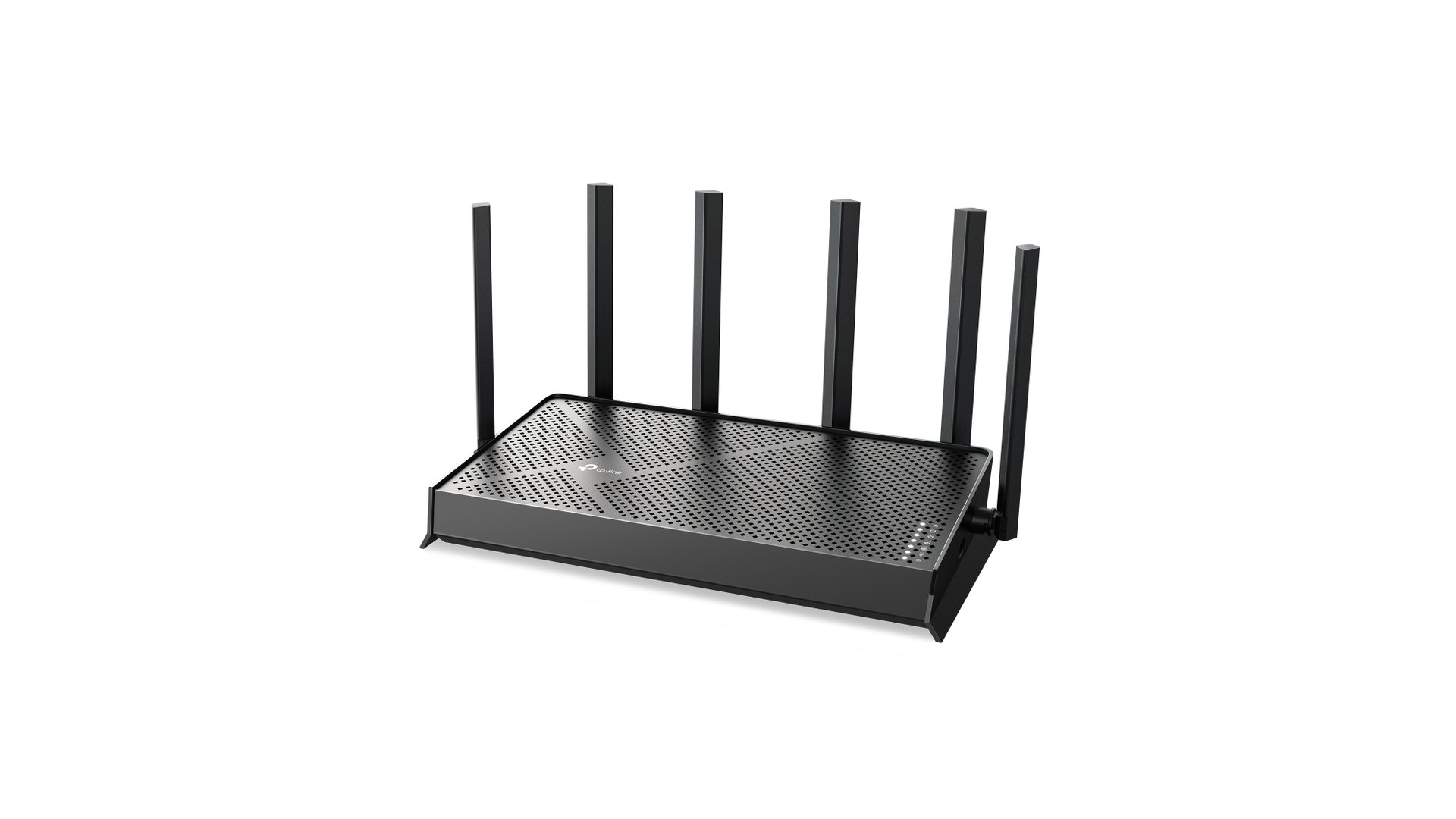
TP-Link Archer BE670 specifications
| Specification | TP-Link Archer BE670 |
|---|---|
| Wi-Fi standard | 802.11be (Wi-Fi 7), tri-band |
| 6 GHz band | Up to 5765 Mbps |
| 5 GHz band | Up to 5765 Mbps |
| 2.4 GHz band | Up to 688 Mbps |
| Combined class | BE12000 (12,218 Mbps added together) |
| Key features | Multi-Link Operation, 4K-QAM, beamforming |
| Wired ports | 1x 10 Gbps WAN/LAN, 1x 2.5 Gbps WAN/LAN, 3x 1 Gbps LAN |
| USB | 1x USB 3.0 (FTP, media and Samba server) |
| Antennas | 6 external |
| Mesh | EasyMesh compatible |
| Coverage rating | "3 Bedroom Houses" (no square footage published) |
| Processor | Not listed by TP-Link |
The port mix is the strongest part of the sheet. A 10 Gbps WAN/LAN port plus a 2.5 Gbps WAN/LAN port means the router can take a multi-gigabit internet feed and still hand a fast wired link to a desktop or a NAS.
Three of the five wired ports are still plain gigabit, however. Placement matters more than any of these numbers in a typical home, which is why it is worth mapping the signal before settling on a spot.
The parental controls are not all free
HomeShield comes with the router, and TP-Link's product page says basic features are free while advanced features need a paid subscription. The company's own support FAQ puts a price on that split.
Advanced Parental Controls is sold as its own tier at $2.99 per month or $17.99 per year. Security+ costs $4.99 per month or $35.99 per year, and the Total Security Package is $69.99 for the first year before renewing at $129.99.
Paying annually for the parental controls tier saves $17.89 against twelve monthly payments. It also adds 7.8% to the cost of the router in the first year, and TP-Link says subscriptions renew automatically until cancelled.
A one-month free trial covers Advanced Parental Controls and Security+, though not the Total Security Package. TP-Link does not itemise which parental control functions remain in the free tier. Its HomeShield marketing page also contradicts itself, listing time limits, content filtering and usage reports across all tiers while labelling parental controls an optional add-on.
So the honest version of the pitch is narrower than the box suggests. Basic controls are included, the advanced set is a recurring charge, and anyone buying this router mainly to police screen time should budget for it.
Two TP-Link siblings sit on either side of the price
| Router | Class | Price at Amazon | Against the BE670 |
|---|---|---|---|
| Archer BE670 | BE12000 | $229.99 (list $299.99) | The deal |
| Archer BE550 Pro | BE9700 | $199.99 (list $299.99) | $30.00 less |
| Archer BE550 | BE9300 | $249.99 | $20.00 more |
The Archer BE550 Pro is $199.99, which undercuts the BE670 by $30.00 from the same seller. The standard Archer BE550 is $249.99, or $20.00 more, with no list price shown behind its discount badge.
Both are lower speed classes than the BE670 on paper. Given how little that combined figure means in practice, the gap is worth weighing against the ports rather than the badge, and a mesh set remains the alternative for larger homes.
Several things are simply not published. TP-Link lists no processor, no memory and no square-footage coverage figure for the BE670, rating its range only for "3 bedroom houses", and Amazon shows no end date or countdown on the discount.
Lower prices on this model have been reported before through clipped coupons, so $229.99 is a strong price rather than a proven floor. Amazon prices move without notice, and the figures here are the ones on the listing at the time of writing.


Discussion (0)
Be the first to comment.