



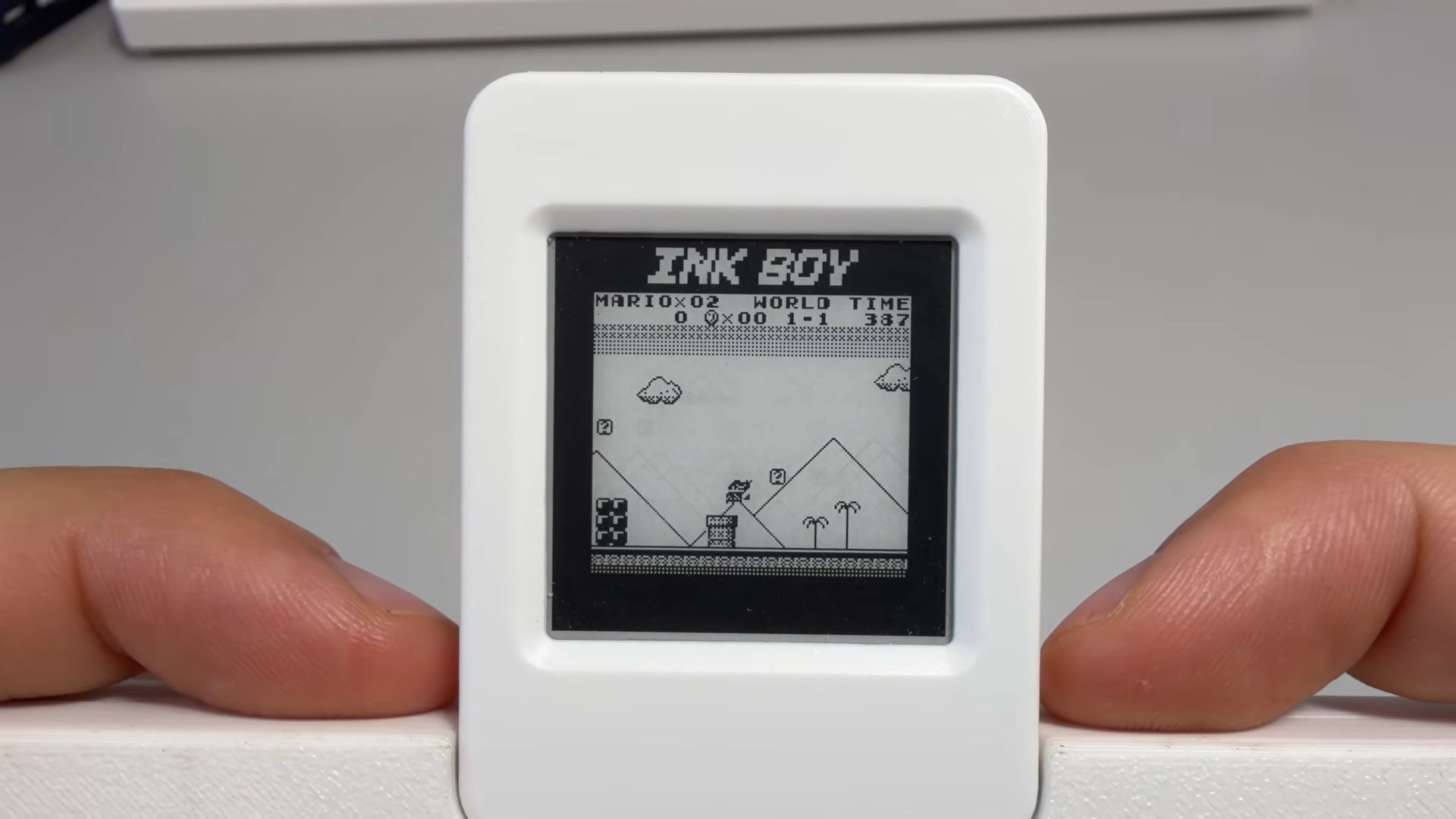
A custom handheld called the Ink Boy is showing that E Ink displays can be used for more than slow page turns and static images.
The tiny Game Boy inspired device can run classic games at around 30 frames per second, despite using display technology better known for e readers. It is built around an ESP32 microcontroller and pairs the unusual screen with a dockable USB C NES style controller.
Custom Display Driver Makes 30 FPS E Ink Gaming Possible
E Ink normally refreshes much more slowly than LCD or OLED panels, which makes it unsuitable for conventional gaming without significant modification.
The Ink Boy works around that limitation with a custom display driver.
Instead of refreshing the entire screen through a full waveform sequence every frame, the system shortens the sequence used to change pixels and updates only the parts of the display that actually need to change.
That reduces the slow transition behavior normally associated with E Ink and allows the handheld to reach roughly 30 FPS in games such as Super Mario Land.
| Feature | Ink Boy |
|---|---|
| Display type | E Ink |
| Display size | 1.54 inches |
| Resolution | 200 x 200 |
| Target performance | Around 30 FPS |
| Processor platform | ESP32 |
| Controls | Dockable USB C NES controller |
| Wireless support | Bluetooth |
| Intended use | Game Boy emulation |
The result is still very different from a modern LCD handheld, but it makes fast moving gameplay much more practical than the usual slow E Ink refresh behavior.
The Display Also Recreates Multiple Game Boy Shades
Original Game Boy games rely on four monochrome shades, while a basic E Ink panel commonly operates with a simpler black and white output.
The Ink Boy handles this by manipulating the natural transition behavior of E Ink pixels to create additional apparent grey levels.
Its 200 x 200 resolution is also close to the original Game Boy's 160 x 144 output, so the remaining space can be used for a static black border around the image.
The creator calibrated the pixel transitions to recreate the extra shades needed by Game Boy games without relying on a conventional color or greyscale LCD panel.
This also helps the screen retain some of the visual character associated with Nintendo's original handheld while avoiding the green tint of the classic DMG display.
The Handheld Can Dock Into an NES Style Controller
The hardware design is just as unusual as the display.
The 1.54 inch Waveshare ESP32 S3 E Ink module is small enough to fit into a very compact enclosure, while the main handheld can dock directly into a USB C NES style controller.
That gives the device physical controls without requiring them to be permanently built around the screen.
Bluetooth support provides another option, allowing compatible wireless controllers to be paired with the device.
The modular approach opens the door to other experimental designs, since the screen itself is small enough to be placed inside custom shells or modified retro hardware.
E Ink Gaming Still Has Limits
The Ink Boy does not make E Ink equivalent to an LCD or OLED screen.
Fast refresh behavior requires substantial software work, and even with custom driving techniques, E Ink still has limitations around ghosting, motion clarity and color reproduction.
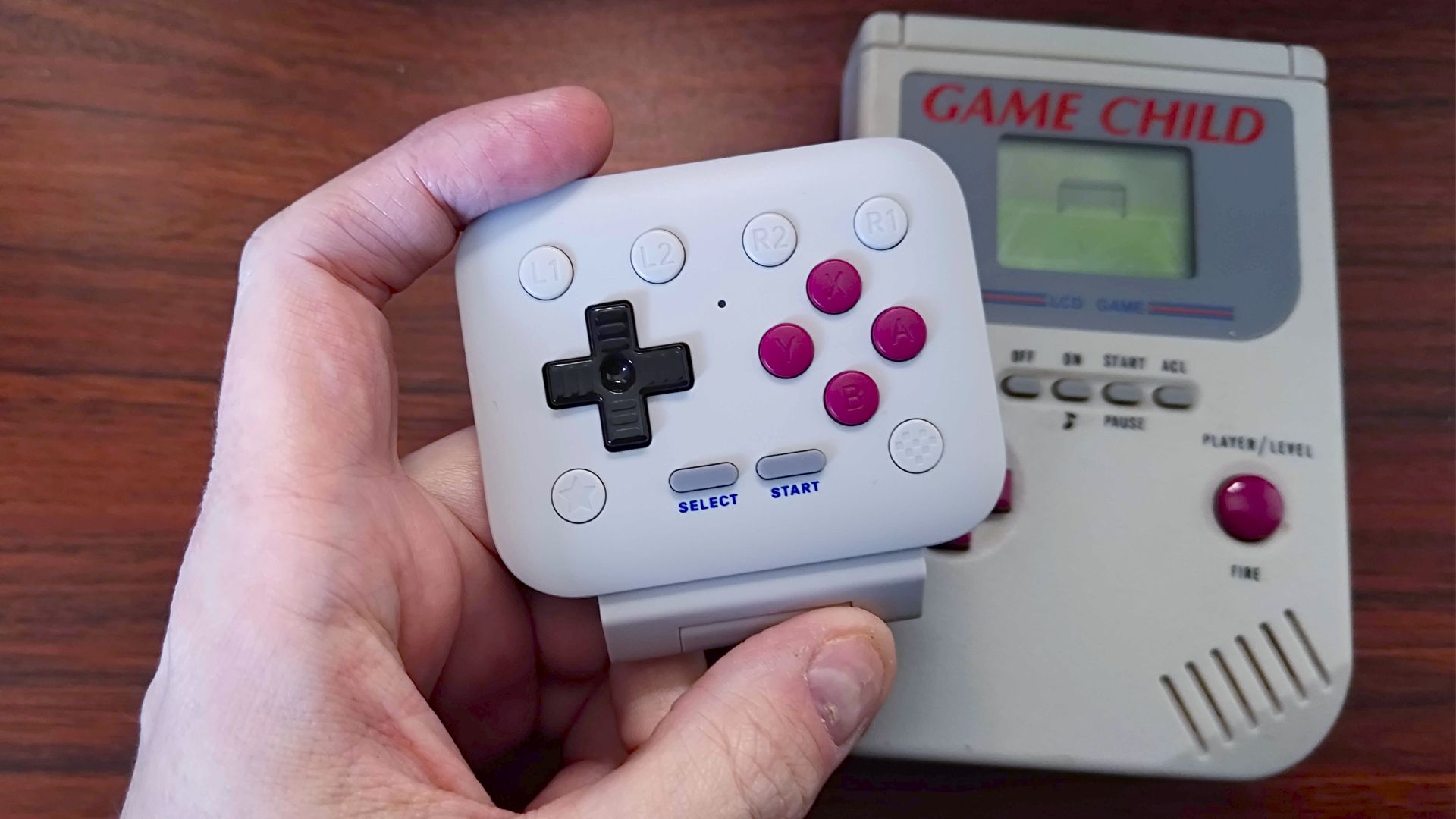
Modern retro handhelds can offer faster screens, stronger processors and broader emulation support for relatively little money.
The appeal of the Ink Boy is therefore less about replacing existing handhelds and more about showing what unusual display technology can do when paired with custom software.
Its creator has demonstrated that a screen normally associated with reading can be pushed far enough to make 30 FPS Game Boy gameplay possible.
For hardware modders, that could make tiny E Ink displays more interesting for future retro projects, especially where low power use, unusual form factors or a paper like appearance matter more than conventional display performance.


Discussion (0)
Be the first to comment.