



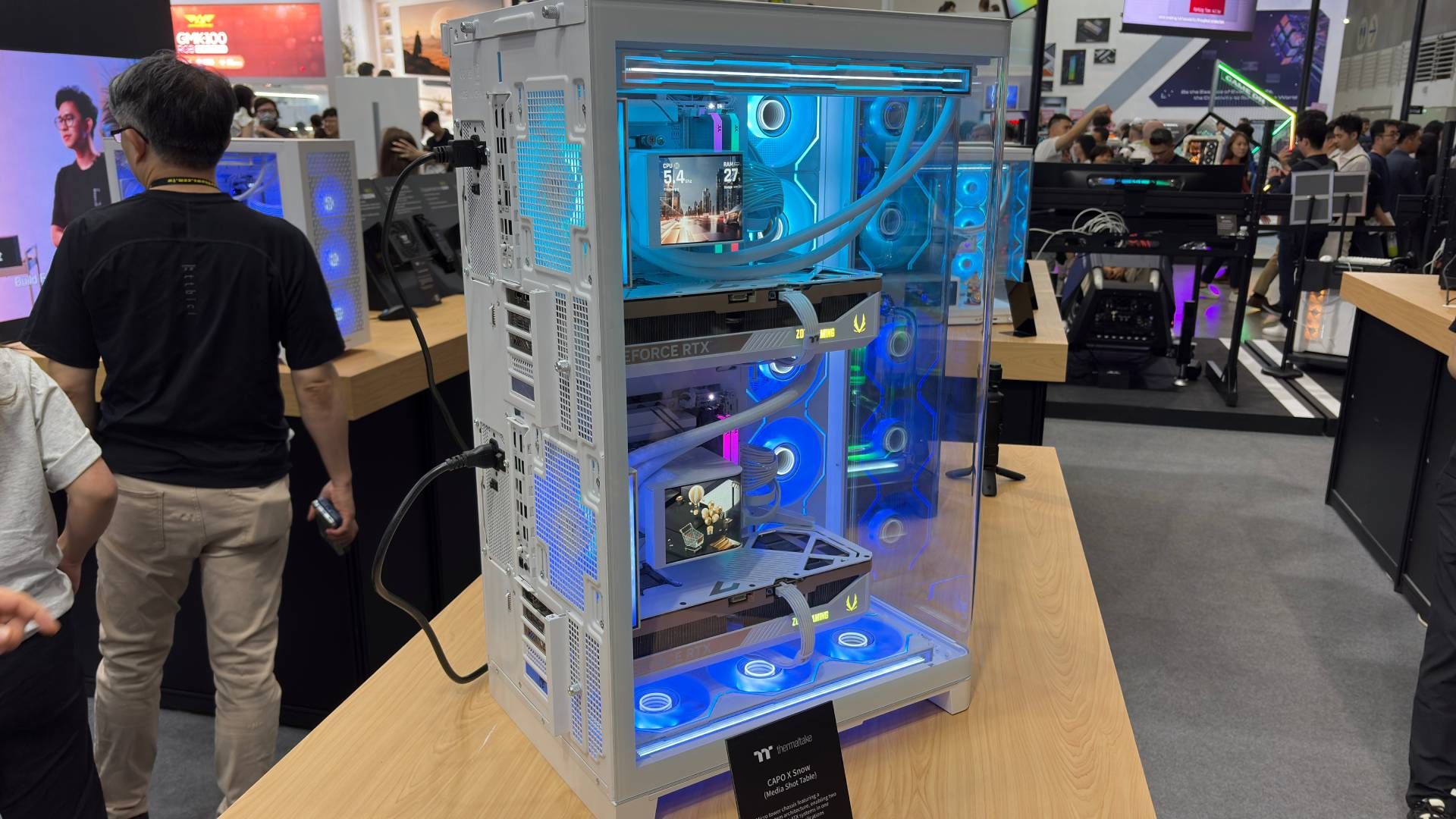
Thermaltake has shown a new dual system PC case at Computex, and it is one of the more unusual chassis ideas from the show. The case is called CAPO X, and it is designed to hold two separate microATX systems inside a single tall tower.
This is not a new PC platform or a new computing standard. It is still a regular PC case, but with enough internal space and layout planning to support two independent builds at once. That means two motherboards, two sets of core components, and two separate systems inside one enclosure.
Dual system cases are not completely new, but Thermaltake’s approach is different from many older designs. Some previous dual system cases paired a full size ATX build with a much smaller Mini ITX system. CAPO X instead supports two microATX systems, which gives both sides a more balanced layout and more room for serious hardware.
For streamers, creators, developers, local AI builders, and heavy multitaskers, this could make sense. One system could handle gaming or rendering, while the other manages streaming, encoding, testing, server tasks, or AI workloads. Instead of placing two full towers under a desk, CAPO X puts both machines into one larger case.
CAPO X is built for parallel workflows and high end hardware
Thermaltake describes CAPO X as a dual system microATX chassis for parallel workflows, AI applications, and multitasking. In practical terms, it is a case for people who want two PCs running side by side without using two separate enclosures.
At Computex, Thermaltake showed the case in multiple configurations. One white build used two high end RTX 50 series graphics cards and two 360mm AIO liquid coolers. Another black build used full custom liquid cooling, with two independent loops, reservoirs, radiators, and water blocks.
| Feature | Thermaltake CAPO X |
|---|---|
| Case type | Dual system tower |
| Motherboard support | Two microATX systems |
| Target use | Streaming, AI workloads, multitasking, parallel workflows |
| Cooling shown | Dual 360mm AIO setup and custom liquid cooling |
| GPU support shown | Two high end RTX 50 series graphics cards |
| Main idea | Two independent PCs in one case |
The case is clearly not trying to be compact. It is taller than a typical tower and is meant for users who care more about consolidation than saving space. The point is not to make two PCs small. The point is to keep two capable systems together in one managed build.
That can be useful for cable management, desk layout, and workflow organization. It can also make the whole setup look cleaner than two separate towers, especially if both systems are part of the same workstation or content creation setup.
The idea makes more sense as AI and streaming workloads grow
A few years ago, a dual PC case mostly appealed to streamers. One system could run the game, while the second handled capture, encoding, and broadcast tools. That use case still exists, but CAPO X arrives at a time when local AI and workstation workloads are making dual system setups more interesting again.
A user could dedicate one system to GPU heavy AI tasks while using the second for normal work. Developers could test software across two systems. Creators could keep editing or production software separate from rendering tasks. Enthusiasts could even run two different hardware platforms inside one build.
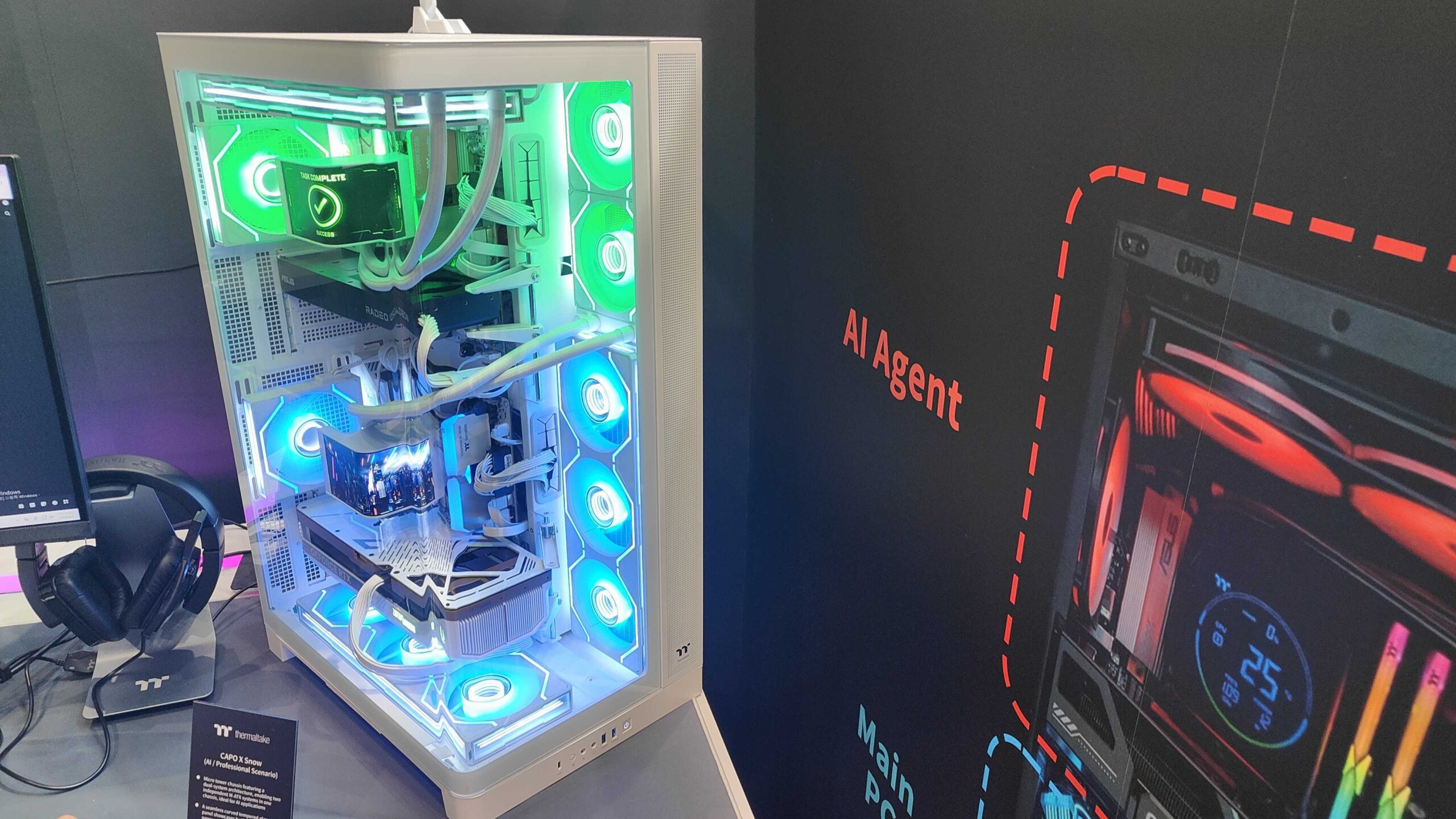
That flexibility is the real appeal. CAPO X is not for the average gaming PC builder, and it is not meant to be cheap or simple. It is for people who already know why they would want two machines and want a cleaner way to house them.
The cooling options shown by Thermaltake suggest the case is prepared for high power components. Two gaming or workstation systems inside one tower can generate a lot of heat, so airflow, radiator placement, and internal separation will matter. The custom loop showcase also suggests Thermaltake expects some buyers to treat CAPO X as a showpiece rather than a plain workstation box.
CAPO X is niche, but it has a clear audience
Most people do not need two PCs in one case. A single powerful system is enough for gaming, streaming, editing, and general work in many situations. CAPO X is not trying to change that. It is built for a specific type of enthusiast who wants two independent systems without doubling the number of cases.
The main questions will be price, availability, power supply support, thermals, noise, and how easy it is to build inside the case. Dual system layouts can become complicated quickly, especially when routing cables, managing airflow, and planning cooling for two GPUs and two CPUs.
Still, CAPO X is a smart Computex product because it instantly stands out. It takes an old enthusiast idea and updates it for current needs, where streaming, local AI, content creation, and multitasking all benefit from dedicated hardware.
The “PC 2” joke may get attention, but the case itself is more practical than it first sounds. Thermaltake is not reinventing the PC. It is giving serious builders a way to put two of them into one tower, and for the right user, that could be exactly the kind of overbuilt solution that makes sense.



Discussion (0)
Be the first to comment.