



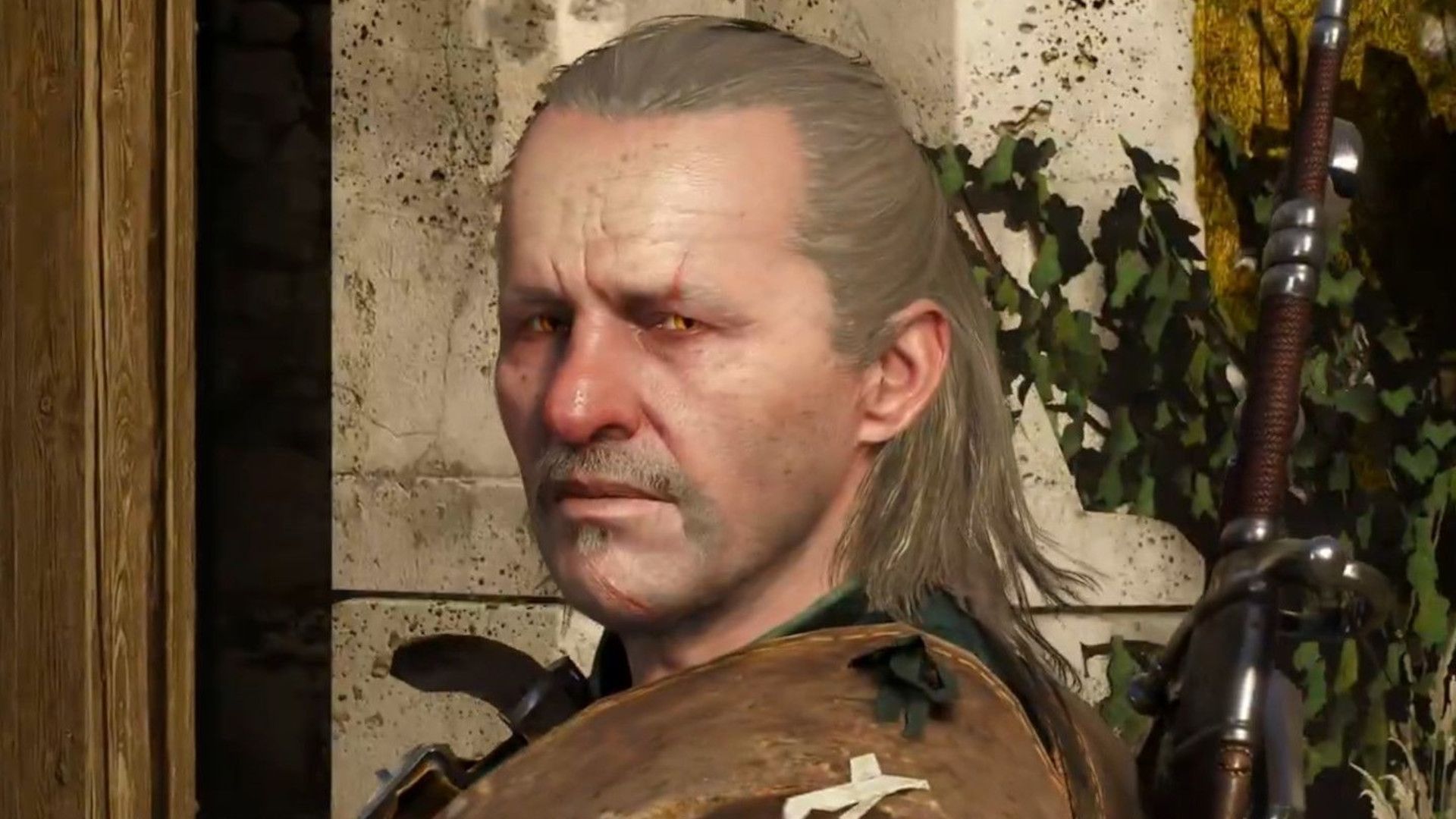
The Witcher 3: Wild Hunt lead quest designer Paweł Sasko has looked back on one of the game’s most emotional story choices, revealing that his idea to kill Vesemir during the Battle of Kaer Morhen shocked the development team into silence. The moment became one of the most important scenes in the game, giving Ciri’s grief and power a stronger emotional foundation.
Sasko shared the story while reflecting on the game’s 11th anniversary. He explained that the Battle of Kaer Morhen sequence was originally only described in a short outline, but he believed the act needed a heavy emotional loss. His suggestion was that Vesemir, the old Witcher and father figure to Geralt, should die during the fight against the Wild Hunt.
Vesemir’s death gave Ciri’s breaking point the emotional weight the story needed
Vesemir’s death is one of the most painful moments in The Witcher 3 because he is not just another supporting character. He represents Kaer Morhen, the old Witcher way of life, and the closest thing Geralt has to a parent. His bond with Ciri also makes the scene more personal. When he is killed by Imlerith, Ciri loses someone who protected and cared for her, and that grief pushes her into a powerful outburst against the Wild Hunt.
Sasko said the team’s first reaction to the idea was silence and wide eyes. That reaction makes sense because killing such an important character is a risky choice. It can upset players if it feels cheap or forced. But when handled well, it can give a story the kind of emotional turn that stays with people for years.
| Story moment | Why it mattered |
|---|---|
| Vesemir dies at Kaer Morhen | Gives the battle a real emotional cost |
| Ciri loses control after his death | Shows the depth of her grief and power |
| The Wild Hunt becomes more threatening | Makes the enemy feel more dangerous |
| Geralt’s world changes | Removes one of his strongest family figures |
The scene works because it is not only about shock. It changes the emotional direction of the story. Before the battle, Kaer Morhen feels like a temporary safe place where old allies gather. After Vesemir dies, that safety is gone. The fight becomes more than a battle sequence. It becomes a turning point for Ciri, Geralt, and everyone connected to the Witcher school.
Sasko also talked about the technical problems behind the questline. He tried ideas such as meteors, rifts opening in the forest, Wild Hunt enemies pouring out, and a horseback ride back to the keep. Many of these ideas did not work at first. The quest flow was unclear, feedback was negative, and parts of the sequence had to be rebuilt.
That detail makes the final result more impressive. The Battle of Kaer Morhen feels large and emotional in the finished game, but it came from repeated testing, failure, and revision. Sasko said this process helped him understand the craft of quest design more deeply. He also described that period as one of the happiest times in his career because the team was constantly sharing ideas, solving problems, and building on each other’s work.
The Witcher 3 went on to sell 60 million copies and is widely considered one of the best RPGs ever made. Vesemir’s death remains a major reason the story still feels powerful years later. It showed that even beloved characters were not safe and that Ciri’s journey carried real emotional consequences.
CD Projekt Red is now focused on The Witcher 4, which is planned as the first entry in a new trilogy. The studio has said it wants to release that trilogy within a six year window, though the next game is not expected before 2027. For now, Sasko’s comments offer a rare look at how one difficult writing choice helped shape one of The Witcher 3’s most memorable moments.



Discussion (0)
Be the first to comment.