



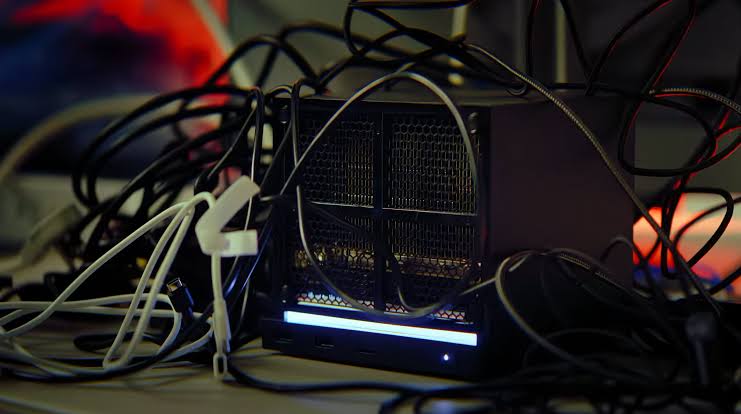
Valve’s new Steam Machine offers a compact gaming PC with SteamOS and console style convenience, but its launch pricing makes it difficult to recommend against many prebuilt gaming desktops. The entry model starts at $1,049 with 512GB of storage, while several prebuilt PCs now offer stronger graphics hardware, more storage, and sometimes double the memory for less money.
The Steam Machine includes 16GB of DDR5 memory, 8GB of graphics memory, and an NVMe SSD. Its compact design and SteamOS experience will appeal to people who want a living room PC that behaves more like a console. However, buyers who mainly care about gaming performance and upgrade flexibility may find better options among discounted desktop systems.
The 512GB Steam Machine costs $1,049 without a controller and $1,128 with one. The 2TB model begins at $1,349 and reaches $1,428 with a controller and additional accessories. These prices are high when compared with current prebuilt systems that use desktop processors and more capable graphics cards.
Several Prebuilt PCs Offer Better Hardware Below $1,000
One of the lower priced alternatives includes an Intel Core i5 14400 processor, Intel Arc B570 graphics with 10GB of memory, 16GB of DDR4 memory, and a 1TB NVMe SSD for around $849. Another version with an RTX 5060 graphics card is available for about $899.
At $999, some prebuilt models offer an RTX 5060 Ti or Arc B580 graphics card with 1TB of storage. These systems may not offer the same compact design as the Steam Machine, but they provide more traditional desktop performance and easier upgrade options.
The difference becomes clearer when memory capacity is considered. A gaming PC with 32GB of RAM and 1TB of storage can be found close to the Steam Machine’s entry price. That gives you twice the system memory and storage space, which can matter for modern games, background apps, mods, and larger game libraries.
| System Type | CPU and GPU Class | Memory | Storage | Starting Price |
|---|---|---|---|---|
| Steam Machine | Semi custom AMD hardware | 16GB DDR5 | 512GB SSD | $1,049 |
| Entry prebuilt | Core i5 14400 with Arc B570 | 16GB DDR4 | 1TB SSD | $849 |
| Mid range prebuilt | Core i5 14400 with RTX 5060 | 16GB DDR4 | 1TB SSD | $899 |
| Higher value prebuilt | Core i5 14400 with Arc B580 or RTX 5060 Ti | 16GB DDR4 | 1TB SSD | $999 |
| Memory focused prebuilt | Core i5 14400 with RTX 5060 | 32GB RAM | 1TB SSD | About $1,100 |
SteamOS and Small Size Remain the Main Advantages
The Steam Machine still has a clear purpose. SteamOS is designed for controller use, couch gaming, quick game launches, and a console like interface. Valve’s software support, controller integration, and compact hardware design may make the system easier to use in a living room than a standard Windows desktop.
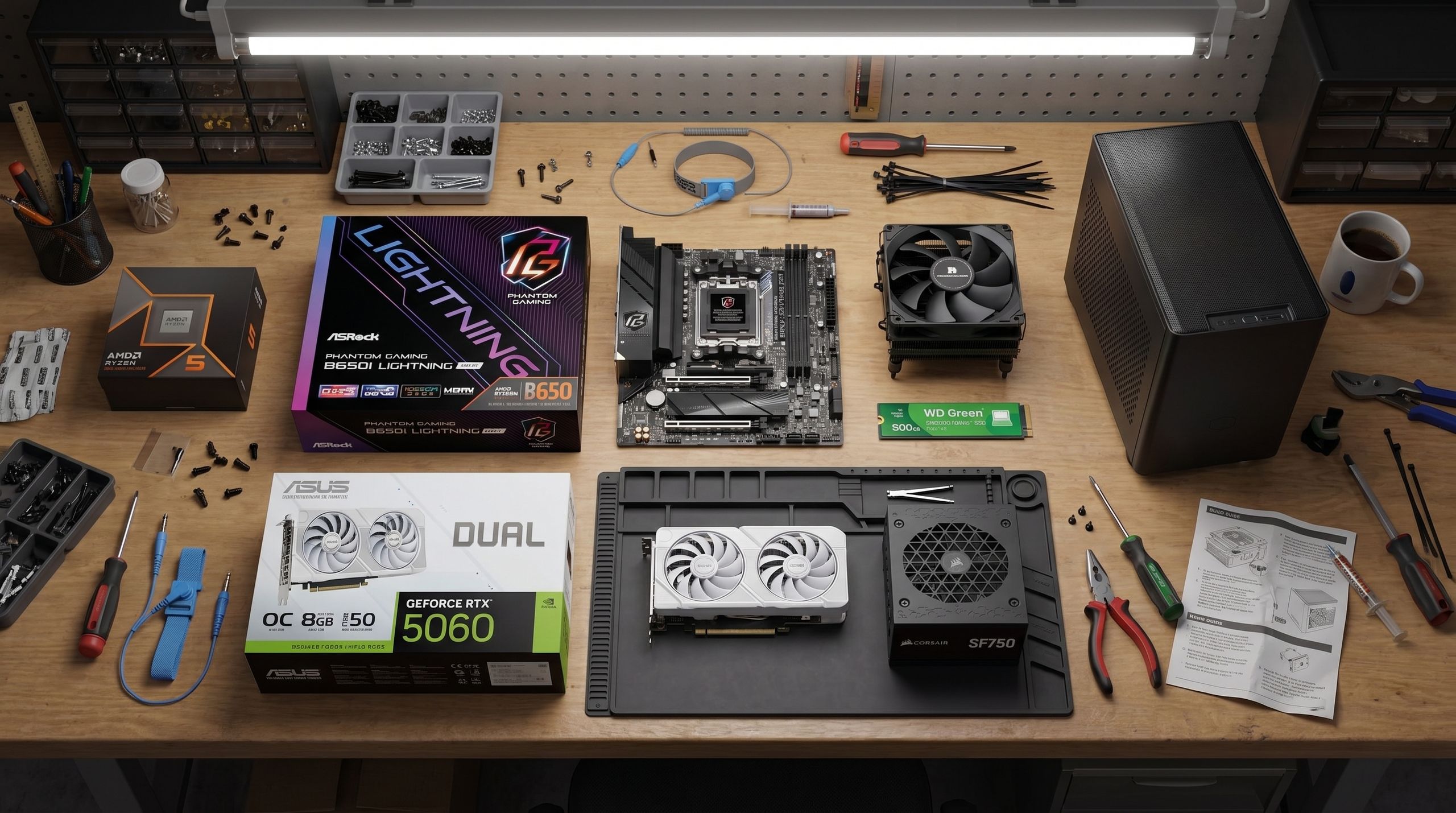
For people who want a small box next to a TV and do not want to build or maintain a Windows gaming PC, the Steam Machine may still be appealing. Its design also avoids the larger cases, extra cables, and setup work that come with many traditional desktops.
However, the market has changed because memory and SSD prices have increased sharply. That pressure has pushed up the cost of the Steam Machine, but it has also affected prebuilt PCs and DIY parts. Even so, current sales show that prebuilt gaming PCs can still offer stronger component combinations at similar or lower prices.
A custom PC can provide even more value for buyers who are comfortable choosing their own parts. A Ryzen 5 5500 system with 32GB of DDR4 memory, an Arc B570 graphics card, and a 1TB SSD can be assembled for around $800. A newer DDR5 based build will cost more, but it gives you a stronger upgrade path for future processors and memory.
The Steam Machine may be convenient, but its price leaves room for traditional gaming PCs to compete strongly on performance, storage, and long term value.



Discussion (0)
Be the first to comment.