




Over the years, Sony’s smartphone division has taken a different approach than most of the other manufacturers. Sony smartphones have unique designs, they innovate, and they have distinct personalities. However, this also has a polarizing effect on potential users: while some fall in love with them, others consider the devices as being awkward and unwieldy. The Xperia PRO-I is no exception. To most, it will be just “another weird flagship from Sony”, but for a select few, this device is exactly what they want. I reviewed the Sony Xperia PRO-I while keeping in mind that it has a niche audience. Here are my findings:
![Verdict]()

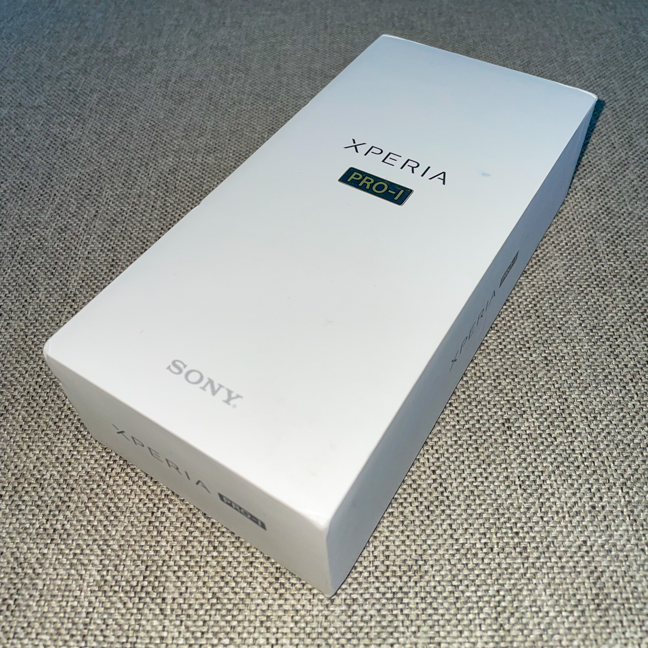
 The box the Sony Xperia PRO-I comes in
On the back, you can find some important specs, as well as a mention that the packaging does not contain any plastic.
The box the Sony Xperia PRO-I comes in
On the back, you can find some important specs, as well as a mention that the packaging does not contain any plastic.
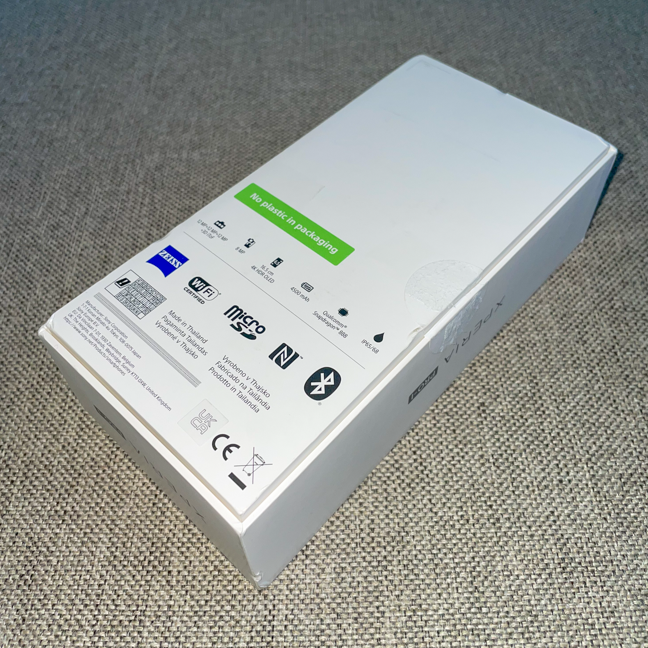 The back of the Sony Xperia PRO-I box
Although the box looks like it was hurled with a catapult by the courier, the contents are perfectly fine, albeit a bit scarce. The package contains the phone, a 30 W charger with USB-C, a 1-meter charging cable, and the usual leaflets (quick guide, warranty).
The back of the Sony Xperia PRO-I box
Although the box looks like it was hurled with a catapult by the courier, the contents are perfectly fine, albeit a bit scarce. The package contains the phone, a 30 W charger with USB-C, a 1-meter charging cable, and the usual leaflets (quick guide, warranty).
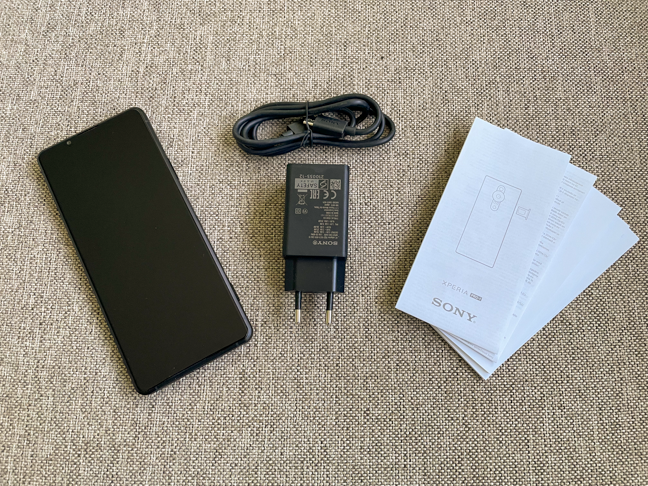
 Sony Xperia PRO-I: package contents
The unboxing experience is rather underwhelming, especially considering that the Sony Xperia PRO-I is an expensive flagship device. There are no included accessories, just the charger and the cable. Then again, some other flagships don’t even pack a charger anymore.
Sony Xperia PRO-I: package contents
The unboxing experience is rather underwhelming, especially considering that the Sony Xperia PRO-I is an expensive flagship device. There are no included accessories, just the charger and the cable. Then again, some other flagships don’t even pack a charger anymore.
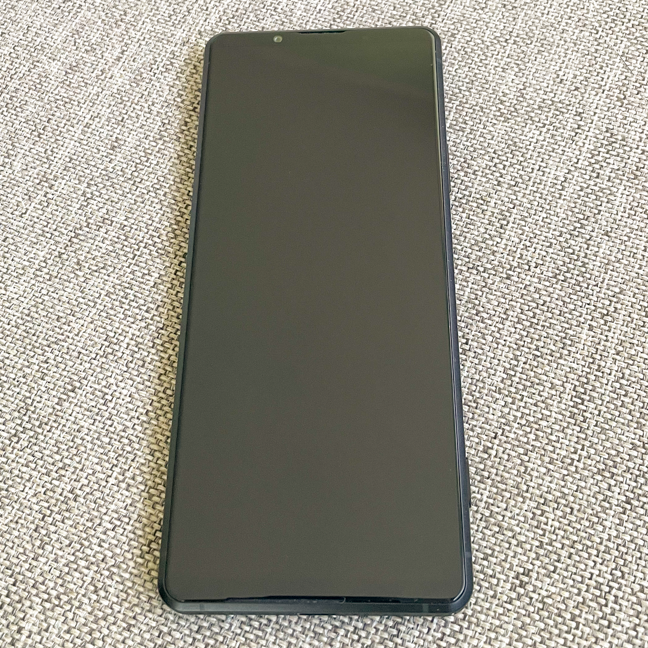 The front of the Sony Xperia PRO-I
The back of the phone is where the “PRO” part of the name really shows: you get a large camera cluster, containing the main 12MP camera in the center, a 12MP ultra-wide above it, and another 12MP sensor with a 50 mm focal length, acting as a telephoto, below the main camera. Other things to note on the back are the ToF (time of flight) camera, used for autofocus in low light conditions, the LED flash, and a microphone.
The front of the Sony Xperia PRO-I
The back of the phone is where the “PRO” part of the name really shows: you get a large camera cluster, containing the main 12MP camera in the center, a 12MP ultra-wide above it, and another 12MP sensor with a 50 mm focal length, acting as a telephoto, below the main camera. Other things to note on the back are the ToF (time of flight) camera, used for autofocus in low light conditions, the LED flash, and a microphone.
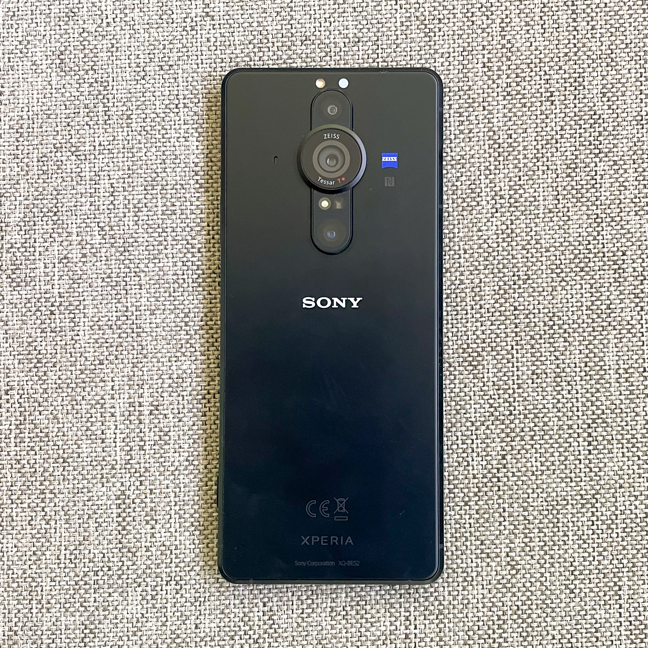 The back of the Sony Xperia PRO-I
The bottom of the smartphone houses the USB-C charging port with DisplayPort support and a microphone.
The back of the Sony Xperia PRO-I
The bottom of the smartphone houses the USB-C charging port with DisplayPort support and a microphone.
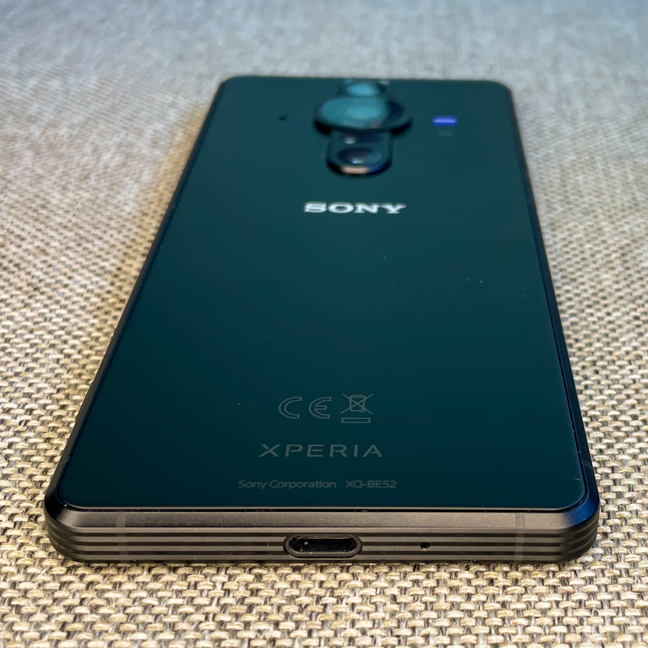 The bottom of the Sony Xperia PRO-I
The top of the phone contains, to my absolute joy, an audio jack, and yet another mic.
The bottom of the Sony Xperia PRO-I
The top of the phone contains, to my absolute joy, an audio jack, and yet another mic.
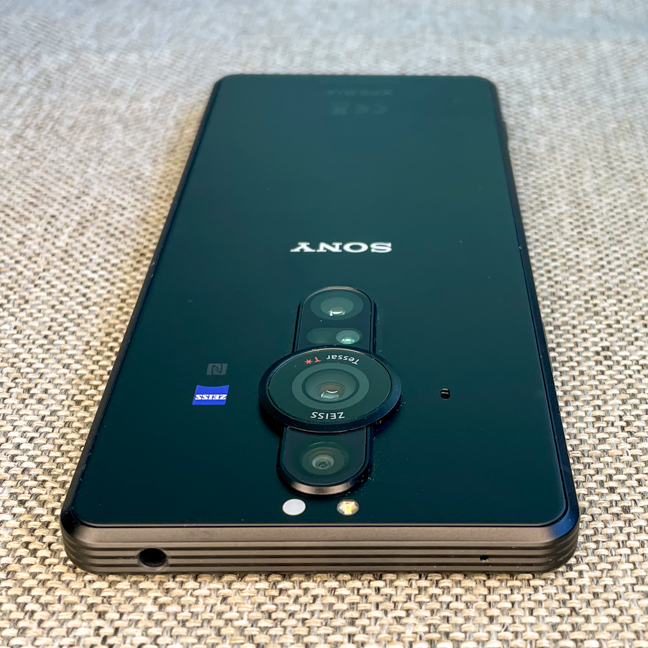 The Sony Xperia PRO-I has a headphone jack, a rare feature these days
There’s not much happening on the left side of the smartphone, with only the SIM card tray and, surprisingly, a lanyard eyelet. This feature is just one of the quirks of the Sony PRO-I, and a very useful one too, for people who travel a lot and need to keep their smartphone safe.
The Sony Xperia PRO-I has a headphone jack, a rare feature these days
There’s not much happening on the left side of the smartphone, with only the SIM card tray and, surprisingly, a lanyard eyelet. This feature is just one of the quirks of the Sony PRO-I, and a very useful one too, for people who travel a lot and need to keep their smartphone safe.
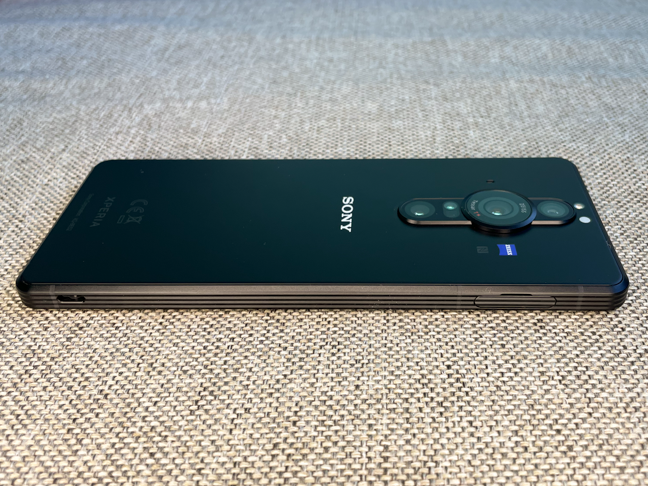 The left side is almost devoid of features
On the right side, you have literally all the buttons, and there’s a ton of them: the volume rocker, the recessed power button, which doubles as a fingerprint reader, a small configurable button (which by default starts the camera in Video mode), and a shutter release with half-press function (for focusing the camera).
The left side is almost devoid of features
On the right side, you have literally all the buttons, and there’s a ton of them: the volume rocker, the recessed power button, which doubles as a fingerprint reader, a small configurable button (which by default starts the camera in Video mode), and a shutter release with half-press function (for focusing the camera).
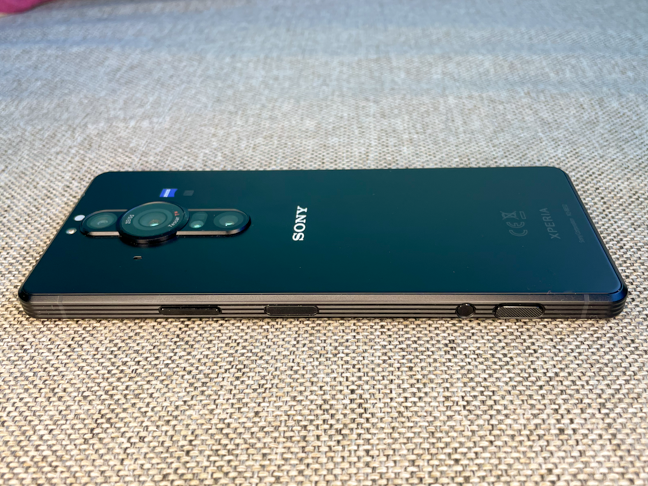 The right side of the smartphone houses five buttons
The Sony Xperia PRO-I has an excellent dust and water resistance rating, IP68, making it able to withstand being submerged at up to 5 feet (1.5 meters) for 30 minutes. Since professionals should never have fun, the smartphone only comes in black, there are no other colors available. If you’re a vlogger, Sony has some excellent accessories that turn the Sony Xperia PRO-I into the perfect tool for you: a grip with remote controls and a Vlog Monitor that attaches to the back of the smartphone and has a microphone mounting slot.
The right side of the smartphone houses five buttons
The Sony Xperia PRO-I has an excellent dust and water resistance rating, IP68, making it able to withstand being submerged at up to 5 feet (1.5 meters) for 30 minutes. Since professionals should never have fun, the smartphone only comes in black, there are no other colors available. If you’re a vlogger, Sony has some excellent accessories that turn the Sony Xperia PRO-I into the perfect tool for you: a grip with remote controls and a Vlog Monitor that attaches to the back of the smartphone and has a microphone mounting slot.
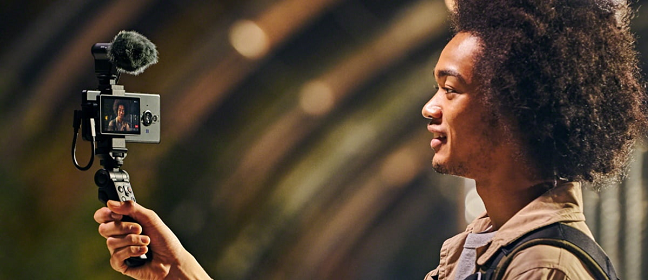
 Combined with the grip, the monitor and a mic, the Sony Xperia PRO-I can become the perfect tool for a vlogger
The Sony Xperia PRO-I looks and feels sturdy, and its unusual format, with a 21:9 screen, makes it easy to handle. The built quality is great, the materials used are perfect for heavy usage, and overall, the smartphone has a very distinctive look.
Combined with the grip, the monitor and a mic, the Sony Xperia PRO-I can become the perfect tool for a vlogger
The Sony Xperia PRO-I looks and feels sturdy, and its unusual format, with a 21:9 screen, makes it easy to handle. The built quality is great, the materials used are perfect for heavy usage, and overall, the smartphone has a very distinctive look.
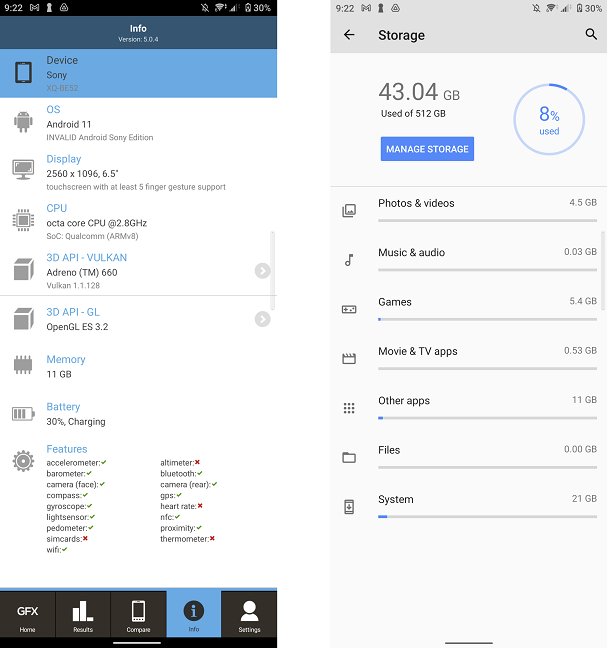
 The technical specs of the Sony Xperia PRO-I
The screen is a 4K (1644 x 3840 pixels) OLED, capable of 120 fps. It has a diagonal of 6.5 inches and an amazing 643 ppi density. With HDR support and a maximum brightness of roughly 650 nits, it should provide quite the viewing experience, but I will test that in the next section.
The technical specs of the Sony Xperia PRO-I
The screen is a 4K (1644 x 3840 pixels) OLED, capable of 120 fps. It has a diagonal of 6.5 inches and an amazing 643 ppi density. With HDR support and a maximum brightness of roughly 650 nits, it should provide quite the viewing experience, but I will test that in the next section.
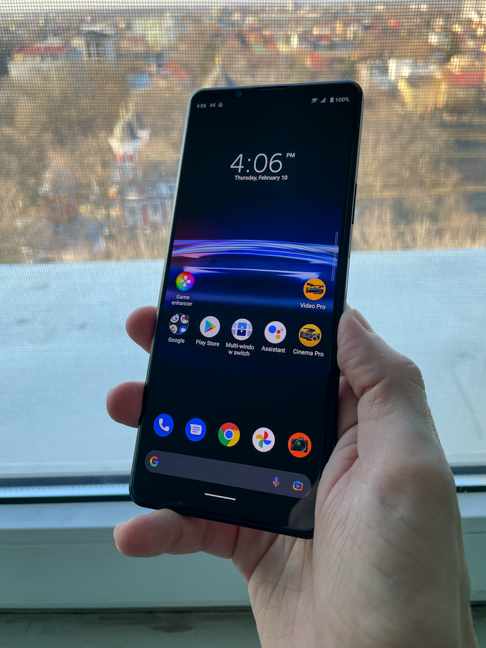
 The screen has an amazing pixel density
The main components of the Sony Xperia PRO-I are, of course, the cameras. As I mentioned before, the PRO-I has three cameras for imaging (plus one for depth measurements) on the back and a selfie camera in front. Here are some specs for them:
The screen has an amazing pixel density
The main components of the Sony Xperia PRO-I are, of course, the cameras. As I mentioned before, the PRO-I has three cameras for imaging (plus one for depth measurements) on the back and a selfie camera in front. Here are some specs for them:
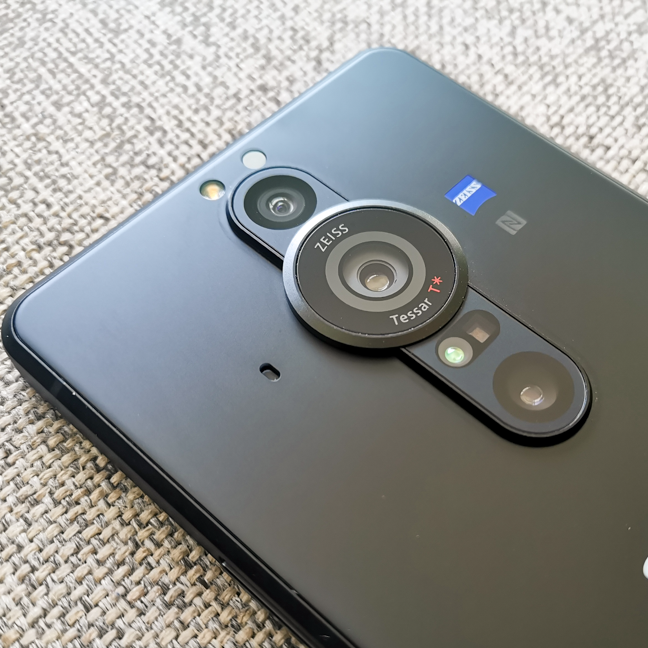 The cameras on the back of the Sony Xperia PRO-I
The battery is a decent 4,500 mAh unit. The Snapdragon 888 is a very powerful and at times power-hungry chipset, so it remains to be seen how fast it drains the battery. The included fast charger should charge the battery to 50% in 30 minutes. I tested both the discharging and charging times and made a charging graph for your convenience on the next page, so be sure to check it out.
Connectivity is great, with Wi-Fi 6 support, Bluetooth 5.2, GPS, USB-C 3.2, and NFC. One thing to note is that the dual-SIM tray can also be used for external storage (microSDXC). And you don’t even have to carry a pin with you, as the tray can be removed using your nail. This is really useful if you need to frequently swap storage cards.
The cameras on the back of the Sony Xperia PRO-I
The battery is a decent 4,500 mAh unit. The Snapdragon 888 is a very powerful and at times power-hungry chipset, so it remains to be seen how fast it drains the battery. The included fast charger should charge the battery to 50% in 30 minutes. I tested both the discharging and charging times and made a charging graph for your convenience on the next page, so be sure to check it out.
Connectivity is great, with Wi-Fi 6 support, Bluetooth 5.2, GPS, USB-C 3.2, and NFC. One thing to note is that the dual-SIM tray can also be used for external storage (microSDXC). And you don’t even have to carry a pin with you, as the tray can be removed using your nail. This is really useful if you need to frequently swap storage cards.
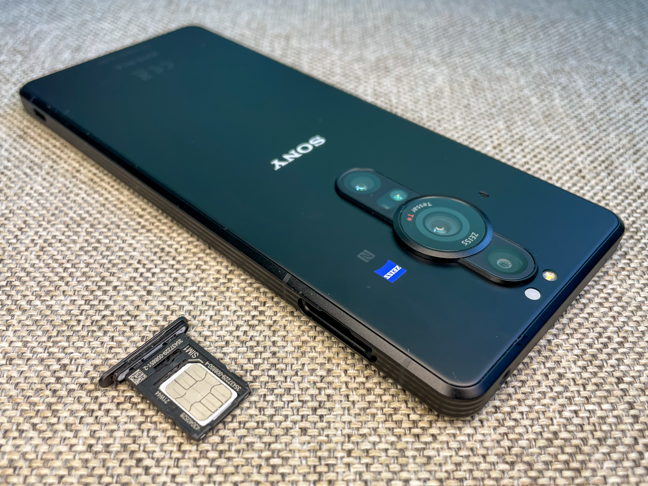 The toolless SIM tray can also hold an SD card
The price of the Sony Xperia PRO-I is not for the faint of heart. Without the accessories, the smartphone costs a whopping 1,800 USD (at the time of the review). For a complete list of technical specifications, as well as the current price, visit the product webpage: Xperia PRO-I Smartphone.
Next, I get to take this bad boy for a test, both in benchmarks and in real life. On the next page, I’ll tell you more about its software and point out some of its qualities and flaws. Read on!
The toolless SIM tray can also hold an SD card
The price of the Sony Xperia PRO-I is not for the faint of heart. Without the accessories, the smartphone costs a whopping 1,800 USD (at the time of the review). For a complete list of technical specifications, as well as the current price, visit the product webpage: Xperia PRO-I Smartphone.
Next, I get to take this bad boy for a test, both in benchmarks and in real life. On the next page, I’ll tell you more about its software and point out some of its qualities and flaws. Read on!
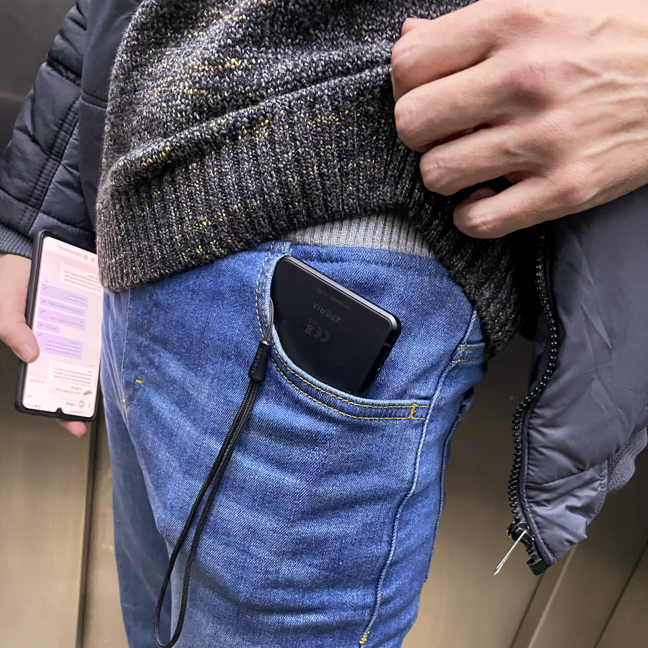 The Sony Xperia PRO-I is too tall for normal pockets
The lack of a strap for the built-in lanyard eyelet is a missed opportunity to impress the user with a very low-cost accessory (the one in the picture is from a pocket camera that I had). That being said, having such a strap hole is almost unheard of on a regular smartphone, so points for that. It’s great for safety and usability if you use the PRO-I as a camera.
The screen has a relatively odd 21:9 ratio. The extra wideness is relatively useless when playing media content, but it’s really important for the camera interface. And boy, what a camera interface.
The Sony Xperia PRO-I is too tall for normal pockets
The lack of a strap for the built-in lanyard eyelet is a missed opportunity to impress the user with a very low-cost accessory (the one in the picture is from a pocket camera that I had). That being said, having such a strap hole is almost unheard of on a regular smartphone, so points for that. It’s great for safety and usability if you use the PRO-I as a camera.
The screen has a relatively odd 21:9 ratio. The extra wideness is relatively useless when playing media content, but it’s really important for the camera interface. And boy, what a camera interface.
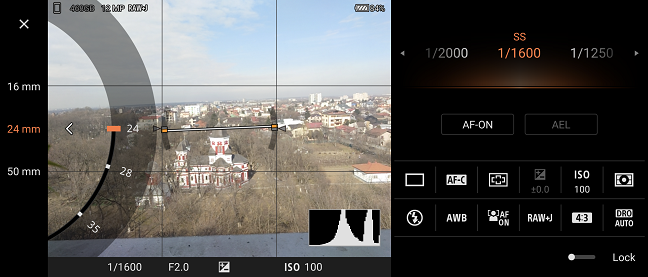
 The camera interface can be a little intimidating at first
The second I opened it, it was like looking at my mirrorless camera screen (but with much better quality). The number of settings that can be changed, especially in the Manual shooting mode, is overwhelming for the average user. Focal length, aperture, exposure, white balance, dynamic range, autofocus type… Definitely, this is a device for more experienced photographers.
But I’m getting ahead of myself. Before we get into the photo and video quality, I’d like to talk more about using the Sony Xperia PRO-I as a smartphone, to get this “detail” out of the way.
Spec-wise, it’s a super powerful device with a bright 4K screen, stereo speakers, and a decent battery, but it’s also too tall to use with one hand, the user interface is far from perfect, and it has some general usability issues. Overall, the smartphone is great, but the devil is in the details. One example is the lock screen password, which on other smartphones can unlock the device directly, without the need to press an OK button. On the Sony Xperia PRO-I, you have that additional step, which can get annoying if you usually unlock your phone this way. Speaking of unlocking, the fingerprint sensor placed on the power button is fairly accurate. However, it’s recessed compared to the volume rocker, and it’s placed just a tiny bit too high for a left-handed user. You will have no issue using it if you’re right-handed, but lefties will have a hard time identifying (it’s flush with the frame and has no discernible texture) and reaching it.
The camera interface can be a little intimidating at first
The second I opened it, it was like looking at my mirrorless camera screen (but with much better quality). The number of settings that can be changed, especially in the Manual shooting mode, is overwhelming for the average user. Focal length, aperture, exposure, white balance, dynamic range, autofocus type… Definitely, this is a device for more experienced photographers.
But I’m getting ahead of myself. Before we get into the photo and video quality, I’d like to talk more about using the Sony Xperia PRO-I as a smartphone, to get this “detail” out of the way.
Spec-wise, it’s a super powerful device with a bright 4K screen, stereo speakers, and a decent battery, but it’s also too tall to use with one hand, the user interface is far from perfect, and it has some general usability issues. Overall, the smartphone is great, but the devil is in the details. One example is the lock screen password, which on other smartphones can unlock the device directly, without the need to press an OK button. On the Sony Xperia PRO-I, you have that additional step, which can get annoying if you usually unlock your phone this way. Speaking of unlocking, the fingerprint sensor placed on the power button is fairly accurate. However, it’s recessed compared to the volume rocker, and it’s placed just a tiny bit too high for a left-handed user. You will have no issue using it if you’re right-handed, but lefties will have a hard time identifying (it’s flush with the frame and has no discernible texture) and reaching it.
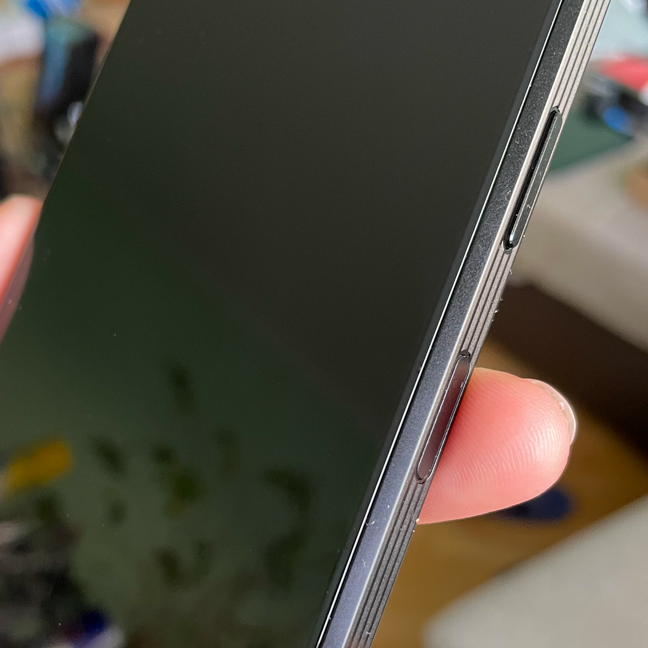 The Power button is hard to locate and actuate
Another gripe I have with the buttons is that, as opposed to the Power button, the shutter release button is too easy to press. Half of the times I was reaching for my smartphone I was accidentally turning on the camera. I guess it’s something that you eventually learn to avoid, but this only reinforces the idea that the PRO-I is not meant for the average user. While we’re on the subject of the shutter release button, it can be pressed halfway, just like on a fully-fledged camera, in order to autofocus. However, the feedback for half-pressing the button is almost non-existent. Again, something that you’ll eventually learn how to use, but it’s worth noting.
When used for calls, the Sony Xperia PRO-I performs well, with clear sound and good reception. The same issue I had with the Xiaomi 11T is present here as well: when trying to call someone from the Recent Calls or Contacts lists, one does not simply tap on the name to initiate the call. You need to tap the handset icon, which is tiny (on the default view) and placed on the wrong side if you’re using the phone with the left hand. Connectivity is excellent, and the Wi-Fi 6 speeds were within specs.
For gaming, both the screen format and its other specs are great, with its super high ppi density and 120 Hz refresh rate. The scan rate for the touchscreen is 240 Hz, excellent for games where you need fast input. The screen brightness is average, just enough so that you won’t have any issues under direct sunlight. The stereo speakers are good and the Dynamic Vibration feature is fun to use - it enhances your experience by vibrating the smartphone on certain frequencies. The device gets warm when gaming, but not as hot as other high-end smartphones.
The Power button is hard to locate and actuate
Another gripe I have with the buttons is that, as opposed to the Power button, the shutter release button is too easy to press. Half of the times I was reaching for my smartphone I was accidentally turning on the camera. I guess it’s something that you eventually learn to avoid, but this only reinforces the idea that the PRO-I is not meant for the average user. While we’re on the subject of the shutter release button, it can be pressed halfway, just like on a fully-fledged camera, in order to autofocus. However, the feedback for half-pressing the button is almost non-existent. Again, something that you’ll eventually learn how to use, but it’s worth noting.
When used for calls, the Sony Xperia PRO-I performs well, with clear sound and good reception. The same issue I had with the Xiaomi 11T is present here as well: when trying to call someone from the Recent Calls or Contacts lists, one does not simply tap on the name to initiate the call. You need to tap the handset icon, which is tiny (on the default view) and placed on the wrong side if you’re using the phone with the left hand. Connectivity is excellent, and the Wi-Fi 6 speeds were within specs.
For gaming, both the screen format and its other specs are great, with its super high ppi density and 120 Hz refresh rate. The scan rate for the touchscreen is 240 Hz, excellent for games where you need fast input. The screen brightness is average, just enough so that you won’t have any issues under direct sunlight. The stereo speakers are good and the Dynamic Vibration feature is fun to use - it enhances your experience by vibrating the smartphone on certain frequencies. The device gets warm when gaming, but not as hot as other high-end smartphones.
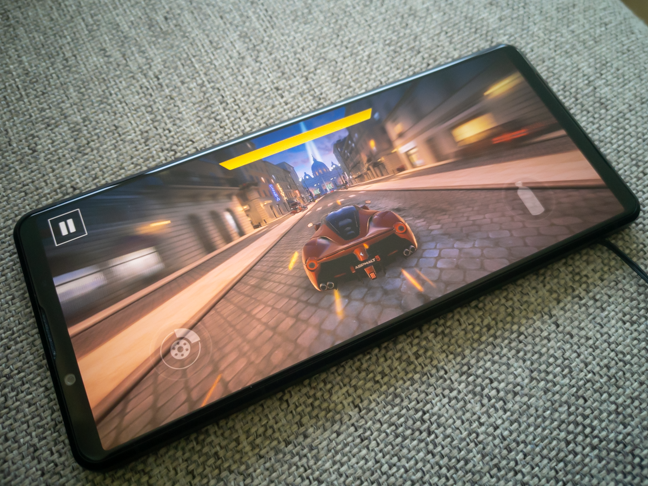 The Sony Xperia PRO-I is great for gaming
The last thing I want to touch in this section is battery life. The phone lasts about two days with light usage and can get you through the day even when using it for shooting videos or taking pictures. As for charging, Sony’s claim of 50% in 30 minutes holds true, although the overall charging time is quite long compared to other flagship devices. Here’s how the charging graph looks:
The Sony Xperia PRO-I is great for gaming
The last thing I want to touch in this section is battery life. The phone lasts about two days with light usage and can get you through the day even when using it for shooting videos or taking pictures. As for charging, Sony’s claim of 50% in 30 minutes holds true, although the overall charging time is quite long compared to other flagship devices. Here’s how the charging graph looks:
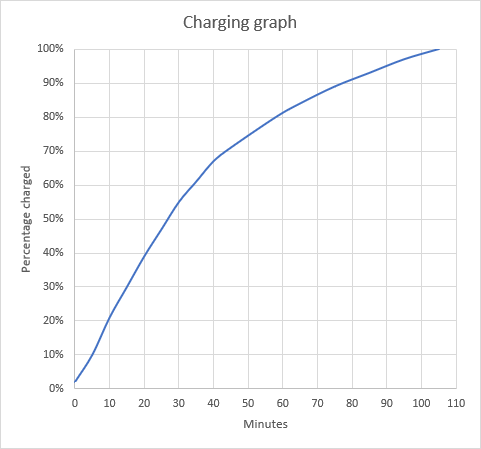
 Charging graph for the Sony Xperia PRO-I
This brings me back to the point I was trying to make initially: while this is a flagship smartphone, it’s far from being the best. It also has some issues that make it special, quirky, and even unattractive to many users. But once I stopped comparing it to a 2022 flagship smartphone and started looking at the Sony Xperia PRO-I as a special tool for photographers, vloggers, and videographers, it all started to make sense. It’s a powerful device, but it’s not for everyone.
Charging graph for the Sony Xperia PRO-I
This brings me back to the point I was trying to make initially: while this is a flagship smartphone, it’s far from being the best. It also has some issues that make it special, quirky, and even unattractive to many users. But once I stopped comparing it to a 2022 flagship smartphone and started looking at the Sony Xperia PRO-I as a special tool for photographers, vloggers, and videographers, it all started to make sense. It’s a powerful device, but it’s not for everyone.
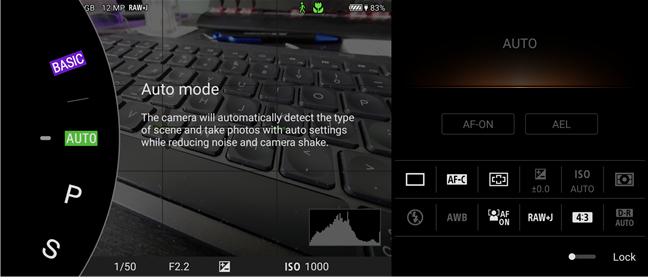 Even in Auto mode, there are many settings you can alter
TIP: Do you want to know how to access the selfie camera on the Sony Xperia PRO-I? I searched for the setting as well, and I had trouble finding the switch. Probably because you would be pretty basic to use this amazing smartphone for selfies, the selfie camera can only be accessed if you’re in Basic mode.
Even in Auto mode, there are many settings you can alter
TIP: Do you want to know how to access the selfie camera on the Sony Xperia PRO-I? I searched for the setting as well, and I had trouble finding the switch. Probably because you would be pretty basic to use this amazing smartphone for selfies, the selfie camera can only be accessed if you’re in Basic mode.
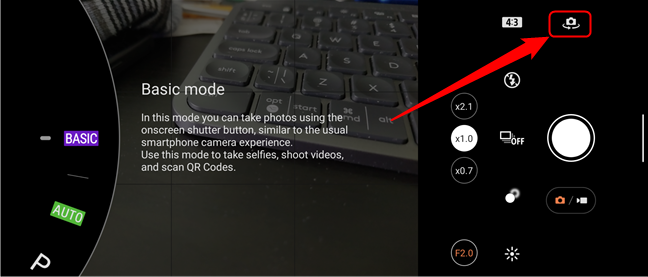 The selfie camera is only available in Basic mode on the Sony Xperia PRO-I
The photos taken with the selfie camera are not great, especially in low light. However, since the Sony Xperia PRO-I is not meant for selfies, I will not deduct points for this.
Putting the camera in any other mode except Basic presents the user with an interface that’s either intimidating or familiar, depending on your experience with professional cameras.
With a shutter speed ranging from an amazing 1/8000 and up to 30 seconds, the cameras can be used in all kinds of scenarios. You can easily capture sporting events and concerts, then go and have a photoshoot in near-total darkness using a tripod, with amazing results. The Sony Xperia PRO-I can be set up to shoot in raw format (DNG, to be more precise), and you can take the pictures and process them further to achieve results that are way out of reach for most smartphone cameras.
The selfie camera is only available in Basic mode on the Sony Xperia PRO-I
The photos taken with the selfie camera are not great, especially in low light. However, since the Sony Xperia PRO-I is not meant for selfies, I will not deduct points for this.
Putting the camera in any other mode except Basic presents the user with an interface that’s either intimidating or familiar, depending on your experience with professional cameras.
With a shutter speed ranging from an amazing 1/8000 and up to 30 seconds, the cameras can be used in all kinds of scenarios. You can easily capture sporting events and concerts, then go and have a photoshoot in near-total darkness using a tripod, with amazing results. The Sony Xperia PRO-I can be set up to shoot in raw format (DNG, to be more precise), and you can take the pictures and process them further to achieve results that are way out of reach for most smartphone cameras.
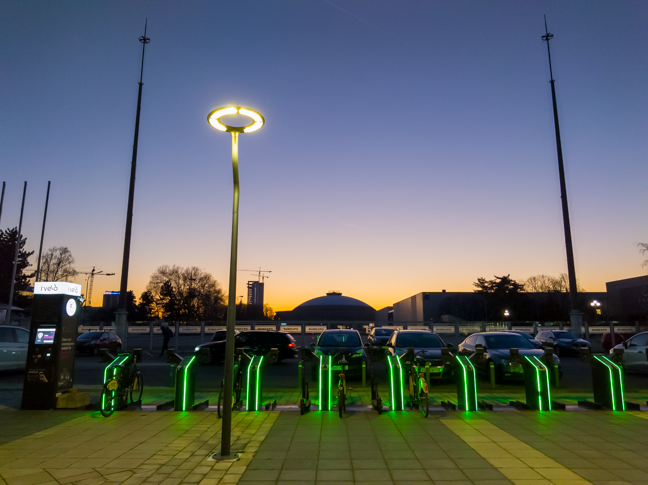
 Example of an edited image from a Sony Xperia PRO-I DNG file
Daylight photos are excellent even on Auto, with a wide dynamic range and good color reproduction for the telephoto and the main camera. Here is JPEG a photo from the main camera with a 100% crop.
Example of an edited image from a Sony Xperia PRO-I DNG file
Daylight photos are excellent even on Auto, with a wide dynamic range and good color reproduction for the telephoto and the main camera. Here is JPEG a photo from the main camera with a 100% crop.
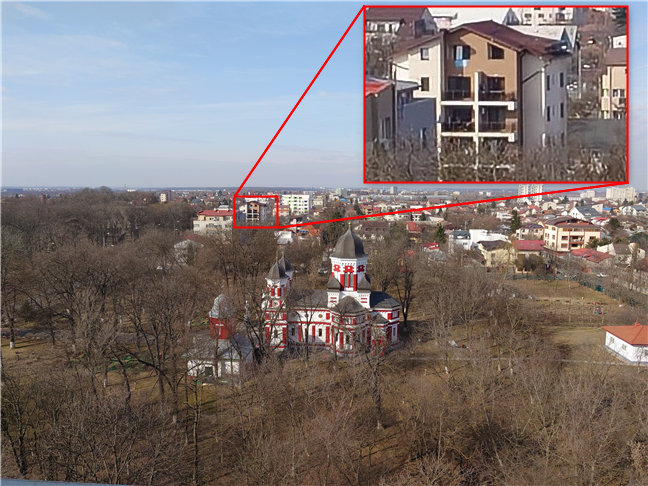 Main camera panorama with a 100% crop (saved as JPEG)
Here’s what a photo taken with the telephoto looks from the same angle. There are more details and the white balance is very similar. The section in the top-right is again a 100% crop.
Main camera panorama with a 100% crop (saved as JPEG)
Here’s what a photo taken with the telephoto looks from the same angle. There are more details and the white balance is very similar. The section in the top-right is again a 100% crop.
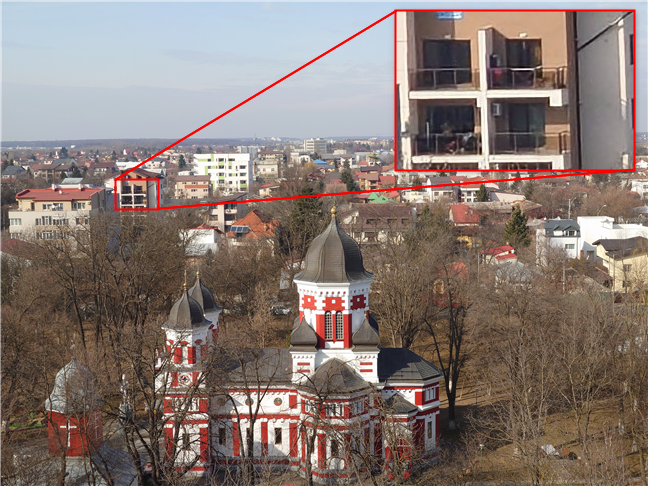 Telephoto camera panorama with a 100% crop (saved as JPEG)
The ultrawide is not great, but it gets the job done. On the ultrawide, the images are darker with less resolved detail, and the white balance is off.
Telephoto camera panorama with a 100% crop (saved as JPEG)
The ultrawide is not great, but it gets the job done. On the ultrawide, the images are darker with less resolved detail, and the white balance is off.
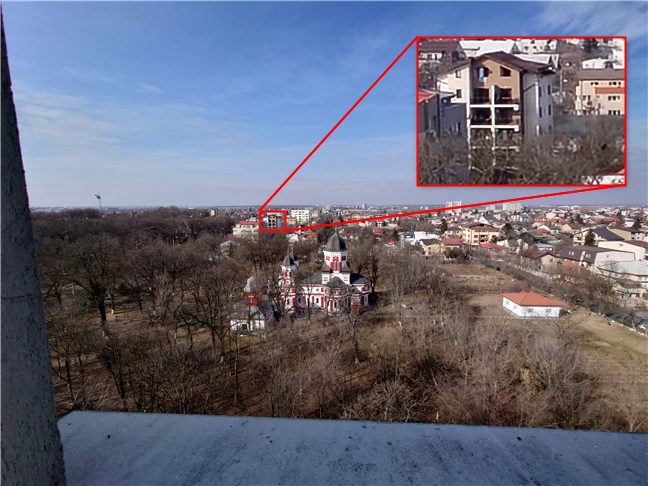 Ultrawide camera panorama with a 100% crop (saved as JPEG)
The 16mm ultrawide is also used for macro shots, but the same restrictions apply.
Moving on to the videos, the Sony Xperia PRO-I is great for recording fast moving objects. The Video Pro app is as detailed as the Photo Pro app, and there are quite a few settings to play around with. Here is a 4K 120 fps recording (bear in mind that YouTube compresses the images and caps the frame rate at 60 fps):
The same spot, same frame rate, this time at 1080p:
And finally, here is a sample recorded in low light, at a concert. The sound reproduction is excellent, considering that I was standing very close to the speakers:
I could literally go on for days analyzing the different camera modes and settings, but I will just mention one more, and that is the Cinema Pro app, which has slightly different settings than the Video Pro and is more suited for shooting artistic movies.
Ultrawide camera panorama with a 100% crop (saved as JPEG)
The 16mm ultrawide is also used for macro shots, but the same restrictions apply.
Moving on to the videos, the Sony Xperia PRO-I is great for recording fast moving objects. The Video Pro app is as detailed as the Photo Pro app, and there are quite a few settings to play around with. Here is a 4K 120 fps recording (bear in mind that YouTube compresses the images and caps the frame rate at 60 fps):
The same spot, same frame rate, this time at 1080p:
And finally, here is a sample recorded in low light, at a concert. The sound reproduction is excellent, considering that I was standing very close to the speakers:
I could literally go on for days analyzing the different camera modes and settings, but I will just mention one more, and that is the Cinema Pro app, which has slightly different settings than the Video Pro and is more suited for shooting artistic movies.
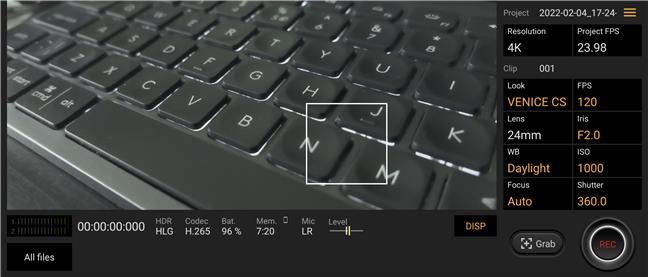 The interface of the Cinema Pro app
The camera experience on the Sony Xperia PRO-I is… different, to say the least. On Auto mode, there are other smartphones out there which yield better results, but if you know your aperture from your exposure, you can get some amazing shots. Video recording is good, although zooming can be a bit jerky. Overall, it’s a tool for professionals, but with a very powerful smartphone attached to it.
The interface of the Cinema Pro app
The camera experience on the Sony Xperia PRO-I is… different, to say the least. On Auto mode, there are other smartphones out there which yield better results, but if you know your aperture from your exposure, you can get some amazing shots. Video recording is good, although zooming can be a bit jerky. Overall, it’s a tool for professionals, but with a very powerful smartphone attached to it.
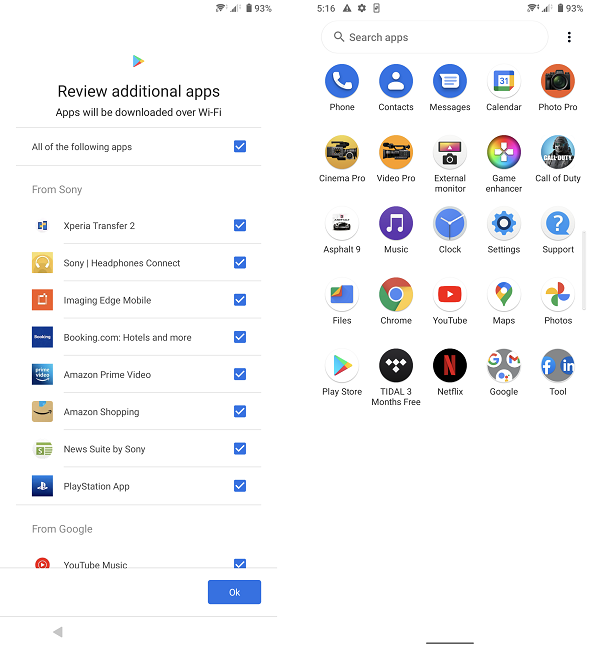
 You can select which apps to install when configuring the phone
In a world where some manufacturers simply choke their devices with useless junk, this is amazing. Apart from the standard Android and Google apps, the Sony Xperia PRO-I comes with the following preinstalled applications (apps may vary depending on the region):
You can select which apps to install when configuring the phone
In a world where some manufacturers simply choke their devices with useless junk, this is amazing. Apart from the standard Android and Google apps, the Sony Xperia PRO-I comes with the following preinstalled applications (apps may vary depending on the region):
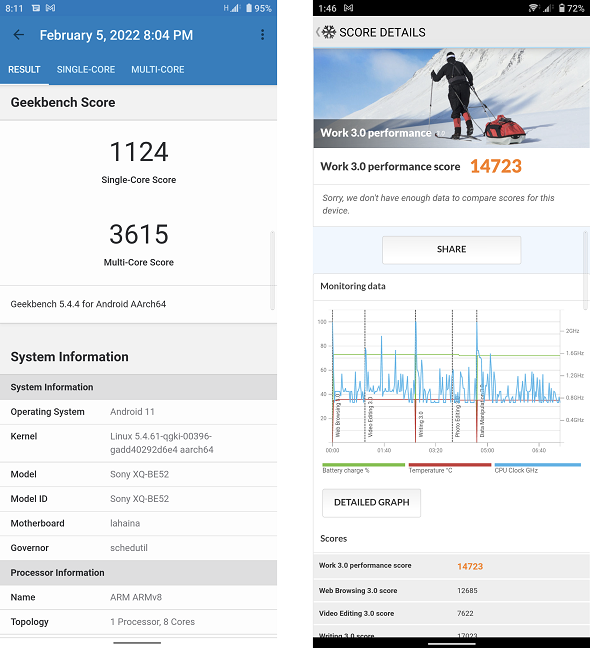 The Geekbench result (left) and the PCMark result (right)
Next, I tested the video subsystem with 3DMark, as mentioned above. The results were very impressive, in line with other results for the same Adreno 660 GPU: 5,736 points for Wild Life and 1,511 points for Wild Life Extreme.
The Geekbench result (left) and the PCMark result (right)
Next, I tested the video subsystem with 3DMark, as mentioned above. The results were very impressive, in line with other results for the same Adreno 660 GPU: 5,736 points for Wild Life and 1,511 points for Wild Life Extreme.
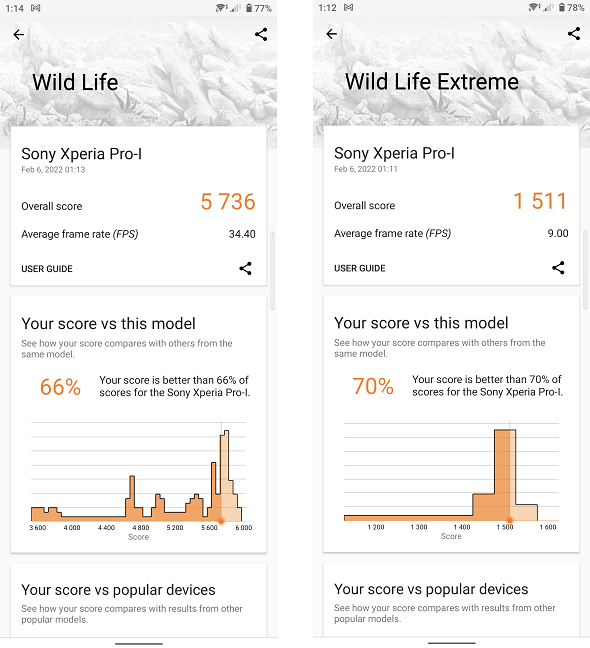 The results of the Sony Xperia PRO-I for the 3DMark suite
I also tested the device with the Car Chase and 1080p Car Chase Offscreen tests from GFXBench, and the framerates were excellent: 54 fps and 69 fps.
The results of the Sony Xperia PRO-I for the 3DMark suite
I also tested the device with the Car Chase and 1080p Car Chase Offscreen tests from GFXBench, and the framerates were excellent: 54 fps and 69 fps.
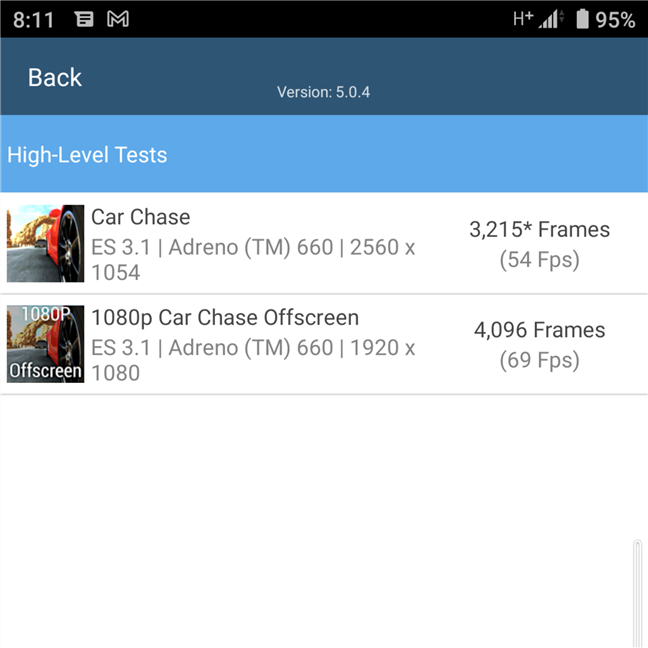 GFXBench scores for the Sony Xperia PRO-I are very good too
Next, I left the device with the Work 3.0 battery life test from PCMark running. It ended after 11 hours and 38 minutes, which is a good result for a device this powerful. Note that the performance did not drop in time, and the device didn’t overheat.
GFXBench scores for the Sony Xperia PRO-I are very good too
Next, I left the device with the Work 3.0 battery life test from PCMark running. It ended after 11 hours and 38 minutes, which is a good result for a device this powerful. Note that the performance did not drop in time, and the device didn’t overheat.
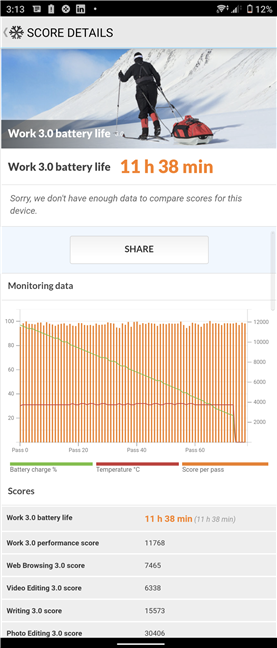
 An average result for the Sony Xperia PRO-I in the Work 3.0 battery life test
Finally, I used Ookla’s Speedtest on a Wi-Fi 6 network with a 1 Gigabit internet connection, and the results were equally good:
An average result for the Sony Xperia PRO-I in the Work 3.0 battery life test
Finally, I used Ookla’s Speedtest on a Wi-Fi 6 network with a 1 Gigabit internet connection, and the results were equally good:
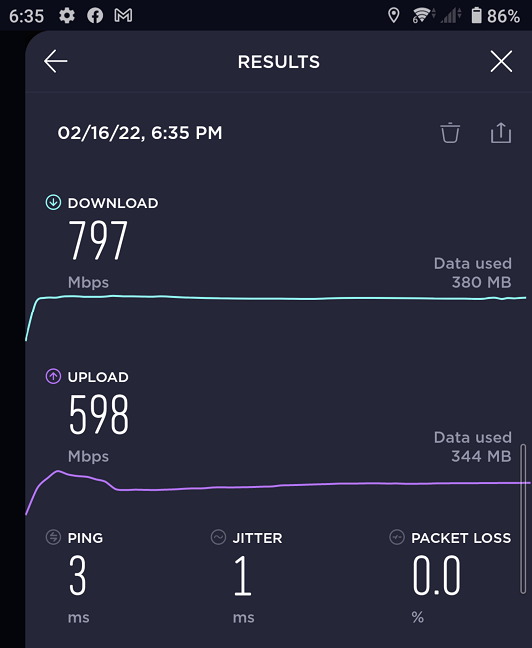
 Network transfer speeds are great
Once again, the Sony Xperia PRO-I confirms its flagship status. There were no issues running the tests, and the scores were in line with expectations. You will definitely be able to play all modern mobile games on the Sony Xperia PRO-I.
Network transfer speeds are great
Once again, the Sony Xperia PRO-I confirms its flagship status. There were no issues running the tests, and the scores were in line with expectations. You will definitely be able to play all modern mobile games on the Sony Xperia PRO-I.
Sony Xperia PRO-I: Who is it good for?
The Sony Xperia PRO-I is perfect for:- Content creators who travel a lot and need a small and robust camera for their vlogs
- Users who are comfortable with advanced cameras and know how to properly configure them
- Professional videographers or photographers who want to combine a flagship smartphone with a high-end camera
Pros and cons
Here are the things I liked about the Sony Xperia PRO-I:
- The processing power of the smartphone is at flagship level
- The picture and video quality rival those of high-end compact cameras, if you apply the right settings
- The camera and video recording apps give you access to a wide range of settings
- The screen’s ppi (pixels per inch) is mind-blowing
- The device feels sturdy
- There is little bloatware, and the included apps are of high quality
- The shutter release button can easily be pressed accidentally, which opens the camera app
- The power button is hard to access and locate if you use the device with the left hand
- The device is too tall to fit in the pocket, unless you are a kangaroo
- Fully charging the device takes too long, even with the quick charger
- It’s an expensive device - 1,800 USD at the time of this review
Verdict
If you want a flagship smartphone, Sony PRO-I fits the bill, but it’s not really meant to be that. It has a very narrow target group, and it provides them with tools that are not available on any other brand apart from Sony. The photos and videos taken with the Sony Xperia PRO-I are great, but in order to make them great, the device needs fine-tuning from the user - definitely not something that regular smartphone users are willing to do. However, if you are an experienced content creator who’s constantly on the move, the Sony Xperia PRO-I is a unique tool that can potentially enhance your content creation.Unboxing the Sony Xperia PRO-I
The Sony Xperia PRO-I arrived in a plain white box. Its dimensions are similar to most smartphone packages: 7.5 x 3.54 x 2.17 inches (190 x 90 x 55 mm). The front of the box displays just the brand and the model.Design and build quality
The Sony Xperia PRO-I is a heavy smartphone, with a weight of 7.44 oz (211 g). Its overall dimensions are 6.54 x 2.83 x 0.35 inches (166 x 72 x 8.9 mm), and while the numbers make it seem as large as the Xiaomi 11T, the Sony smartphone has an unusual format. It’s narrower, so gripping it is a lot easier for people with small hands. The small ridges on its side make gripping it even better. On the front of the phone, you get a 21:9 OLED display (with Gorilla Glass Victus protection) and front-facing stereo speakers, as well as a notification light and the 8MP selfie camera.Hardware specifications
The Sony Xperia PRO-I is a flagship product and the specs fully confirm it. The device is powered by a powerful Qualcomm Snapdragon 888 chipset with an Adreno 660 GPU. It has 12 GB of RAM and a hefty 512 GB storage. The system software occupies roughly 21 GB, with other applications taking another 10 GB.- The main camera has a 12MP resolution, with an f/2 or f/4, 24mm equivalent wide lens. Thanks to its huge 1-inch type sensor, it has a pixel size of 2.4 µm, and it uses phase-detection autofocus (PDAF). It’s also optically stabilized.
- The second camera uses a 12MP sensor and a f/2.2 ultrawide fixed focus lens. It has a FOV of 124°.
- The telephoto camera is also a 12MP with PDAF and OIS, and it has an aperture of f/2.4 and a 50mm focal length equivalent. It only provides a modest 2.1x zoom.
- The front camera has 8MP, an aperture of f/2.0, and a focal length of 24mm.
The smartphone experience on the Sony Xperia PRO-I
The Sony Xperia PRO-I reminds me of a saying: you can’t judge a fish by its ability to climb a tree. If you put this smartphone next to a Samsung Galaxy S21, for example, you could easily mistake it for a flagship smartphone with a focus on cameras, but the Sony Xperia PRO-I is a different kind of beast. It has a lot of quirks that make it unattractive or even scary for the regular user, but if you’re in the small group of photography enthusiasts that this device targets, you might just fall in love with the PRO-I. First, the format: it’s a tall and narrow smartphone, making it easy to grip. Try putting it in a pocket though, and unless you have access to hammerspace, your Sony Xperia PRO-I will be sticking out quite a lot.The camera experience on the Sony Xperia PRO-I
NOTE: The pictures in the article are resized for optimization purposes. You can find pictures and videos captured by the Sony Xperia PRO-I in the gallery below: Here’s the thing: if you’re used to a Samsung or iPhone camera, you might be surprised to discover that using the default settings, the Sony Xperia PRO-I photos look generally worse. This is because the smart processing done by the competition is, in many cases, superior to that of the Sony PRO-I. This, however, doesn’t mean that the photos taken by the PRO-I are bad. They are really good, actually. But if you want to buy this smartphone and use the Photo Pro (the default camera app) on Basic or Auto modes, you should reconsider, as you’re only using a small part of what it’s capable of.Android 11 and bundled apps
The Sony Xperia PRO-I comes with Android 11, and a pretty barebones one too. In the initial setup process, you can select which apps you want to install. If you select none, the operating system is almost devoid of any (unnecessary) apps:- Photo Pro, Cinema Pro, and Photo Pro - the dedicated apps for taking photos and recording video. They are extremely detailed and well-made
- External monitor - an app dedicated to connecting the Sony Xperia PRO-I to professional cameras, such as the Sony Alpha series, and using it as a camera monitor
- Game enhancer - like the name implies, it’s an app dedicated to tweaking device and game settings in order to have the best gaming experience possible
- Asphalt 9 and Call of Duty - two extremely popular and good looking games
- Tidal - a popular music streaming service
- Netflix - the popular video streaming service that needs no introduction
- Facebook, LinkedIn - social media
- Multi-window switch - allows you to display two apps at the same time, useful if you want to browse the internet while watching a YouTube video
- Side sense - it helps with using the device with one hand
Performance in benchmarks
I tested the Sony Xperia PRO-I with the usual benchmarks, with one exception: since the devices we’re testing have become more and more powerful, I used the Wild Life and Wild Life Extreme tests in the 3DMark suite. But first things first: the Geekbench results were in line with other devices with the Snapdragon 888 chipset: 1124 for the Single Core test and 3615 on the Multi-Core test. Next, I used PCMark for Android to test the performance of the Sony Xperia PRO-I in various usage scenarios. The Work 3.0 score of 14723 confirms that the PRO-I is a powerhouse.
Discussion (0)
Comments are closed.