



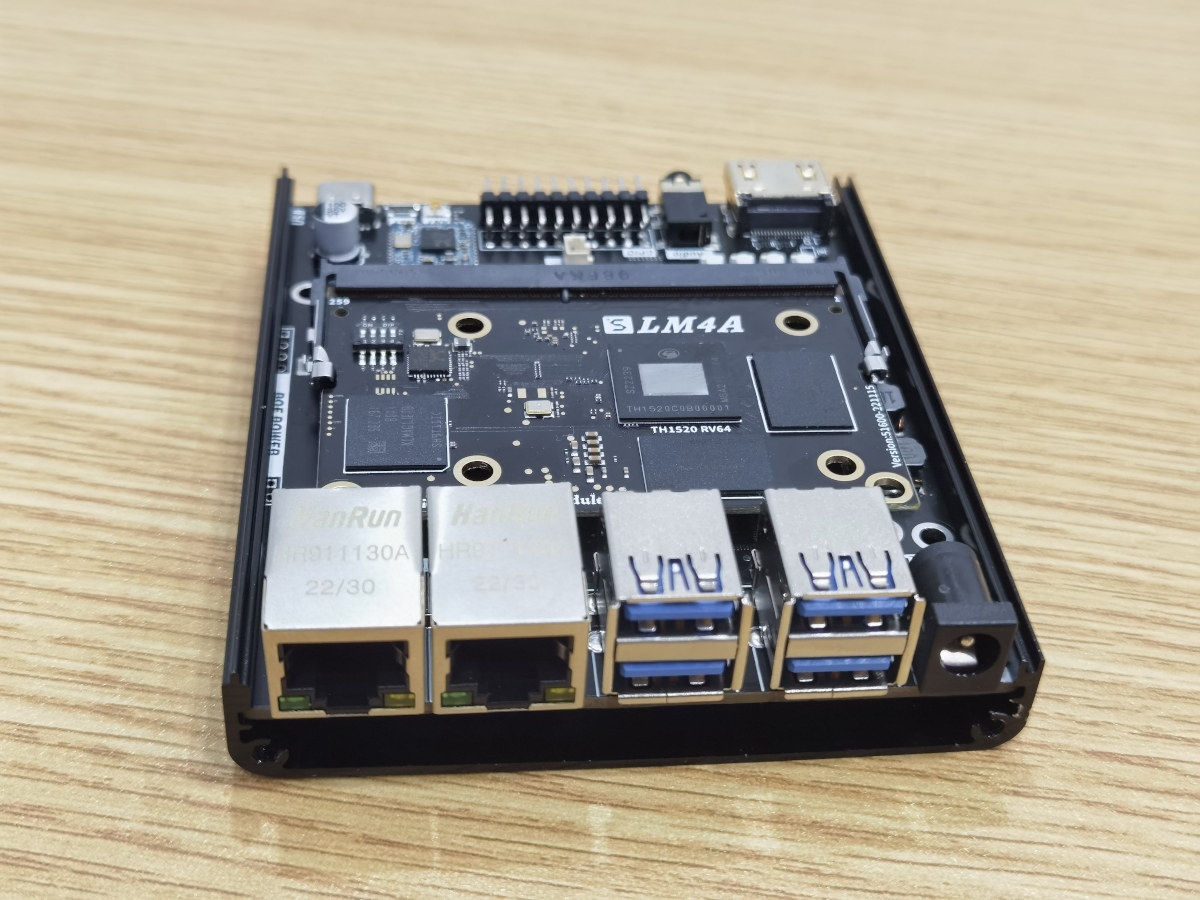
Sipeed has introduced a new line of compact RISC V single board computers aimed at local AI, edge computing, and networking workloads.
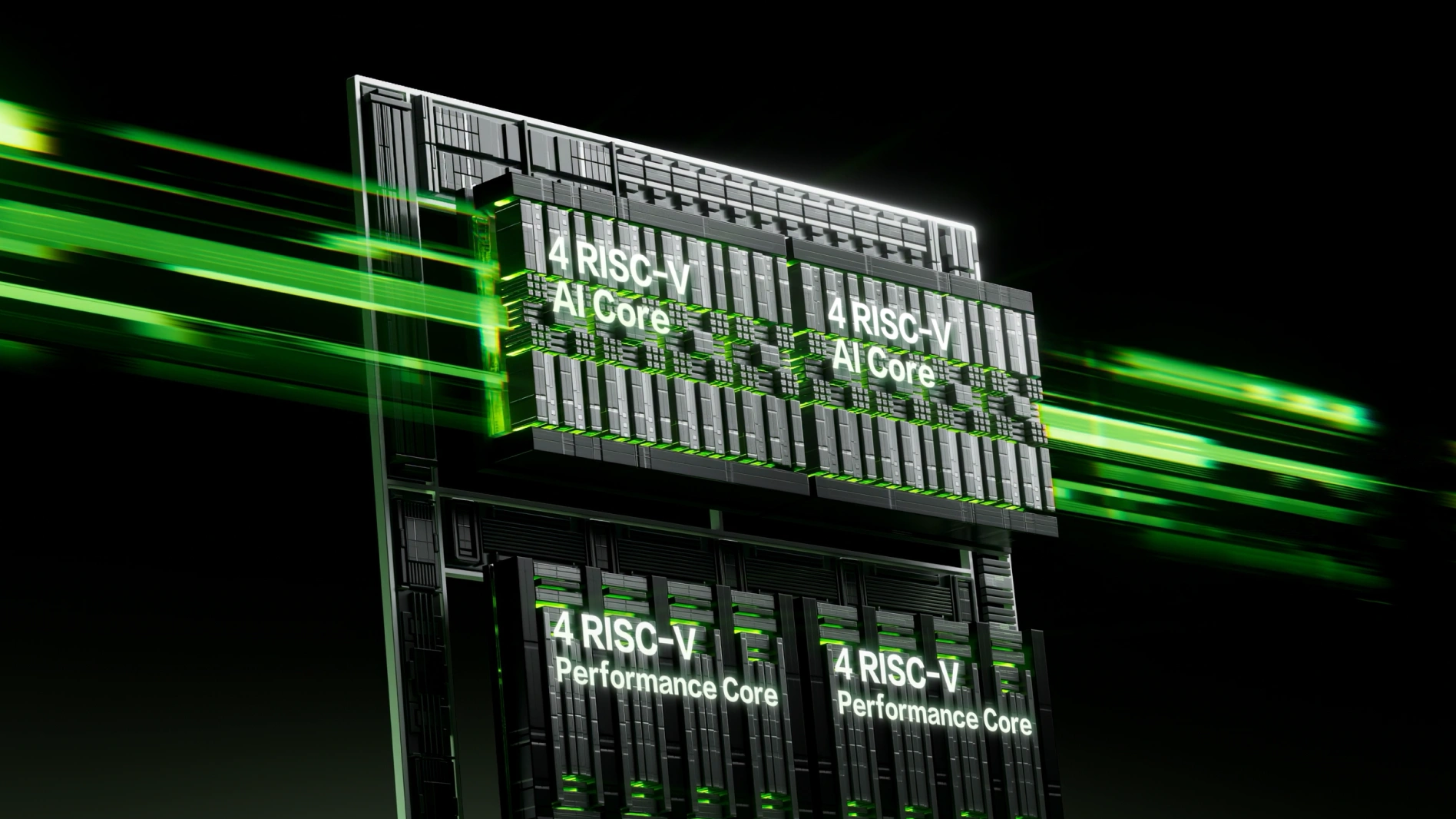
The new K3 series is built with SPACEMIT’s Key Stone K3 AI processor. It combines 8 X100 high performance RISC V cores with 8 A100 AI cores, giving the board a mix of general compute and AI acceleration in a compact form factor.
Sipeed says the chip can deliver up to 130,000 DMIPS of general computing performance and runs at up to 2.4GHz. The company compares its CPU performance to Arm Cortex A76 class hardware.
The more interesting part is the AI side. The K3 includes a 60 TOPS NPU with support for BF16, FP16, FP8, INT8, and INT4. Sipeed says the board can run local 30B class language models smoothly, with inference speeds above 10 tokens per second.
In one example, the K3 is said to run Qwen 3.5 35B at up to 15 tokens per second.
Here is the main hardware picture:
| Spec | Sipeed K3 series |
|---|---|
| CPU | 8 X100 performance cores and 8 A100 AI cores |
| Architecture | RISC V |
| Clock speed | Up to 2.4GHz |
| AI performance | Up to 60 TOPS INT4 |
| Memory | 8GB, 16GB, or 32GB LPDDR5 |
| Memory speed | LPDDR5 6400MT/s |
| Bandwidth | Up to 51GB/s |
| Storage | eMMC 5.1, SD card, M.2 NVMe SSD |
| Video decode | 4K at 120 FPS H.265 and VP9 |
| Video encode | 4K at 60 FPS |
| OS support | Bianbu OS, Debian based, Docker, RISC V KVM |
The 32GB LPDDR5 option is important because local AI models need both compute and memory. A small board with only 8GB RAM can run lightweight models, but 16GB and 32GB options make the K3 more useful for larger LLMs, vision language models, and edge AI tasks.
Sipeed is offering the K3 in different board formats. The K3 CoM260 Kit is a compact 69.6mm by 45mm module with a 260 pin SO DIMM connector and compatibility with NVIDIA Jetson Orin style carrier boards. That should make migration easier for developers already using Jetson ecosystems.
There is also a K3 Pico ITX board in a 100mm by 86mm form factor. It includes richer I/O, including 10 Gigabit Ethernet, Gigabit LAN, USB 3.0, PCIe Gen3, and dual USB C with USB PD and DisplayPort Alt Mode support.
Pricing starts at around $299 to $309 for 8GB models. The 32GB configurations are listed around $629 to $639, depending on the kit.
| Model range | Price |
|---|---|
| 8GB K3 boards | Around $299 to $309 |
| 32GB K3 boards | Around $629 to $639 |
That puts the K3 above many simple Raspberry Pi style boards, but it is aimed at a different market. This is not only a hobby board for basic projects. It is meant for developers who want a compact local AI machine with real memory capacity and dedicated NPU acceleration.
The comparison with NVIDIA’s Jetson Orin Nano is obvious. Jetson remains a strong option with a mature CUDA based ecosystem, but Sipeed is offering a RISC V alternative with more memory options and a focus on open architecture.
The biggest question will be software maturity. Hardware specs are only part of the story for AI development. Developers will need stable drivers, model support, optimized runtimes, documentation, and a healthy ecosystem before the K3 can become a serious Jetson alternative.
Still, the board is interesting. A compact RISC V system with 32GB LPDDR5, 60 TOPS AI performance, NVMe support, and 10GbE gives developers a lot to experiment with.
For local AI, robotics, edge servers, networking boxes, and private inference projects, the Sipeed K3 could become one of the more exciting RISC V boards of the year.


Discussion (0)
Be the first to comment.