



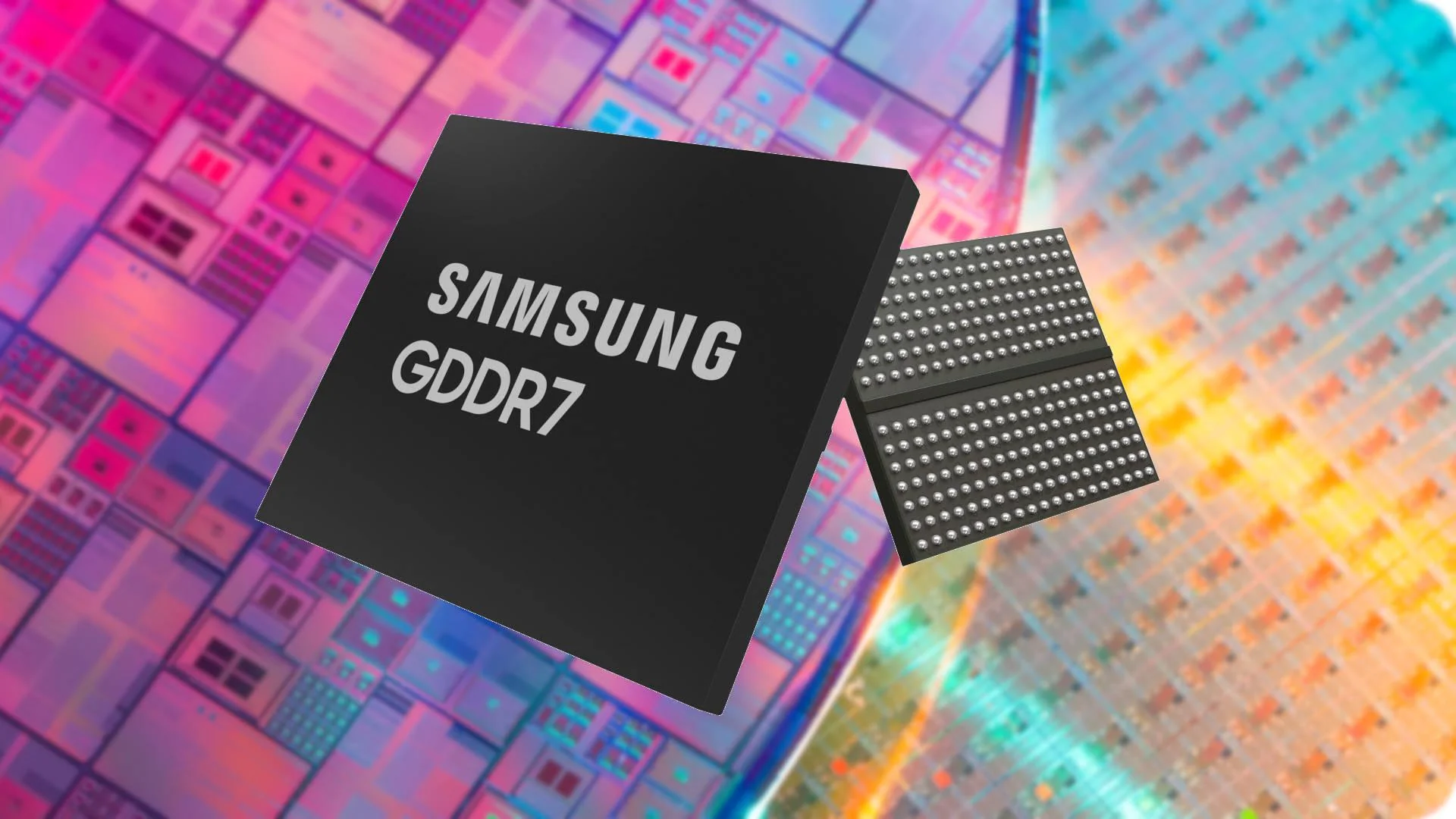
Samsung is reportedly preparing to move its next generation 1d DRAM technology toward mass production as early as late 2027. The company is said to be working with equipment partners now, with plans to introduce production machinery into its factories during the second quarter of 2027 if its current timeline holds.
The shift is important because advanced DRAM is becoming one of the most critical parts of the AI hardware supply chain. High bandwidth memory depends on stacked DRAM dies, and future AI accelerators will need faster, denser, and more efficient memory to keep up with larger models and higher data movement demands.
Samsung’s latest commercial DRAM technology is currently based on its 1c process, which is already used for advanced HBM4 memory. The next step, 1d DRAM, could help power future HBM5 and HBM5E products, giving Samsung a chance to strengthen its position against SK hynix and Micron in the AI memory race.
Why 1d DRAM matters for AI memory
The 1d generation is expected to be a major shift from earlier DRAM designs. Traditional DRAM generations place memory cells side by side in a horizontal layout. With 1d DRAM, Samsung is reportedly moving toward vertical capacitor stacking, which changes how memory cells are arranged and manufactured.
This approach can help DRAM continue scaling as older methods become harder to shrink. Smaller and denser DRAM is especially valuable for HBM, where multiple memory dies are stacked together to deliver high bandwidth for GPUs and AI accelerators.
| Area | Why it matters |
|---|---|
| 1d DRAM | Next generation memory process after 1c |
| Vertical capacitor stacking | Helps continue DRAM scaling |
| Separate peripheral wafer | Adds manufacturing complexity |
| HBM5 and HBM5E | Possible future use for 1d DRAM |
| AI accelerators | Need faster and denser memory |
| Late 2027 target | Reported window for mass production |
Samsung is preparing equipment before final production plans
Samsung is reportedly discussing equipment plans with manufacturing partners as it prepares for the 1d DRAM transition. The company may bring the needed tools into its fabs in the first half of 2027, with mass production possible in the second half.
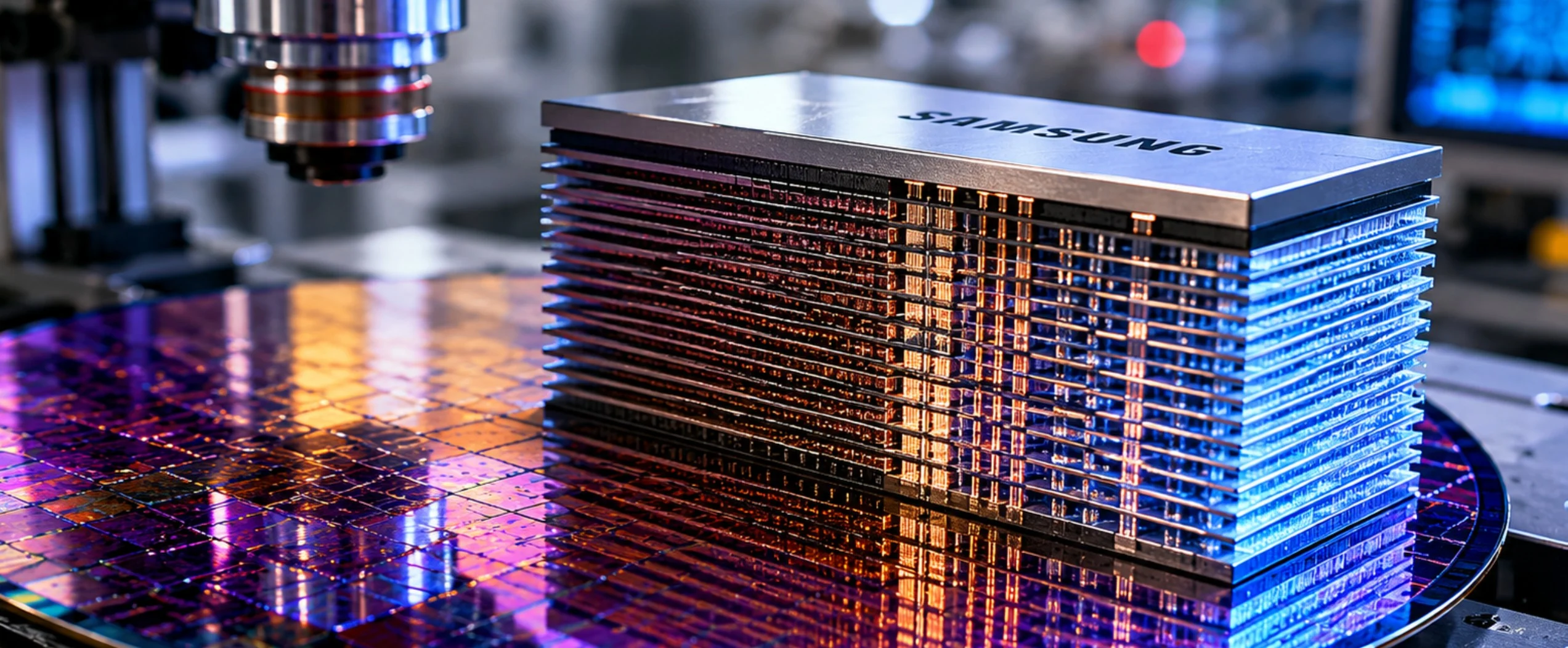
The report suggests Samsung could finalize its mass production plan by the end of 2026. That would give the company time to align equipment, yield targets, process readiness, and customer demand before moving into larger scale production.
This timeline is aggressive because 1d DRAM is not a simple process shrink. It changes the memory cell structure and adds integration complexity by using different wafers for memory cell circuits and peripheral circuitry.
HBM demand is putting pressure on every memory maker
AI chips depend on HBM because processors such as GPUs need enormous memory bandwidth. Traditional memory cannot feed these chips fast enough for many AI workloads, which is why HBM has become one of the most valuable parts of the semiconductor market.
Samsung, SK hynix, and Micron are all racing to improve HBM capacity and performance. SK hynix currently has a strong position in the HBM market, while Samsung has been working to close the gap with newer generations.
Samsung’s use of 1c DRAM in HBM4 shows that it is willing to move to newer DRAM processes for advanced stacked memory. If 1d DRAM is ready in time, it could become a foundation for HBM5E products later in the decade.
The move could help Samsung compete in next generation HBM
Samsung’s memory business has been under pressure in the AI era, where HBM qualification and supply agreements can shape revenue for years. Moving quickly to 1d DRAM could help the company offer higher density and better performance for future AI hardware.
The challenge will be execution. Advanced DRAM nodes are difficult to manufacture, and new structures can create yield and cost problems early on. Samsung will need strong production stability if it wants 1d DRAM to support HBM5 class products at scale.
The company also has to compete with Micron’s 1 delta process and SK hynix’s own roadmap. In AI memory, being early matters, but shipping reliable volume matters more.
Late 2027 could be a key point for AI memory
If Samsung reaches 1d DRAM mass production in late 2027, it would arrive as the industry prepares for the next wave of AI accelerators and HBM upgrades. By then, demand for HBM4, HBM4E, HBM5, and related memory technologies may be even higher than it is today.
That makes Samsung’s 1d DRAM roadmap important beyond ordinary PC memory. This is about supplying the memory foundation for future AI data centers.
For now, the timeline remains based on industry reporting rather than a full public production announcement from Samsung. But the direction is clear. The AI boom is forcing memory makers to accelerate advanced DRAM development, and Samsung wants 1d DRAM ready before the next major HBM generation becomes the center of the market.



Discussion (0)
Be the first to comment.