



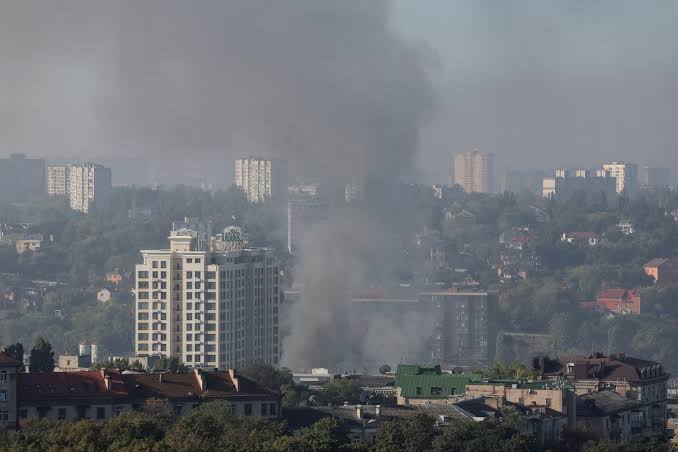
Russian drone strikes have damaged data centers and telecommunications infrastructure in Kyiv, disrupting internet service for around 100,000 households in the Ukrainian capital and surrounding region.
Ukraine's Ministry of Digital Transformation said the outages followed attacks on September 23, with repair teams working to assess damage and restore stable connectivity. Independent reporting also identified several internet providers suffering partial service losses after facilities housing critical networking equipment were hit.
Russia's Defence Ministry said its forces had struck data centers and logistics sites that it claimed were being used for the Ukrainian military. Ukrainian officials disputed the characterization of the affected communications infrastructure as legitimate military targets and emphasized its importance to civilians.
| Detail | Reported information |
|---|---|
| Location | Kyiv and surrounding region |
| Households affected | Around 100,000 |
| Infrastructure hit | Data centers and internet infrastructure |
| Attack type | Drone strikes |
| Reported affected providers | Kyiv Link, Pautina, Utels, Crazy Network |
| Russian position | Sites were used to support Ukrainian military operations |
| Ukrainian position | Infrastructure was critical to civilian communications |
Data center damage caused widespread connectivity problems
Several facilities tied to Ukraine's internet infrastructure were damaged during the attacks.
Internet monitoring data cited in reporting showed partial connectivity losses affecting at least four providers, including Kyiv Link, Pautina, Utels, and Crazy Network. Some providers said damage to facilities containing networking equipment was directly responsible for the outages.
Ukraine's digital ministry put the number of affected households at roughly 100,000 across Kyiv and Kyiv Oblast.
The outages were described as temporary, with engineers beginning repair work soon after the strikes.
Russia says the sites supported military operations
Russia's Defence Ministry said its September 23 strikes targeted several data processing centers and logistics facilities.
It specifically claimed that data centers in Kyiv were being used to provide services to Ukraine's Defence Ministry and security agencies.
That claim represents Russia's stated justification for the attacks.
Ukrainian officials rejected the broader characterization of the communications infrastructure as a military target.
Foreign Minister Andrii Sybiha said the affected data centers were important for delivering information, including alerts about missile and drone attacks, and argued that the systems were essential to daily civilian life.
Kyiv's digital infrastructure has become a more visible target
The September attacks were notable because they affected multiple data centers and internet providers over a short period.
Reporting from Kyiv described the strikes as part of an expansion of attacks against Ukraine's digital infrastructure, while noting that Russia had hit data facilities before.
The affected systems support more than ordinary home internet access.
Ukraine depends heavily on communications networks for banking, payment systems, government services, emergency alerts, and other parts of daily economic activity.
That makes prolonged connectivity failures potentially more disruptive than a temporary loss of consumer internet service.
Companies are trying to make networks more resilient
Since the start of the war, Ukrainian authorities and telecommunications operators have invested in backup power and other measures intended to keep internet and mobile networks functioning during attacks and electricity outages.
The latest damage shows that physical data center and networking infrastructure remains vulnerable even when power redundancy is available.

Some Ukrainian technology firms have also moved or duplicated data outside the country to reduce the risk that a strike on one facility could permanently destroy important information.
The supplied source does not provide detailed figures on how much data has been moved abroad or which companies have done so.
Attacks are part of a wider infrastructure campaign
The data center strikes have occurred alongside broader Russian attacks on Ukrainian energy, transport, commercial, and communications infrastructure.
Independent assessments reported strikes during the same period against railway, logistics, agricultural, energy, and other facilities in several Ukrainian regions.
The immediate technical impact in Kyiv was significant but not permanent, with repair crews working to restore services after around 100,000 households experienced connectivity problems.
The longer term concern is whether repeated attacks on data centers, telecom nodes, and power systems can make Ukraine's digital infrastructure increasingly difficult and expensive to maintain.



Discussion (0)
Be the first to comment.