



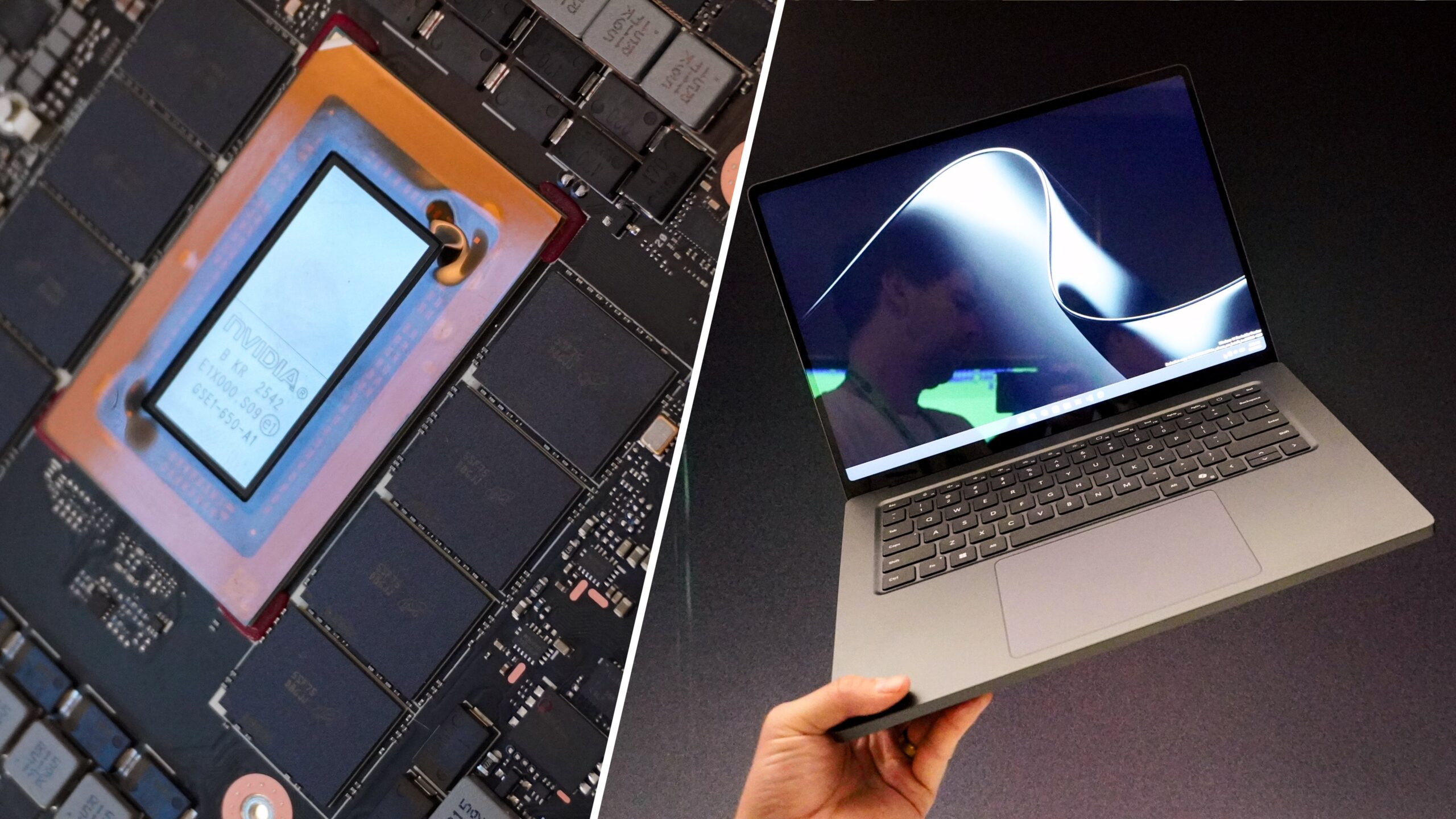
RTX Spark laptops are starting to look more capable than expected for gaming, based on early demos showing PRAGMATA and Alan Wake 2 running smoothly on Microsoft’s Surface Laptop Ultra. The short footage does not give a full performance breakdown, but it gives the first clearer sign that NVIDIA’s new ARM based RTX Spark platform can handle demanding modern games with the help of DLSS and Frame Generation.
NVIDIA introduced RTX Spark at Computex 2026 as a laptop platform built around strong AI performance, unified memory, and a Blackwell GPU. The company claimed the chip could run modern AAA games at 1440p and 100 FPS, but early hands on sessions mostly focused on hardware design and AI capability rather than proper gameplay demonstrations. That left one major question open: how well would these machines actually play games?
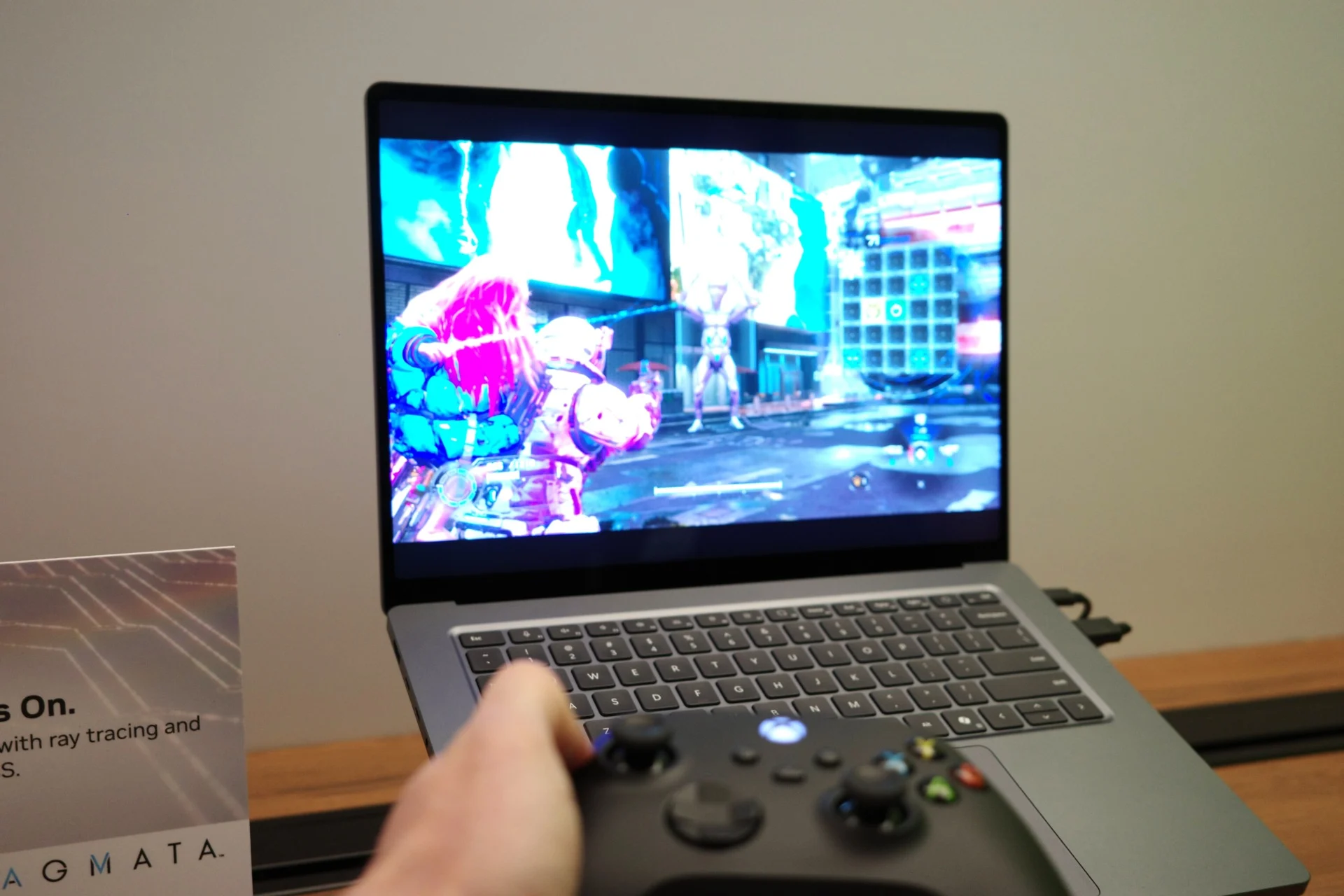
A clip shared by Geeky Vaidy now gives a better idea. The footage shows Microsoft’s Surface Laptop Ultra, which has a 110W TDP, running Capcom’s PRAGMATA and Remedy’s Alan Wake 2. There was no FPS counter visible, so exact performance cannot be confirmed from the clip alone. Still, both games appeared to run at a playable level of fluidity, which is notable because Alan Wake 2 remains one of the more demanding PC titles.
DLSS and Frame Generation appear to be central to RTX Spark gaming
The demos were shown with DLSS 4.5 Ray Reconstruction enabled, which suggests that ray tracing was active. It was not clear whether full path tracing was enabled, and that distinction matters because path tracing is much heavier on the GPU.
A follow up post confirmed that Frame Generation 2x and NVIDIA Reflex were also enabled. Reflex helps reduce latency, which is important because Frame Generation works best when the base frame rate is already solid. NVIDIA’s Blackwell GPU inside RTX Spark can support Multi Frame Generation up to 6x, but the demo was limited to 2x. That may have been done to keep latency lower or to maintain visual stability.
| RTX Spark demo detail | What it suggests |
|---|---|
| Games shown | PRAGMATA and Alan Wake 2 |
| Demo laptop | Microsoft Surface Laptop Ultra |
| TDP | 110W |
| Upscaling and reconstruction | DLSS 4.5 Ray Reconstruction |
| Frame Generation | 2x enabled |
| Latency feature | NVIDIA Reflex enabled |
| Higher power designs | ASUS models can reportedly reach 140W |
| Main takeaway | Playable AAA gaming looks possible with NVIDIA’s full software stack |
Unified memory could help avoid VRAM limits in modern games
One of RTX Spark’s biggest advantages is its memory design. These laptops use a large unified memory pool, which can help reduce traditional VRAM limitations. Modern games are increasingly memory hungry, especially at higher resolutions and with ray tracing enabled. Having more memory available to the GPU could make RTX Spark systems more flexible than laptops with smaller dedicated VRAM pools.
That said, raw performance still matters. A large memory pool does not automatically make a laptop faster, and demanding games still need enough GPU power, bandwidth, cooling, and software optimization. The Surface Laptop Ultra demo is encouraging, but it is not a substitute for full testing across many games.
The 110W Surface Laptop Ultra also may not represent the best RTX Spark can do. ASUS laptops with the same silicon are expected to support up to a 140W power limit. That higher TDP could deliver better frame rates, assuming the cooling system can sustain it.
RTX Spark still needs broader testing before firm conclusions
The early footage is a positive sign, especially for a first generation platform. RTX Spark appears capable of running demanding games when paired with DLSS, Ray Reconstruction, Frame Generation, and Reflex. That combination could make these laptops useful for people who want a machine that handles both AI work and gaming.
Still, there are open questions. Alan Wake 2 and PRAGMATA may have received specific optimization attention, so performance in less optimized titles remains unclear. Unreal Engine 5 games will be especially important to test because they can stress both CPU and GPU resources heavily.
For now, RTX Spark looks promising rather than proven. The demos show that NVIDIA’s ARM based laptop platform can run serious games with help from its software stack, but final judgment will depend on real benchmarks, native frame rates, latency tests, battery behavior, and performance across a wider game library.



Discussion (0)
Be the first to comment.