



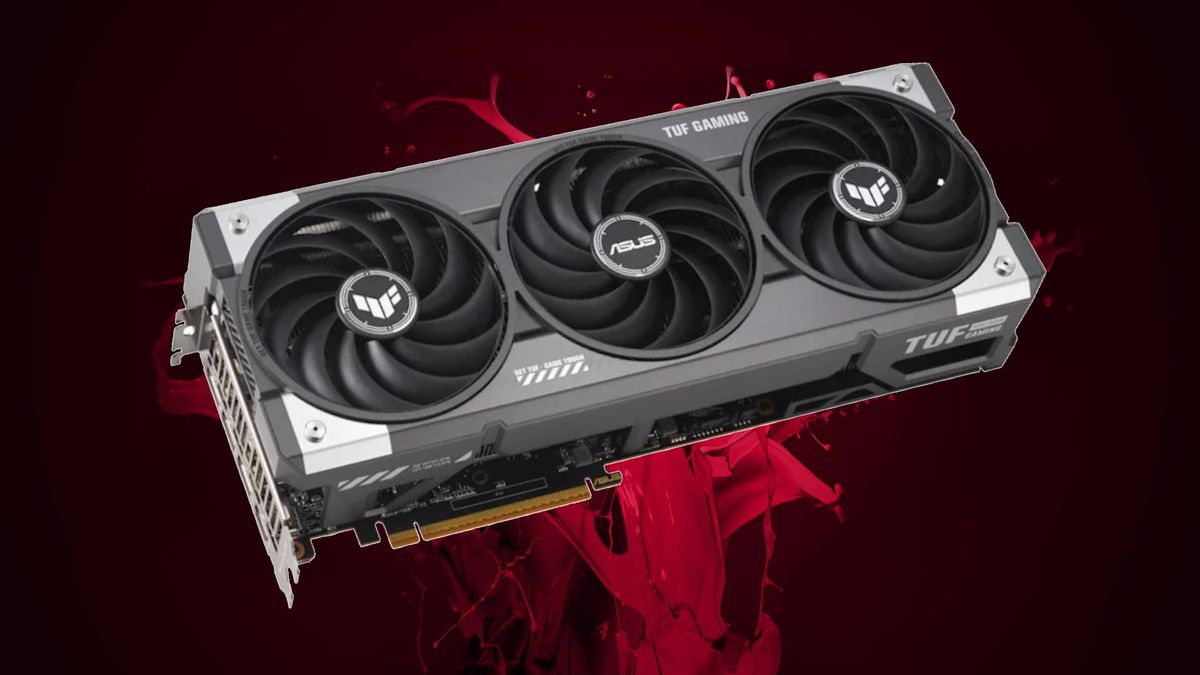
An RTX 4090 owner has sparked debate after claiming that AMD’s Radeon RX 9070 XT could be a better option for path tracing, while also criticizing DLSS image quality and NVIDIA Frame Generation latency.
The claim came from a Reddit post in which the owner said the RTX 4090 still feels technically capable but argued that DLSS appears blurry, Frame Generation adds too much lag, and the card’s 24GB of VRAM is unnecessary for their own use.
The same post suggested that the RX 9070 XT’s rasterization efficiency and FSR 4 support might allow it to challenge or even outperform the RTX 4090 in path tracing.
Those claims are difficult to assess properly because the post did not include the information needed for a controlled comparison.
RTX 4090 and RX 9070 XT claims at a glance
| Area | RTX 4090 claim | RX 9070 XT claim |
|---|---|---|
| Rasterization | Described as feeling dated by owner | Claimed to offer strong efficiency |
| Upscaling | DLSS described as blurry | FSR 4 viewed more favorably |
| Frame generation | Claimed to add too much latency | Not directly compared |
| VRAM | 24GB described as unnecessary for owner | Lower capacity not presented as concern |
| Path tracing | Owner suggested weaker value | Claimed it could potentially compete |
| Evidence provided | Limited | Limited |
The most important issue is that no benchmark methodology was included.
There was no monitor resolution, no render resolution, no DLSS or FSR quality preset, no base frame rate and no game specific performance data.
Without those details, the comparison cannot establish whether the image quality or latency complaints came from the GPU itself, the chosen settings or the conditions under which the games were being tested.
DLSS image quality depends heavily on render resolution
DLSS can produce noticeably different results depending on the selected quality mode.
At 4K output, for example, an aggressive Ultra Performance preset can render internally at a much lower resolution before reconstructing the final image.
That can create softer details or visible artifacts in some scenes.
More recent DLSS versions have improved reconstruction quality, but the selected preset and base resolution remain important.
A claim that DLSS simply looks blurry therefore needs more context before it can be treated as a general criticism of the technology.
The same applies to comparisons with AMD’s FSR.
Upscaling quality should ideally be compared using equivalent output resolutions, similar internal render targets and the same game scenes.
Frame Generation latency also depends on base performance
Frame Generation can increase displayed frame rates, but it does not replace the need for a sufficiently high base frame rate.
If a game is running at around 30 FPS before frame generation is enabled, generated frames may make motion look smoother while input response still reflects the lower native frame rate.
That can make latency easier to notice.
At a much higher base frame rate, the experience can be different.
Because the Reddit post did not disclose the original frame rate or game settings, it is impossible to know whether the reported latency came from Frame Generation itself or from using it at a low starting frame rate.
RTX 4090 remains a much higher class GPU
The RTX 4090 and RX 9070 XT are not positioned as direct equivalents.
The RTX 4090 was NVIDIA’s previous generation flagship gaming GPU and remains significantly more powerful in conventional rasterization workloads.
It also includes dedicated RT cores for ray tracing and Tensor cores used by technologies such as DLSS.
The RX 9070 XT is a newer AMD card with improved ray tracing and newer FSR support, but that does not automatically place it ahead of the RTX 4090 in path tracing.
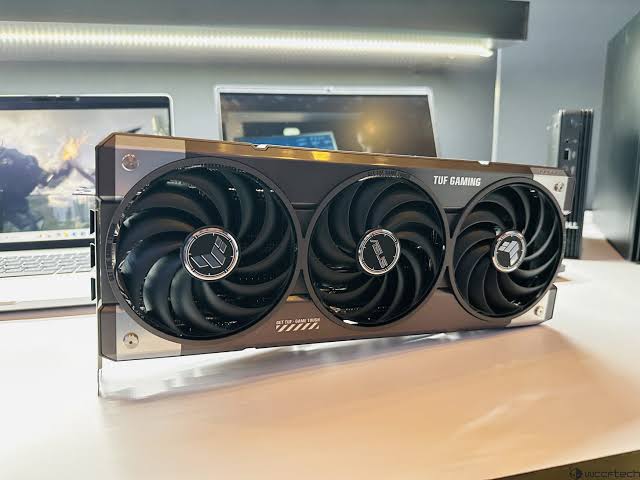
A proper comparison would require benchmark data from the same games at identical settings.
Without that evidence, the statement that the RX 9070 XT can beat the RTX 4090 in path tracing remains an unsupported opinion rather than a demonstrated result.
Personal preference can still affect the experience
There is also an important difference between performance measurements and personal preference.
Someone may genuinely dislike the visual appearance of a particular upscaling method or may be more sensitive to latency than another person.
That does not make the experience invalid.
However, subjective preference should not be treated as proof that one GPU is technically faster or more capable than another.
The same applies to VRAM.
A person who does not use workloads that need 24GB may see little personal value in that capacity, but the memory remains useful for high resolution gaming, heavy texture workloads, rendering and professional applications.
The Reddit post therefore raises legitimate topics around image quality, latency and value, but it does not provide enough evidence to show that the RX 9070 XT is actually superior to the RTX 4090 for path tracing.
Until controlled benchmarks support the claim, the comparison remains more provocative than conclusive.



Discussion (0)
Be the first to comment.