



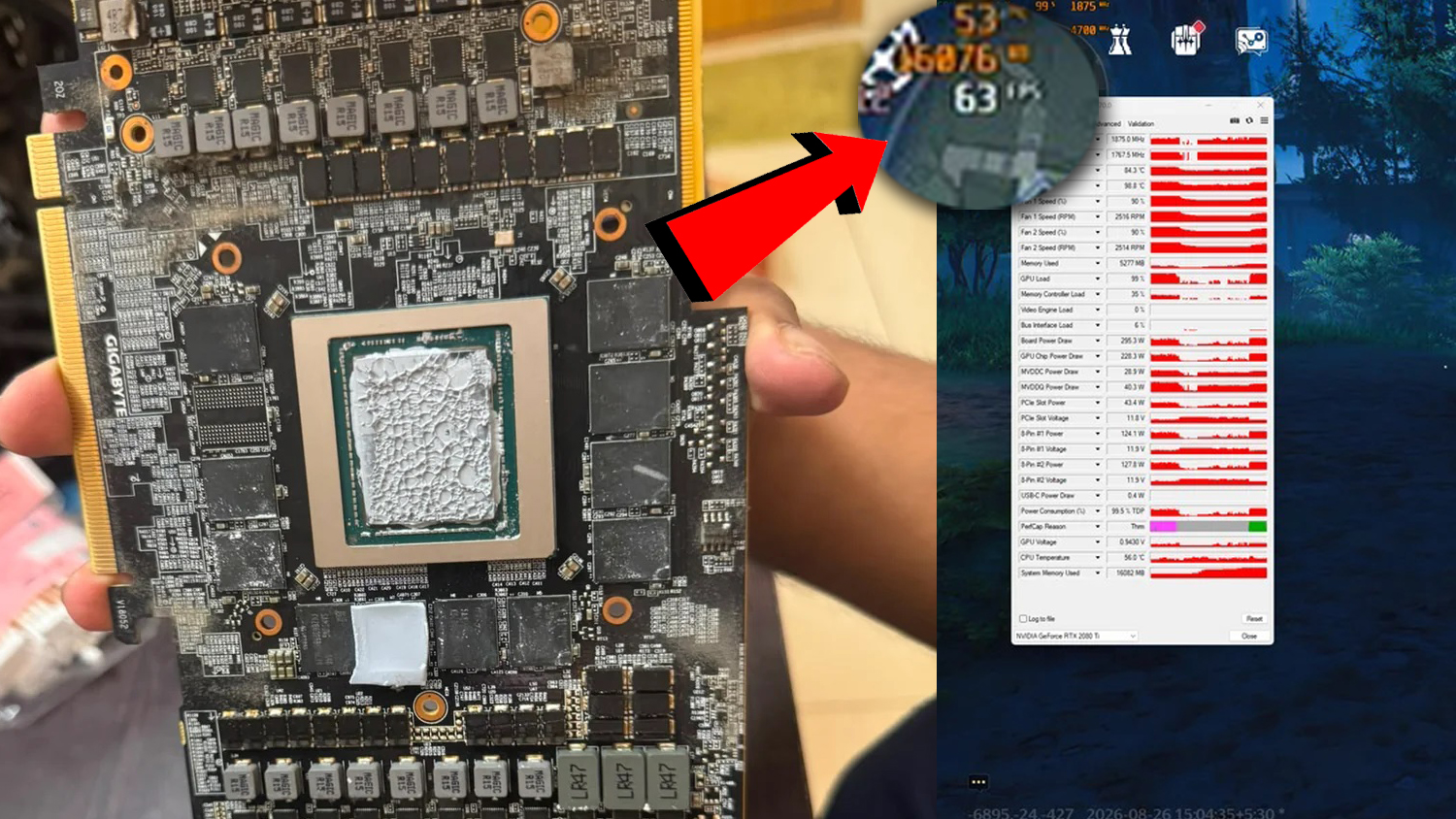
An aging GeForce RTX 2080 Ti reportedly recovered a large amount of lost performance after its owner replaced dried thermal paste, showing how severe thermal throttling can affect an older graphics card.
The card had been reaching a hotspot temperature of around 107°C under heavy load while the regular GPU temperature remained below 80°C. After the thermal paste was replaced, hotspot temperatures dropped by roughly 7°C to 10°C.
That temperature reduction was enough to produce a major performance improvement in the tests shared by the owner.
| Test | Before repaste | After repaste |
|---|---|---|
| Unigine Heaven 4.0 | Around 65 FPS | Around 106 FPS |
| Wuthering Waves | Around 25 to 30 FPS | Around 55 to 65 FPS |
| GPU hotspot temperature | Around 107°C | Around 97°C to 100°C |
Thermal throttling appears to have been the main problem
The RTX 2080 Ti had reportedly been used for several years before the issue became severe enough to investigate.
During benchmarks and gaming, the GPU hotspot temperature repeatedly climbed above 100°C when utilization approached 100 percent. That large difference between the hotspot reading and the average GPU temperature suggested that heat transfer between the GPU die and cooler was no longer working properly.
The owner opened the graphics card, removed the dried thermal compound and applied fresh Arctic MX7 paste.
The card still ran hot afterward, but the lower hotspot temperature reduced the amount of thermal throttling enough to restore much higher clock speeds and performance.
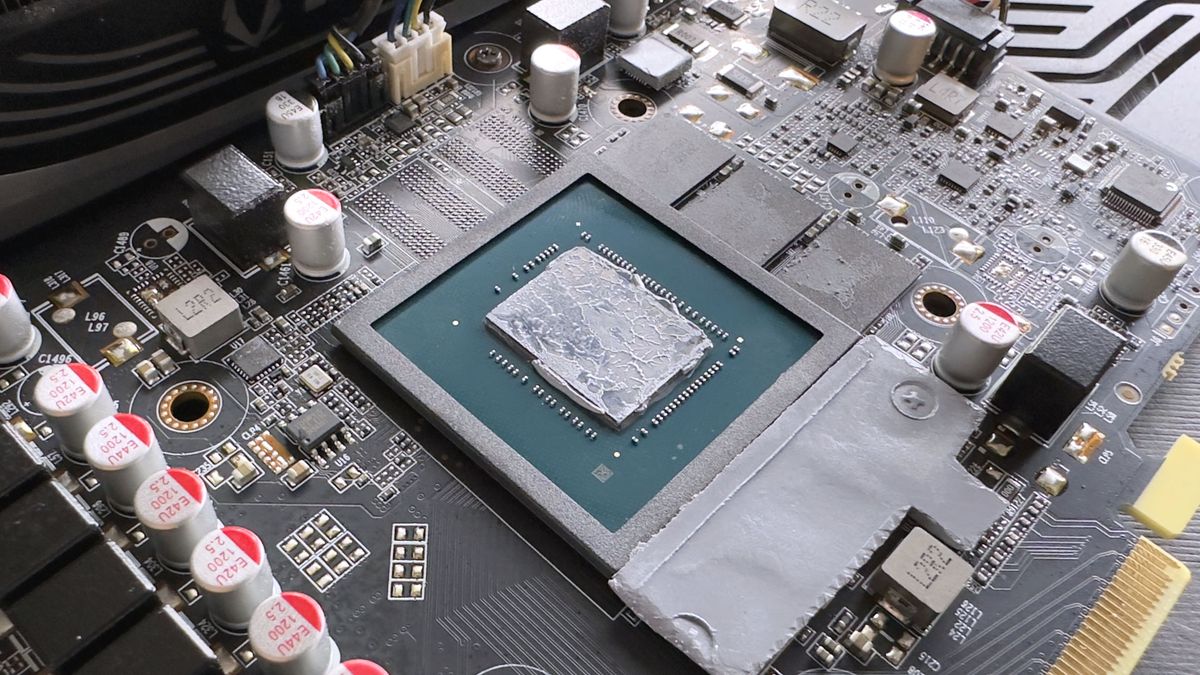
In Unigine Heaven 4.0, the frame rate increased from roughly 65 FPS to about 106 FPS. Wuthering Waves improved from around 25 to 30 FPS to approximately 55 to 65 FPS.
Those results come from one individual system and should not be treated as a typical performance gain for every older GPU. A repaste will only provide a major improvement if degraded thermal transfer is already causing serious throttling.
A repaste is not automatically necessary for every older GPU
Thermal paste can dry out or lose effectiveness over time, particularly after years of repeated heating and cooling cycles.
However, replacing it should not be treated as routine maintenance based only on the age of a graphics card. If temperatures, clock speeds and performance remain normal, opening the card may provide little benefit.
There are also risks. Disassembling a GPU can damage thermal pads, connectors or other components if done incorrectly, and warranty conditions can vary by manufacturer.
The more useful warning sign is an unusual hotspot temperature combined with falling clock speeds and poor performance under sustained load.
A hotspot temperature above 100°C can be concerning, but the number alone does not prove that every GPU is throttling. Different graphics architectures have different operating limits.
The case shows why hotspot readings matter
Average GPU temperature does not always reveal a cooling problem.
In this example, the reported core temperature remained below 80°C while the hotspot was almost 30°C higher. That difference helped expose a thermal transfer issue that was severely affecting performance.
For an older graphics card that has suddenly become much slower, checking hotspot temperature, clock speed and power behavior under load can help determine whether cooling degradation is responsible.
The RTX 2080 Ti example is unusually dramatic, but it demonstrates that a relatively small temperature improvement can make a large performance difference when a GPU is already operating deep inside its thermal throttling range.


Discussion (0)
Be the first to comment.