



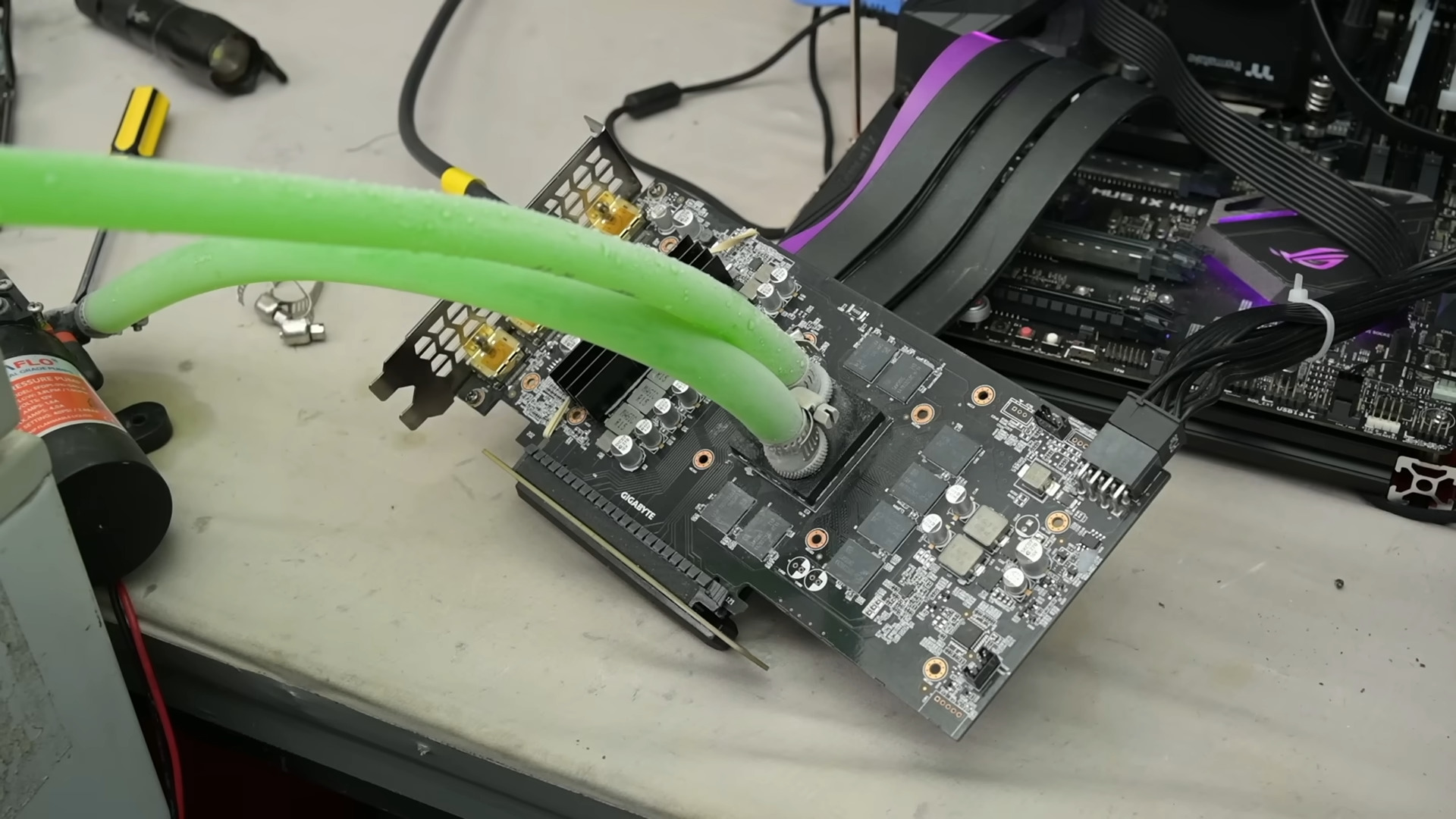
A hardware modder has demonstrated an unusual cooling experiment in which water was pumped directly onto the exposed silicon of an NVIDIA GeForce RTX 2060, reducing the GPU temperature from around 70°C to just 28°C.
The experiment bypassed a traditional heatsink, water block and thermal interface material. Instead, a custom enclosure directed water straight onto the GPU die while the graphics card was running.
The result was a substantial reduction in temperature, although the method carries a very high risk of permanently damaging the graphics card if any liquid reaches the surrounding electrical components.
This is therefore an experimental cooling project rather than a practical alternative to conventional GPU cooling.
RTX 2060 cooling results
| Cooling method | GPU temperature | Hotspot temperature |
|---|---|---|
| Stock RTX 2060 cooler | Around 70°C | Not stated |
| 360mm liquid cooler | Around 36°C | Not stated |
| Direct water on silicon | Around 28°C | Around 41°C |
Before using the RTX 2060, the modder first tested the idea on a nonfunctional RTX 3060.
A custom plastic enclosure was created using a 3D printer and installed around the GPU die. Epoxy was then applied around the substrate to prevent water from reaching sensitive areas of the graphics card.
Several early attempts developed leaks, including water escaping through parts of the printed enclosure. The design was gradually improved until it could contain the water reliably enough for further testing.
A GeForce GTX 980 was also used during development before the project moved to the functioning RTX 2060.
Direct cooling removes several thermal barriers
The RTX 2060 initially reached around 70°C while running the Unigine Heaven benchmark with its normal heatsink.
The modder also attached a 360mm liquid cooler, which reduced the GPU temperature to approximately 36°C.
Direct water cooling produced an even lower result.
With water circulating directly across the exposed GPU silicon, the main temperature reading dropped to 28°C while the hotspot reached around 41°C.
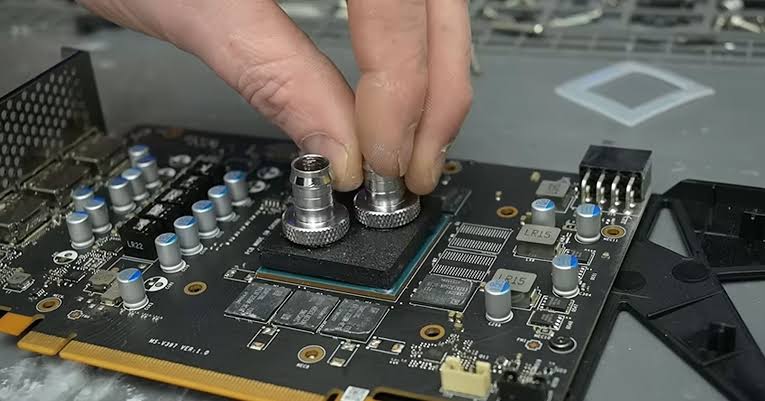
The large reduction makes sense from a thermal perspective. Conventional GPU coolers have several layers between the silicon and cooling fluid or air. Heat normally travels through thermal paste, a heatsink or water block, and then into the cooling medium.
Direct cooling removes several of those interfaces and allows the liquid to absorb heat much closer to its source.
That does not make the approach suitable for normal PCs.
The risk of hardware damage is extremely high
Water and exposed electronics are an unsafe combination unless the system has been specifically designed to isolate the liquid.
Even a small leak around the GPU package could reach the PCB and cause a short circuit. Long term exposure could also create corrosion or other reliability issues depending on the liquid and materials involved.
The custom enclosure also has to maintain a reliable seal while dealing with heat, pressure and continuous water flow.
For those reasons, conventional liquid cooling systems use sealed water blocks rather than allowing coolant to contact the silicon directly.
The same experiment was later attempted with an Intel Core i5 7600K processor. In that case, direct water cooling did not outperform the more conventional liquid cooling setup.
The RTX 2060 result nevertheless shows how much temperature can be reduced when thermal resistance between the chip and coolant is minimized.
Dropping from about 70°C with the stock cooler to 28°C is an impressive technical result, but it comes with risks that make the method unsuitable for everyday systems. A properly designed air cooler, GPU water block or AIO remains a much safer way to control graphics card temperatures.


Discussion (0)
Be the first to comment.