



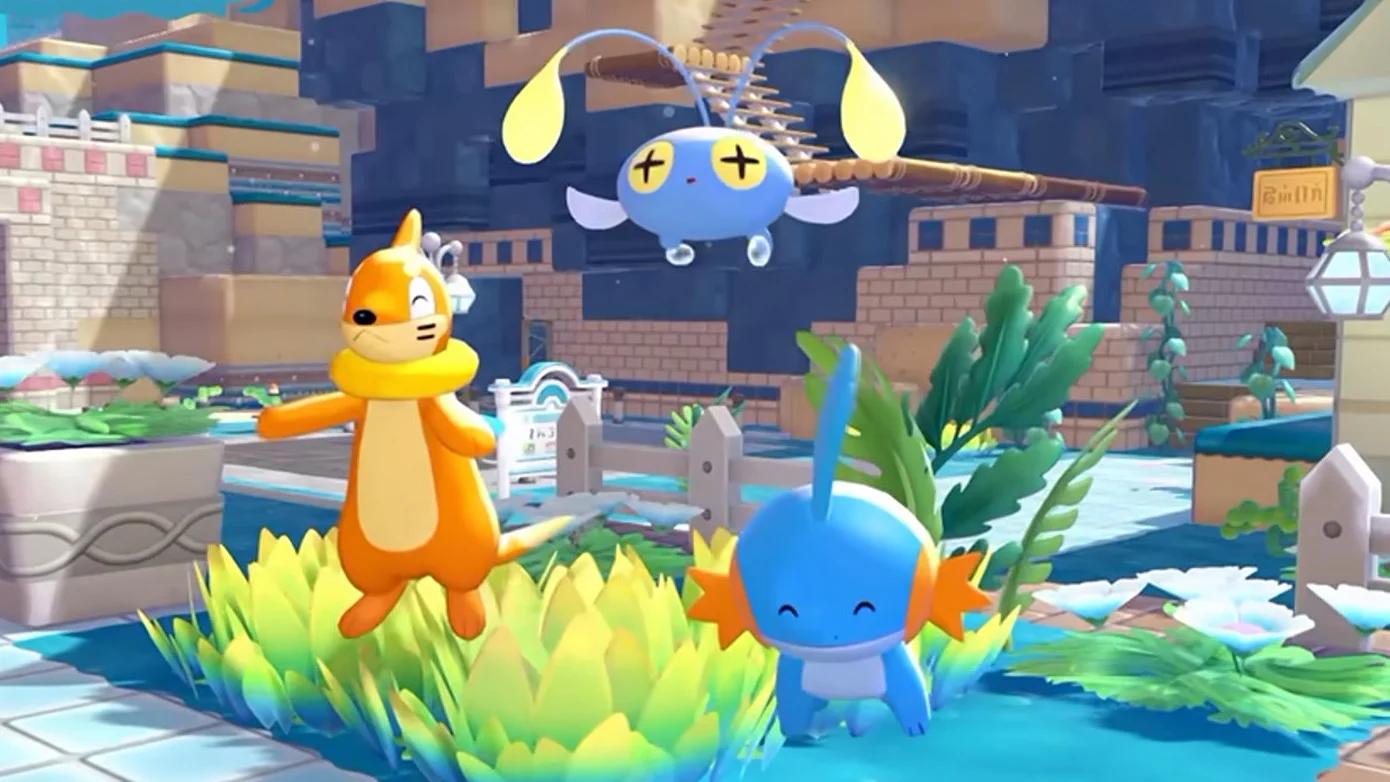
Pokémon Pokopia has received its first major paid expansion with Bubbly Basin, alongside a free version 2.0 update that adds underwater exploration and several quality of life improvements.
Bubbly Basin is the first of three planned content waves included in the $35 Pokémon Pokopia Expansion Pass. The new area centers on a large flooded region built around the ruins of Cerulean City, with new aquatic Pokémon, building mechanics and additional story material.
The free 2.0 update also gives every player access to underwater diving, even without purchasing the Expansion Pass.
Pokémon Pokopia Bubbly Basin details
| Feature | Detail |
|---|---|
| DLC | Bubbly Basin |
| Expansion Pass price | $35 |
| Content wave | Part 1 of 3 |
| Main setting | Flooded Cerulean City region |
| Underwater exploration | Included |
| New Pokémon | Aquatic species available to befriend |
| New building mechanic | Buoyant blocks and floating structures |
| Free update | Version 2.0 |
| DLC access requirement | Environment Level 5 on Bleak Beach |
Underwater exploration is available to everyone
The biggest free addition in version 2.0 is the ability to dive underwater.
Movement takes place in three dimensional space, but the game keeps the system relatively simple. You can still move around and build underwater without having to manage an oxygen meter or complicated physics.
Existing regions do not contain a large amount of underwater content, but the mechanic becomes much more important once Bubbly Basin is unlocked.
Players who own the Expansion Pass need to reach Environment Level 5 on Bleak Beach before gaining access to the new region.
Bubbly Basin is one of the game’s largest areas
Bubbly Basin is presented as a substantial new sandbox rather than a small side location.
Its central area contains the flooded ruins of Cerulean City, surrounded by block based wilderness and habitats designed around aquatic Pokémon.
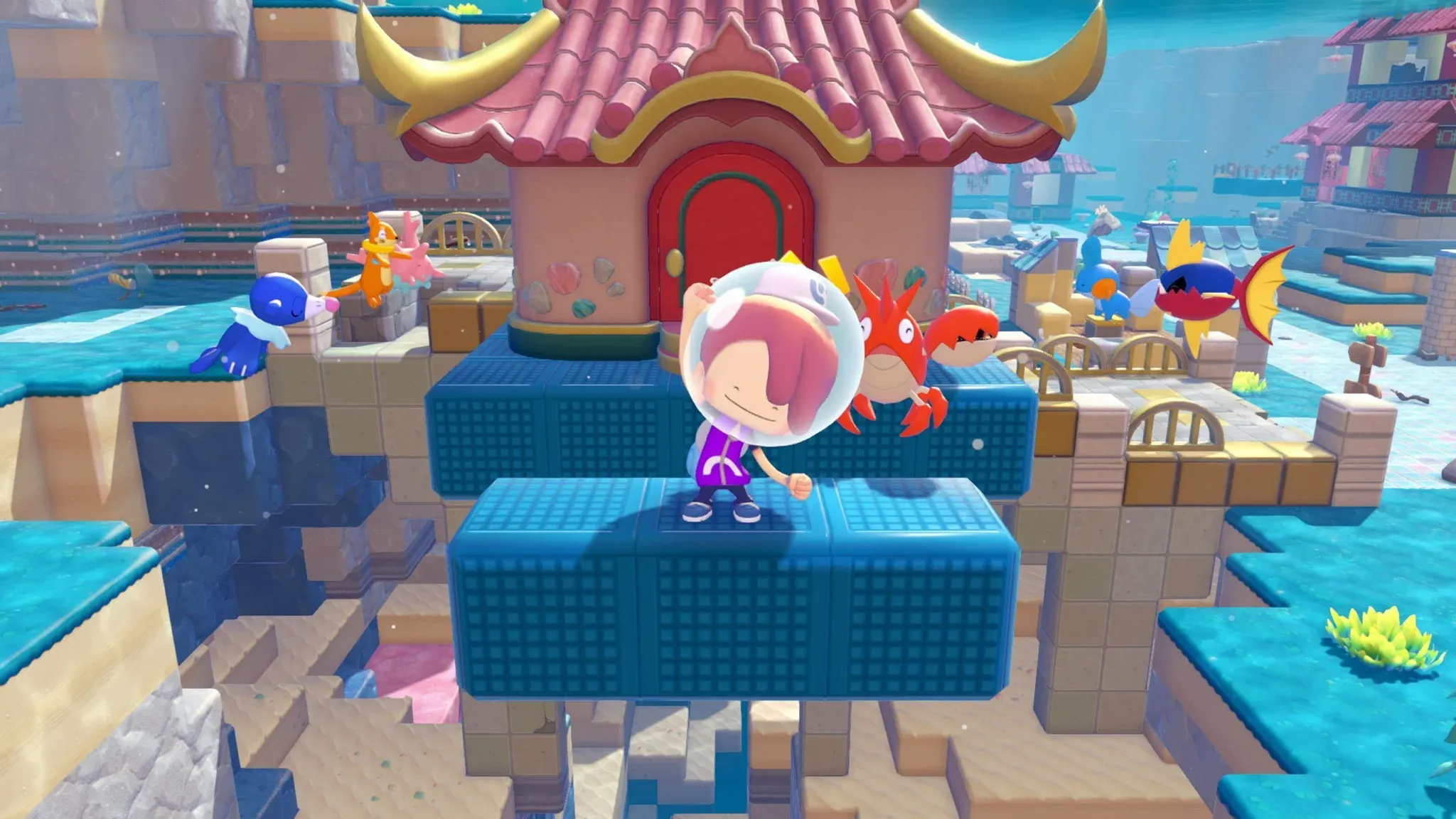
The map is also vertically layered.
You can explore the main underwater region, travel above the surface to several small islands and descend into darker areas beneath the basin.
Those deeper sections can be illuminated using lights, wires and other electrical equipment.
The region also contains new documents expanding the game’s environmental backstory.
Floating construction adds more building options
The underwater setting changes some of the rules around construction.
Certain structures naturally float, including a shark shaped submarine house that appears during the Bubbly Basin quest line.
New buoyant blocks also allow players to suspend creations at different points in the water instead of keeping everything attached to the ground.
That gives builders more freedom to create vertical and floating designs that were not possible in the original regions.
Version 2.0 improves inventory and construction systems
The free update adds more than swimming.
Version 2.0 introduces additional building options and several inventory improvements.
One notable change allows a limited number of items to be shared between different regions.
That should make moving materials and managing multiple areas easier, especially for players who spend a large amount of time building across the game’s different sandboxes.
Bubbly Basin expands rather than changes the core formula
The DLC does not significantly redesign Pokémon Pokopia’s overall structure.
Instead, it adds another large region built around the same exploration, construction and Pokémon befriending systems that define the base game.
The underwater setting gives those mechanics a different context, while the free update improves several systems across the entire game.
Pokémon Pokopia has already sold more than 4 million copies, and Bubbly Basin represents the beginning of a wider post launch plan.
With two more content waves still expected through the Expansion Pass, the first DLC suggests Nintendo intends to support the game with substantial new regions rather than smaller isolated additions.



Discussion (0)
Be the first to comment.