



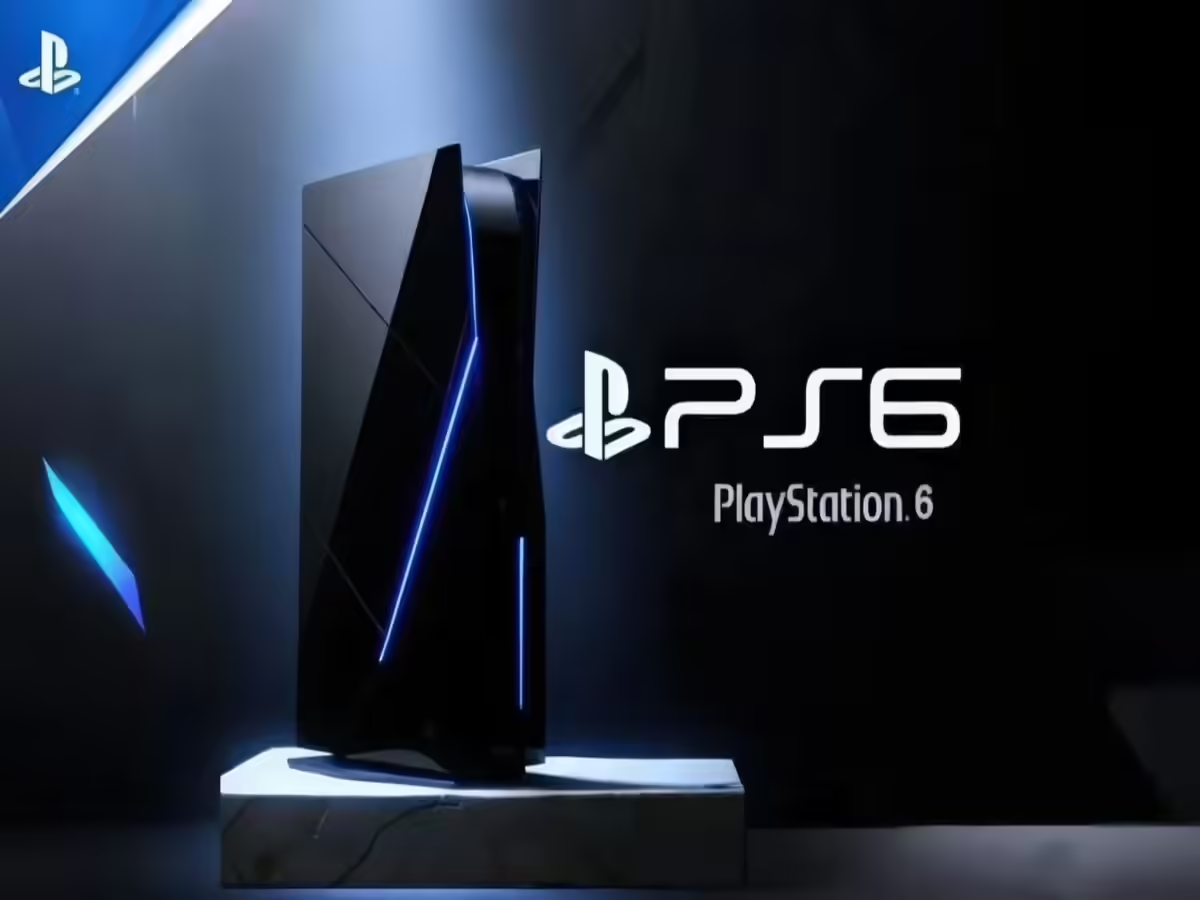
The PlayStation 6 could launch at a far higher price than previous Sony consoles, with a new rumor claiming its current component cost is approaching $1,000. Rising prices for memory, storage, and other hardware parts are reportedly pushing Sony closer to a difficult decision: absorb major losses on each console or sell the next PlayStation at a price that could discourage many buyers.
The report remains unconfirmed, and Sony has not announced the PlayStation 6, its specifications, price, or release window. However, the wider concern is becoming easier to understand as memory shortages and component inflation affect PCs, smartphones, consoles, and other consumer devices.
A PlayStation 6 priced near $999 would be a major shift for the console market. Sony has previously launched premium hardware at high prices, but no mainstream PlayStation home console has entered the market at four figures.
Reportedly Higher Component Costs Could Change Console Pricing
Earlier rumors suggested the PlayStation 6 bill of materials was around $760. New claims now suggest that figure may have increased by roughly $200 in only a few months, bringing the estimated hardware cost close to the $1,000 mark.
A bill of materials includes the cost of components such as the processor, graphics hardware, memory, storage, cooling, circuit boards, power supply, ports, and internal assembly. It does not include marketing, shipping, retail margins, software development, warranty costs, or long term support.
| Possible pricing factor | Why it matters |
|---|---|
| Higher DRAM prices | Memory is becoming more expensive due to supply pressure |
| Rising storage costs | SSD and NAND prices can increase console manufacturing costs |
| Advanced chip design | A newer AMD processor and graphics system would be costly |
| Cooling requirements | More powerful hardware may need larger cooling systems |
| Sony subsidy decision | Selling below cost could reduce the launch price |
| Digital-only model | Removing the disc drive could lower the retail price |
Sony could choose to sell the PlayStation 6 at a loss during its first years, as console makers have often done in the past. However, that becomes much harder when component costs are already close to the expected retail price.
A digital-only PlayStation 6 could be one possible way to reduce the entry price. Removing the disc drive would lower manufacturing costs and give Sony more control over game sales through its digital storefront.
Delaying the Console May Not Solve the Problem
The report suggests that delaying the PlayStation 6 may not make financial sense. If memory and storage prices continue rising, waiting could make the console even more expensive to manufacture.
On the other hand, if component costs stabilize or begin falling, Sony may have little reason to delay the launch. That means the company may still move forward with its existing plans despite the difficult market conditions.
This creates a difficult situation for Sony and Microsoft. Both companies will need to balance higher performance expectations with the need to keep console gaming accessible.
The current generation already shows how expensive hardware has become. PlayStation 5 Pro, high end gaming PCs, and premium handheld systems have pushed many buyers toward higher price points. A $1,000 PlayStation 6 would take that trend further.
The PS3 Shows Why Sony Must Be Careful
Sony has experience with expensive console launches. The PlayStation 3 launched at up to $599 in 2006, a price that became one of the biggest talking points of that generation.
The system later recovered through price cuts, strong games, and improved consumer interest, but its high launch cost hurt early momentum. A $999 PlayStation 6 would face an even tougher challenge, especially when many players already own capable PlayStation 5 consoles.
Sony may need to offer a lower priced model, a digital version, financing options, or a more gradual hardware rollout to avoid limiting its audience.
For now, the PlayStation 6 price discussion is based on rumor rather than official information. Still, it reflects a growing concern across the gaming industry: next generation performance may come with a much higher cost than players expect.



Discussion (0)
Be the first to comment.