



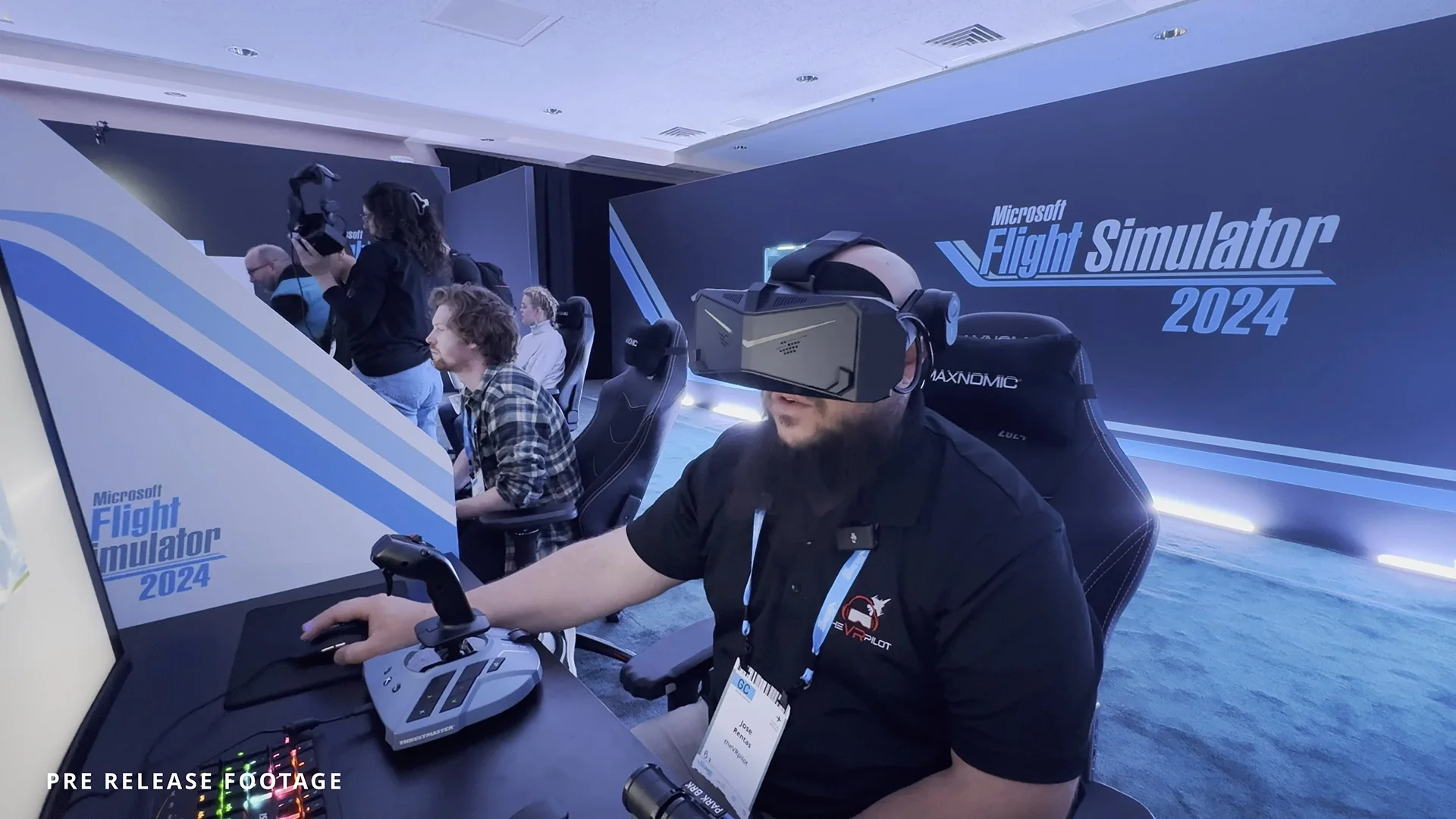
Pimax Dream Air may be one of the most comfortable high end VR headsets for Microsoft Flight Simulator 2024 and serious sim racing, thanks to its extremely light design, sharp Micro OLED display, and PC focused hardware. It is not a budget headset, but for players who spend long sessions flying or racing in VR, its comfort and image quality could make the price easier to justify.
The headset was shown at the Sim Racing Expo in Charlotte, where its small size and low weight stood out immediately. VR has improved a lot over the years, but many headsets still become tiring after long sessions because of their bulk. That matters for games like Microsoft Flight Simulator 2024 and iRacing, where players may stay inside VR for an hour or more.
The Pimax Dream Air appears to solve one of VR’s biggest practical problems by making the headset feel less like heavy hardware strapped to your face.
Why the low weight matters so much
The Pimax Dream Air weighs around 170g, which is far lighter than mainstream standalone headsets like the Meta Quest 3. The Dream Air SE is even lighter at under 140g.
That difference may sound like a spec sheet detail, but it changes the whole experience. Heavy headsets can cause neck strain, face pressure, and general fatigue. A lighter headset makes longer VR sessions more realistic, especially for seated experiences.
| Headset | Approximate weight |
|---|---|
| Pimax Dream Air | Under 170g |
| Pimax Dream Air SE | Under 140g |
| Meta Quest 3 | Around 515g |
| Meta Quest 3S | Slightly below Quest 3 |
The Pimax headset can be this light because it is a tethered PC VR device. It does not need to carry all the standalone computing hardware found inside a Quest headset.
The display is built for flight sims and racing
The full Pimax Dream Air uses dual Sony Micro OLED displays with a combined 8K class resolution. Each eye gets 3840 x 3552 resolution, with 90Hz refresh rate, 53 pixels per degree, and a 110 degree horizontal field of view.
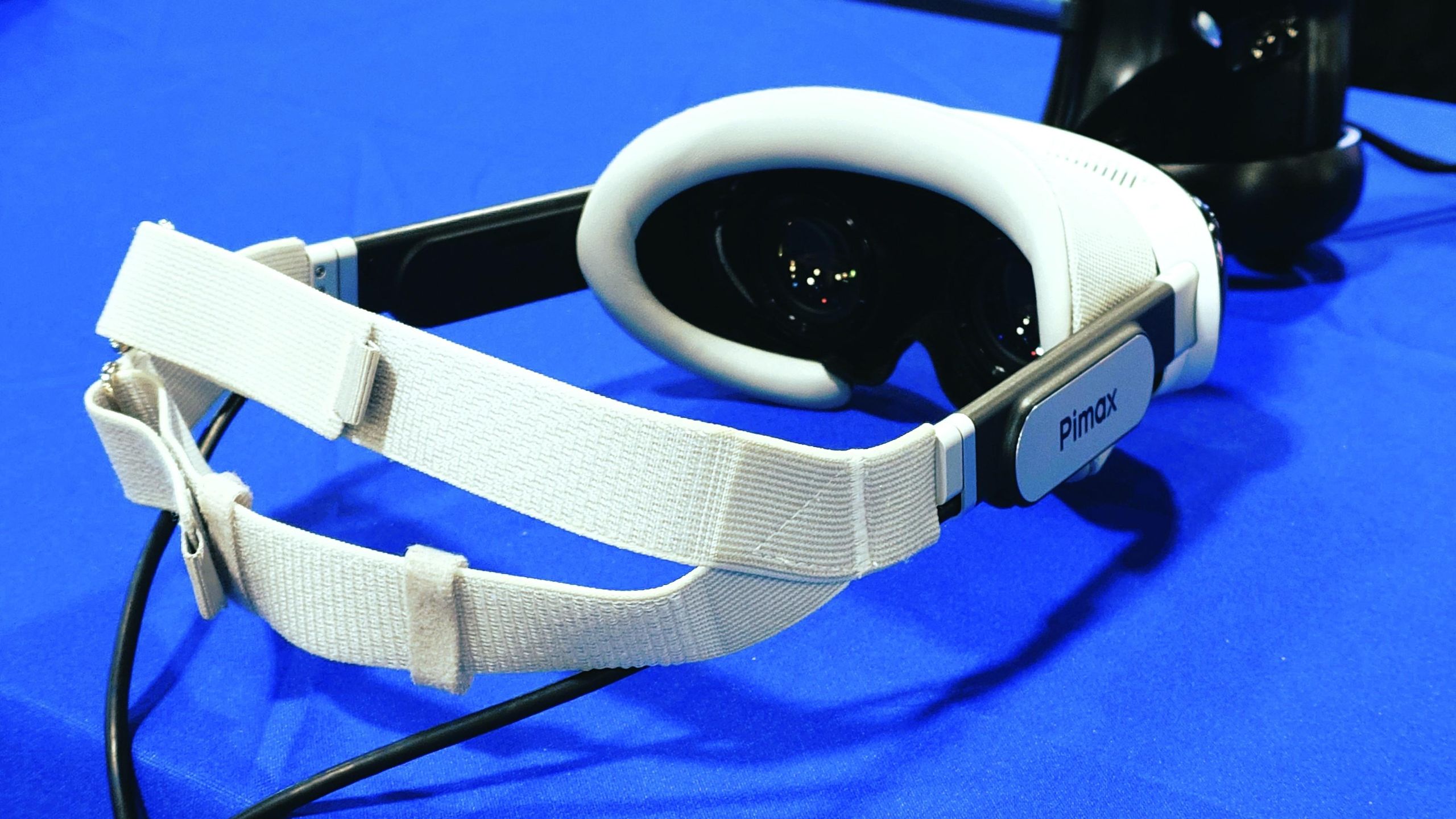
That kind of clarity is especially useful in simulation games. In Microsoft Flight Simulator 2024, cockpit instruments, terrain details, runway lights, and distant scenery all benefit from higher resolution. In racing games, sharper visuals help with braking points, track detail, mirrors, and depth perception.
The Dream Air SE lowers the resolution to 2560 x 2560 per eye, but also lowers the price and weight. That could make it the more practical choice for players who want a lighter and cheaper version without giving up the core design.
Eye tracking helps performance
Both Dream Air models include eye tracking and Dynamic Foveated Rendering. This system tracks where your eyes are looking and renders that area at the highest quality while reducing detail in areas outside your focus.
That can help preserve performance in demanding games. Microsoft Flight Simulator 2024 is already heavy on PC hardware, and VR increases that load. Dynamic Foveated Rendering could help players get a better balance between sharp visuals and smoother frame rates.
Pimax says the minimum GPU requirement is an RTX 2070, while an RTX 3080 is recommended. That means the headset does not require the absolute newest graphics card, though serious flight sim and racing players will still benefit from stronger hardware.
Dream Air vs Dream Air SE
The two versions target different buyers. The standard Dream Air is the premium model with 8K class resolution and the highest image quality. The Dream Air SE is lighter, cheaper, and still uses Micro OLED displays.
| Feature | Pimax Dream Air | Pimax Dream Air SE |
|---|---|---|
| Display | Dual Sony Micro OLED | Dual Sony Micro OLED |
| Resolution per eye | 3840 x 3552 | 2560 x 2560 |
| Combined resolution | 7680 x 3552 | 5120 x 2560 |
| Refresh rate | 90Hz | 90Hz |
| Field of view | 110 degrees | 105 degrees |
| Weight | Under 170g | Under 140g |
| Eye tracking | Yes | Yes |
| Connection | DisplayPort 1.4 | DisplayPort 1.4 |
| Starting price | $1,999 | $899 |
Both models can use inside out SLAM tracking or external Lighthouse tracking. The Lighthouse version costs less, while the SLAM version with controllers costs more.
The price is the biggest barrier
The Pimax Dream Air is clearly not for casual VR buyers. The standard model starts at $1,999 with Lighthouse tracking and $2,299 with SLAM tracking and controllers. The Dream Air SE starts at $899 or $1,199 depending on the tracking option.
That puts the Dream Air well above mainstream headsets like the Meta Quest 3S. If you only want to try VR casually or play wireless standalone games, a cheaper headset makes more sense.
But the Dream Air is not trying to be that kind of product. It is aimed at PC VR players who want comfort, sharp visuals, and a headset built for long sessions.
Why it could work well for Microsoft Flight Simulator 2024
Microsoft Flight Simulator 2024 is one of the clearest use cases for this headset. Flight sim players often sit for long periods, focus on cockpit readability, and need strong immersion. A lighter headset with high resolution solves several problems at once.
The same logic applies to sim racing. Games like iRacing, Assetto Corsa, and other racing sims benefit from VR because depth perception and head tracking can make driving feel more natural. But long races can become uncomfortable with heavier headsets.
A headset this light could make VR more practical for endurance racing, longer flights, and serious simulation setups.
A promising headset for a specific audience
Pimax Dream Air looks like a strong option for players who already know they want premium PC VR. Its biggest strengths are comfort, weight, display quality, and features built for demanding simulation games.
It is expensive, and availability remains unclear because preorders are open without a firm shipping window. That means it is not a simple recommendation for everyone.
For Microsoft Flight Simulator 2024 players and sim racers who have struggled with heavy VR headsets, though, the Dream Air could be one of the most interesting VR devices of the year. It may not be the cheapest way into VR, but it could be one of the first headsets that makes long PC VR sessions feel genuinely comfortable.



Discussion (0)
Be the first to comment.