



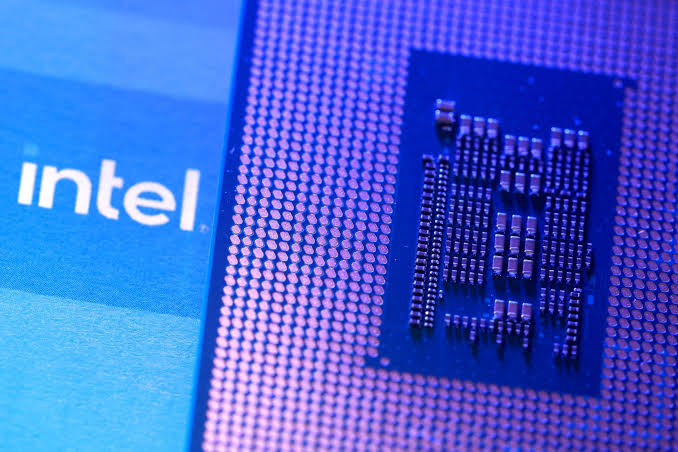
Intel CEO Lip Bu Tan says the semiconductor industry is not expanding fast enough to keep up with AI demand, and he believes the pressure is creating bottlenecks across memory, chip production, power, and even helium supply. His comments came while discussing Intel’s work with Elon Musk on the Terafab project, which is expected to rely on Intel’s future 14A manufacturing process.
Tan said he and Musk share the view that semiconductor infrastructure is falling behind the rapid growth of artificial intelligence. The issue is not only about making more chips. It also involves capacity, productivity, efficiency, power access, memory supply, and the materials needed to keep fabs running.
His comments add another warning sign for the chip industry as AI demand continues to reshape the market.
Elon Musk’s Terafab plan needs a huge chip supply
Musk’s Terafab project is expected to support his wider plans across electric vehicles, robotics, and future data center ambitions. Those areas require massive amounts of compute power, and that means more advanced chips.
Intel is expected to manufacture chips for the project using its 14A process technology. That makes the partnership important for both sides. Musk needs dependable chip capacity, while Intel needs major customers to prove its foundry strategy can compete at the highest level.
Tan praised Musk’s approach to problem solving, saying he questions every step of a process and challenges traditional ways of doing things. That style has long been associated with Musk’s first principles approach, where a problem is broken down into its basic parts before a new solution is built.
Tan says AI demand is bigger than current infrastructure
The key point from Tan’s comments is that AI growth is moving faster than the semiconductor supply chain can support. AI models need huge numbers of GPUs, CPUs, memory chips, networking parts, and advanced packaging.
That demand has already pushed parts of the industry into shortage conditions. Memory is the most visible problem, but Tan said the pressure is broader than that.
| Supply chain issue | Why it matters |
|---|---|
| Memory shortage | AI systems need large amounts of high speed memory |
| Power limits | Data centers require huge electricity capacity |
| Fab capacity | New semiconductor fabs take years to build |
| CPU and GPU demand | AI growth increases demand for compute chips |
| Helium supply | Used in key chip manufacturing steps |
| Higher costs | Suppliers may pass rising costs to customers |
The challenge is time. Even if companies invest heavily today, new capacity does not appear instantly. Building or expanding fabs can take years.
Memory is still the biggest shortage
Tan said memory is currently the biggest shortage, with companies scrambling to secure supply. That is not surprising because AI servers require large amounts of advanced memory, including high bandwidth memory for accelerators and DRAM for broader system needs.

When demand rises this quickly, pricing usually follows. Tan said costs are increasing and those costs may have to be passed on to customers.
This could affect more than just AI hardware buyers. If memory supply remains tight, prices for PCs, servers, consumer electronics, and gaming devices may also face pressure.
Helium could become another overlooked bottleneck
One of Tan’s more interesting warnings involved helium. While many people focus on chips and memory, helium is also used in semiconductor manufacturing. It plays a role in processes such as vapor deposition and cooling during etching.
That makes helium a quiet but important part of the semiconductor supply chain. If demand for chip production rises sharply, pressure on supporting materials can become a serious problem.
This is the kind of bottleneck that does not always get attention until it starts slowing production or increasing costs.
AI is also changing how chips are designed and made
Tan also said AI is changing the business landscape and could have a bigger impact than the internet. He pointed to efficiency gains in areas such as semiconductor design, where AI can help reduce time and cost.
That means AI is both the cause of the supply crunch and part of the solution. It increases demand for chips, but it may also help chipmakers design faster, improve manufacturing workflows, and reduce waste.
The same cycle is already visible across the industry. Companies are using AI to improve chip design, fab operations, and software development, while also needing more chips to support those AI systems.
Intel needs this moment to go right
Tan’s remarks come at an important time for Intel. The company is trying to rebuild its position in advanced manufacturing and convince major customers that its foundry business can deliver.
Working with Musk on a major chip project could help Intel prove that its future process technology has real demand. But the broader supply chain problems also show how difficult the next phase of semiconductor growth will be.
AI has created a new race for chips, power, memory, and manufacturing materials. Intel wants to be one of the companies that benefits from that demand, but it also has to navigate the same shortages and cost pressures affecting the rest of the industry.
Tan’s warning is clear: AI growth is no longer just a software story. It is now a full supply chain challenge, and the companies that solve capacity, memory, power, and materials constraints will shape the next phase of the chip market.



Discussion (0)
Be the first to comment.