



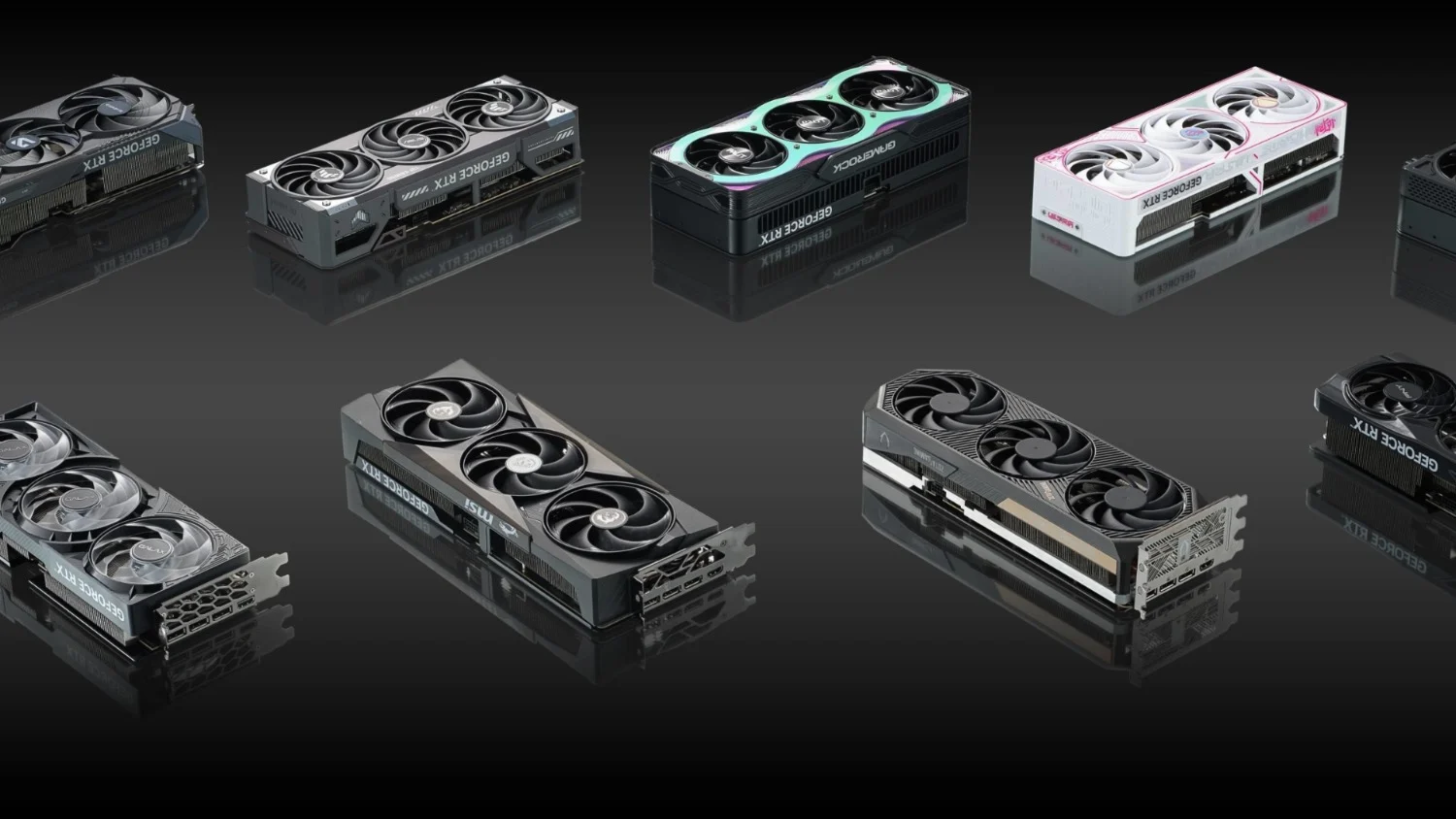
Nvidia has patented an AI based chatbot system designed to help game developers identify and address performance problems using plain English requests.
The concept could eventually allow developers to interact with optimization tools conversationally instead of manually digging through large amounts of performance data. A developer could potentially describe a problem, ask the system to investigate it, and receive guidance about areas of a game that may need optimization.
The supplied material does not include the full patent details, so there is no confirmation that Nvidia plans to turn the concept into a commercial product.
| Detail | Information available |
|---|---|
| Company | Nvidia |
| Technology | AI chatbot for game optimization |
| Intended audience | Game developers |
| Interaction method | Plain English requests |
| Main goal | Simplify performance analysis and optimization |
| Patent status | Patent disclosed |
| Commercial release | Not confirmed |
| Availability date | Not provided |
AI could simplify game performance analysis
Game optimization typically involves examining performance metrics, graphics workloads, frame times, memory behavior, and other technical information.
Nvidia's patented concept appears intended to make some of that work easier by placing an AI driven conversational layer over development and optimization tools.
Instead of requiring developers to manually interpret every metric, the chatbot could potentially respond to natural language questions about a game's performance.
That could make complex optimization systems more accessible and reduce the amount of time required to locate performance bottlenecks.
The supplied source describes the system as one that could help developers optimize games through requests written in plain English.
Developers could get help without navigating complex tools
The potential advantage of a chatbot interface is that developers would not necessarily need to know exactly where to look before beginning an investigation.
For example, a developer experiencing poor performance in a particular scene could theoretically describe the issue rather than manually checking every possible graphics or CPU related subsystem.
The AI system could then help narrow down the problem and provide information relevant to optimization.
However, the supplied material does not provide examples of specific prompts or explain exactly which development tools the chatbot could control.
It also does not confirm whether the system would automatically make changes to a game or simply provide recommendations.
Nvidia's idea could reduce development workload
If implemented effectively, a system like this could reduce some of the repetitive work involved in optimizing PC games.
Modern games must run across a wide range of processors, GPUs, memory configurations, resolutions, and graphics settings.
Finding performance problems across all of those combinations can require considerable engineering time.
An AI assistant capable of understanding performance data and responding to natural language requests could potentially speed up that process.
That could be especially useful late in development when teams are trying to identify bottlenecks before release.
Better optimization could benefit players
The potential benefits would not be limited to developers.
More efficient optimization tools could eventually lead to games arriving with fewer performance problems or requiring less time to reach acceptable frame rates across different hardware configurations.
The source suggests the technology could help games run better when they reach consumers.
That remains a possible outcome rather than a confirmed result, since the material does not include evidence from a working commercial implementation.
A patent also does not guarantee that Nvidia will release the technology.
Companies regularly patent concepts that never become public products.
Details about the system remain limited
The supplied article excerpt provides only the headline and basic description of Nvidia's patent.
It does not explain which AI model would power the chatbot, whether processing would happen locally or in the cloud, or how the system would integrate with existing development environments.
There are also no details about supported game engines, APIs, hardware requirements, licensing, or release timing.
The material therefore supports only the broader concept: Nvidia has patented an AI chatbot intended to make PC game optimization easier through natural language interaction.
If Nvidia develops the idea further, it could become another tool for simplifying increasingly complex graphics and performance analysis. For now, it remains a patented concept rather than an announced developer product.

Discussion (0)
Be the first to comment.