



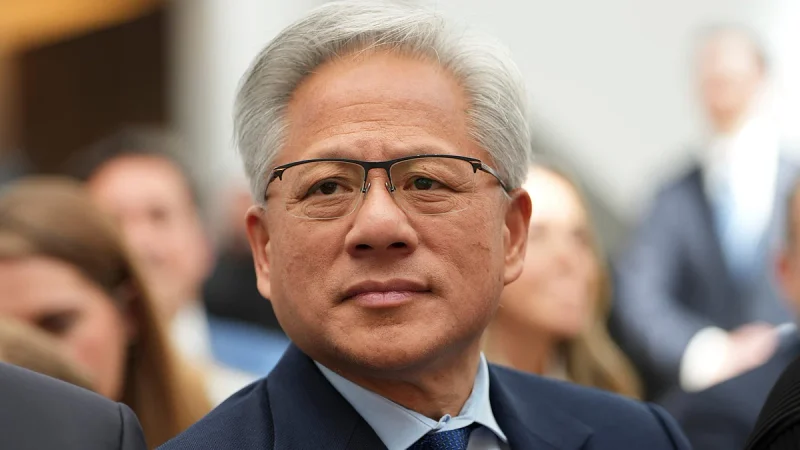
NVIDIA cofounder Jensen Huang has resigned as chief executive officer, ending his 33 years of leadership at the company during a period of growing uncertainty surrounding its management and future business priorities.
NVIDIA confirmed the leadership change on November 12, 2026, announcing that Chief Financial Officer Colette Kress will serve as interim CEO while the board searches for a permanent replacement. NVIDIA Newsroom
Huang has also stepped down as company president and a member of NVIDIA's board of directors.
His departure follows reports concerning his personal relationships and allegations involving possible foreign intelligence connections. However, the company's official resignation announcement did not establish that sensitive information had been compromised.
The transition raises questions about NVIDIA's future direction, particularly as its rapidly expanding AI business continues to overshadow its traditional gaming graphics division.
Colette Kress Becomes NVIDIA's Interim CEO
Kress has served as NVIDIA's chief financial officer since 2013, overseeing the company's finances throughout its transformation into a major supplier of AI computing hardware.
She will continue holding her financial responsibilities while serving as interim chief executive.
NVIDIA's board has begun searching for a permanent successor and plans to consider candidates from both inside and outside the company.
The company has also appointed Harvey C. Jones as its first board chairman.
Huang's departure represents a significant leadership change because he helped establish NVIDIA in 1993 and remained its only CEO until his resignation.
During his tenure, NVIDIA expanded from gaming graphics cards into professional visualization, data centers and AI computing.
NVIDIA's Growing AI Business Raises Questions About GeForce
The leadership transition comes as NVIDIA generates substantially more revenue from AI infrastructure than from its traditional consumer businesses.
Its latest second quarter figures reportedly showed approximately $89 billion in data center revenue, demonstrating the scale of demand for AI accelerators and related hardware.
This expansion has prompted concerns about the long term importance of GeForce graphics cards within NVIDIA's business strategy.
Gaming remains an established part of NVIDIA's product portfolio, but enterprise AI hardware has become a much larger financial opportunity.
The appointment of a finance executive as interim CEO does not necessarily indicate that NVIDIA intends to reduce its consumer graphics operations.
However, the priorities of Huang's eventual successor could influence future investments in GeForce products, gaming technologies and AI infrastructure.
NVIDIA Has Not Announced Changes to Its Gaming GPU Plans
NVIDIA has not announced any changes to its GeForce roadmap following Huang's resignation.
There is also no confirmed indication that the leadership transition will affect upcoming graphics card launches or the company's planned CES 2027 activities.
For PC gamers, the immediate implications remain uncertain.
The permanent CEO's approach to balancing consumer hardware against the growing demand for AI accelerators will be an important factor in NVIDIA's future direction.
Until a successor is appointed and a revised strategy is announced, concerns about reduced GeForce investment remain speculative rather than confirmed business decisions.

Discussion (0)
Be the first to comment.