


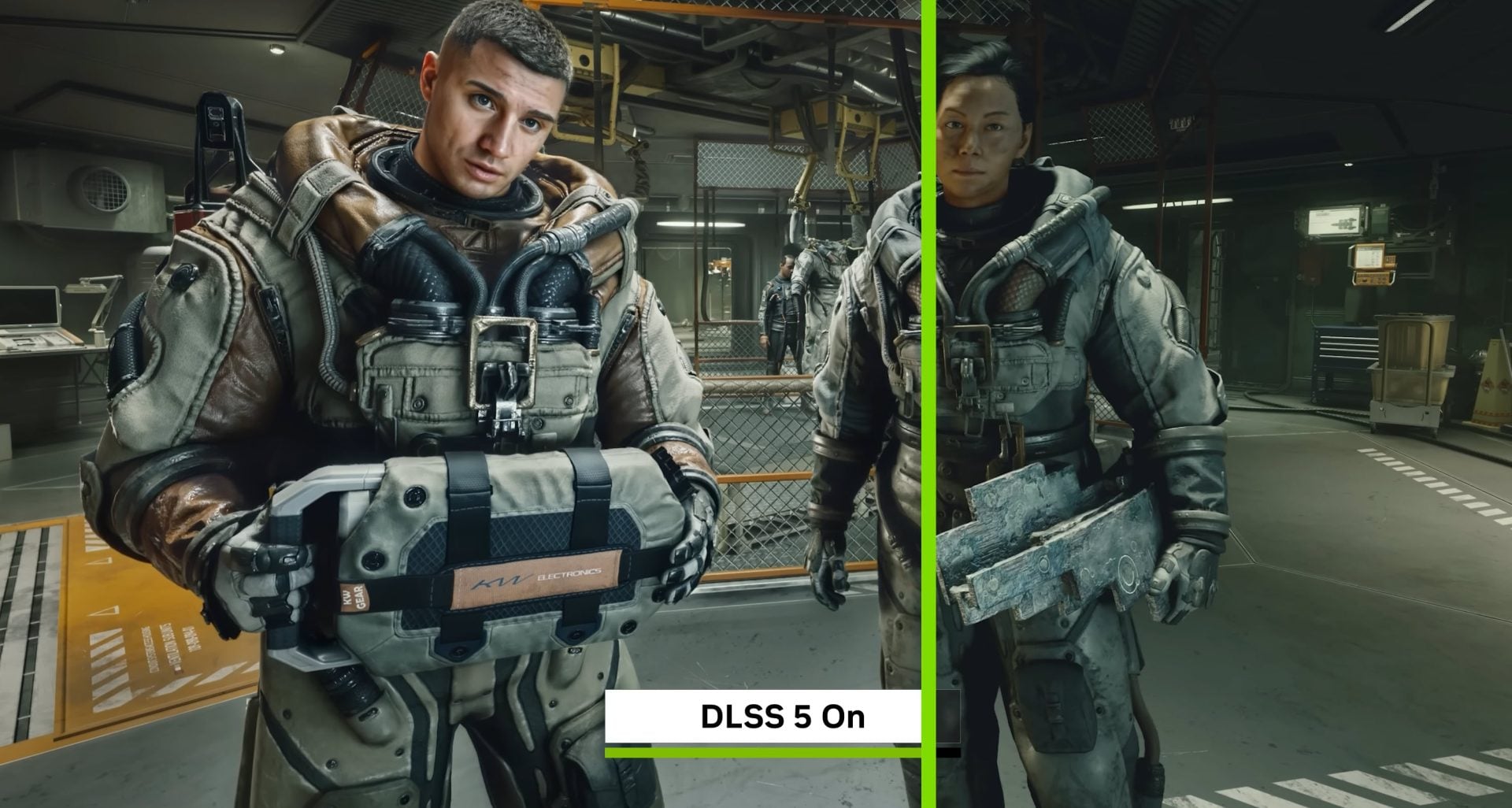
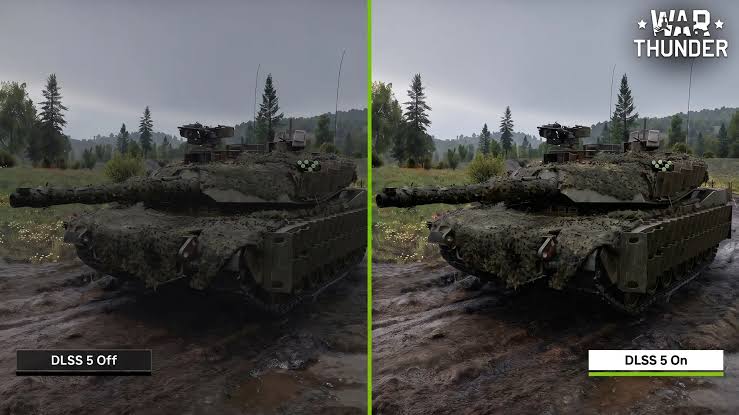
War Thunder has received NVIDIA DLSS 5 support through its new Eagle's Shadow update, bringing improved lighting, metallic reflections and more realistic visuals to the PC version.
Gaijin Entertainment introduced the feature alongside new aircraft, ships, tanks and additional weapons, including cluster bombs for aircraft.
According to NVIDIA's performance figures, War Thunder can exceed 400 FPS at 4K on a GeForce RTX 5090 when using DLSS Super Resolution in Performance mode and enabling the supported rendering features. The RTX 5080 reportedly achieves an average of 262 FPS under the tested conditions.
However, War Thunder art director Kirill Stupin has acknowledged that DLSS 5 Neural Rendering significantly increases GPU power consumption and temperatures.
The developer also identified several visual consistency issues that could benefit from future improvements.
DLSS 5 Took Less Than a Week to Integrate Into War Thunder
Gaijin Entertainment reportedly integrated DLSS 5 into War Thunder within a few days of receiving access to the technology.
According to Stupin, the initial implementation required less than a week before the team could begin adjusting its visual presentation.
The relatively short integration period was possible partly because War Thunder already supported several NVIDIA technologies, including DLSS 4.5 Multi Frame Generation, Super Resolution, Ray Reconstruction, DLAA and Reflex.
The game also supports ray tracing and path traced global illumination.
With DLSS 5, developers can apply additional AI based rendering improvements to the final image.
Stupin explained that the technology primarily improves lighting consistency, reflections on metallic surfaces, soft shadows and color presentation.
These changes are particularly relevant to War Thunder because much of its gameplay involves tanks, aircraft and naval vessels.
The additional rendering effects are intended to improve the appearance of these vehicles and their surrounding environments.
War Thunder Uses the Newer DLSS 5 Neural Rendering Model
Gaijin has chosen to implement the newer DLSS 5 Neural Rendering model rather than offer both the original and updated versions.
The development team considered providing additional customization options but ultimately decided against introducing extensive controls.
Stupin explained that the studio wanted to maintain a consistent visual appearance rather than allow numerous configurations that could produce substantially different results.
The game also supports masking features that allow developers to prevent neural rendering from changing selected elements.
However, Gaijin found that enabling these masks currently makes little noticeable difference in War Thunder.
DLSS 5 Improves Visuals but Increases GPU Power Consumption
Although the developer praised the technology's visual improvements, Stupin acknowledged that DLSS 5 Neural Rendering places substantial additional demands on the GPU.
Enabling the feature can increase graphics card temperatures and power consumption.
He also identified several areas where NVIDIA could improve the technology.
One concern involves visual stability when moving the camera. Some rendered details can change noticeably as the viewpoint shifts, potentially affecting image consistency.
Stupin would also like more transparent quality settings, separate adjustments for particles and clouds, and independent control over color processing.
These improvements could provide developers with more precise control over the final image without relying entirely on predefined rendering presets.
Enlisted and Active Matter Could Receive DLSS 5 Later
Gaijin Entertainment is also considering bringing DLSS 5 to its other games, including Enlisted and Active Matter.
Both titles use the Dagor Engine, which now supports NVIDIA's latest neural rendering technology.
This means the technical foundation for introducing DLSS 5 already exists.
However, the studio has not confirmed an implementation schedule for either game.
War Thunder is among the first games to receive official DLSS 5 integration, following earlier support in NBA 2K27, Metro 2033 Redux, Metro: Last Light Redux and Hogwarts Legacy.
For now, the Eagle's Shadow update gives PC players another opportunity to experience NVIDIA's latest rendering technology.
The implementation demonstrates how developers can use neural rendering to improve visual presentation, although its additional hardware demands and occasional image stability issues remain important considerations.


Discussion (0)
Be the first to comment.