



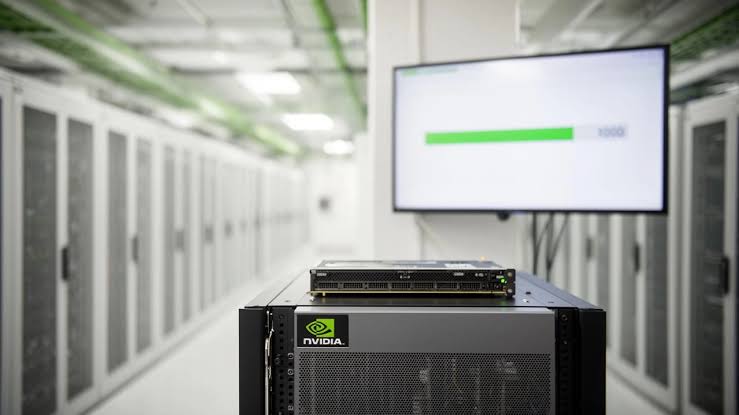
NVIDIA has joined the highest sponsorship tier of the Linux Vendor Firmware Service, placing it alongside Dell, HP, and Lenovo as a premier supporter of the project.
The sponsorship gives LVFS the fourth major hardware partner it needed to reach the funding target established last year. The service provides a central system for distributing firmware updates to Linux computers, allowing supported devices to receive updates without relying on separate vendor utilities.
NVIDIA is already using LVFS and the fwupd framework to deliver firmware for DGX Spark systems. Downloads for those updates are reportedly increasing, giving the company a direct reason to support the infrastructure financially.
LVFS simplifies firmware updates on Linux
LVFS allows hardware manufacturers to upload firmware packages and information about supported devices. Linux systems can then identify compatible updates and install them through fwupd.
You can access those updates through graphical tools such as GNOME Software or through the fwupdmgr command in a terminal.
| Component | Purpose |
|---|---|
| LVFS | Hosts and distributes firmware packages |
| fwupd | Detects hardware and installs supported firmware |
| GNOME Software | Provides a graphical update interface |
| fwupdmgr | Offers command line firmware management |
| Hardware vendors | Upload firmware and device metadata |
This approach gives Linux a more consistent update process across laptops, desktops, docks, graphics hardware, and other supported devices. It also reduces the need to visit several manufacturer websites and install separate applications.
The service had already delivered more than 145 million firmware updates from over 100 vendors when Dell and Lenovo joined its top sponsorship tier earlier this year.
NVIDIA already distributes DGX Spark updates through fwupd
NVIDIA’s involvement is connected closely to DGX Spark, a compact system designed for local AI development and related workloads.
The company has used LVFS to distribute several firmware improvements for the platform. Previous updates added better ConnectX-7 power management, improved display compatibility, and support for Bluetooth audio.
| DGX Spark firmware improvement | Purpose |
|---|---|
| ConnectX-7 power management | Improves networking hardware efficiency |
| Display compatibility | Expands support for connected screens |
| Bluetooth audio | Adds or improves wireless audio support |
| Central update delivery | Simplifies installation through Linux tools |
Richard Hughes, the lead developer of LVFS and fwupd, said the DGX Spark firmware rollout was progressing well and that download numbers were continuing to increase.
That growth means NVIDIA is placing greater demand on the service. Its new sponsorship helps fund the infrastructure required to store, test, and distribute those updates reliably.
Premier sponsorship helps LVFS expand its team
LVFS introduced its revised funding plan because large manufacturers can generate millions of downloads while the project still depends on a relatively small development team.
More funding allows the service to improve reliability, expand testing, maintain servers, and reduce its dependence on one lead developer.
| Sponsorship benefit | Why it matters |
|---|---|
| Additional staffing | Reduces pressure on a small team |
| Infrastructure funding | Supports growing download traffic |
| Better testing | Helps prevent failed firmware updates |
| Project continuity | Provides backup for key maintainers |
| Vendor support | Makes large rollouts easier to manage |
Dell, Lenovo, HP, and NVIDIA now represent the four premier sponsors supporting this work.
Dell and Lenovo had already distributed updates through LVFS before joining the top tier. HP followed later, and NVIDIA has now completed the group needed to meet the project’s funding goal.
The move may help future NVIDIA Linux hardware
NVIDIA’s sponsorship is focused on infrastructure it already uses, but it could support more products over time.
Consumer systems based on the same underlying platform as DGX Spark may also be technically capable of receiving firmware through LVFS. This could include future laptops or mini PCs using related NVIDIA hardware.
However, support would depend on those systems running Linux and on NVIDIA or its partners choosing to publish their firmware through the service.
| Product category | LVFS potential |
|---|---|
| DGX Spark | Already supported |
| Linux AI workstations | Strong potential |
| Consumer RTX Spark systems | Possible but unconfirmed |
| Windows on Arm laptops | Would require Linux installation |
| General GeForce products | No wider commitment announced |
The sponsorship does not confirm that every NVIDIA device will gain LVFS support. It only shows that the company is investing in a platform already used by one of its Linux based product lines.
Firmware support remains important for Linux adoption
Hardware compatibility on Linux depends on more than graphics drivers.
Firmware updates can fix security issues, improve power management, resolve display problems, support new accessories, and correct hardware behaviour. When those updates are available only through Windows applications, Linux owners may need complicated workarounds or another operating system.
LVFS gives manufacturers a standard route for delivering those fixes directly.
NVIDIA has historically faced criticism over parts of its Linux support, although its recent work has included more open driver components and improved compatibility. Supporting LVFS is another practical step because it strengthens the update process for hardware already running Linux.
DGX Spark growth gives NVIDIA a practical reason to invest
The timing of the sponsorship reflects increasing use of DGX Spark firmware packages rather than a general branding exercise.
As more devices download updates, LVFS must provide additional bandwidth, storage, validation, and operational support. NVIDIA benefits directly from a reliable service because failed or unavailable firmware delivery could affect its customers.
The arrangement also shows how Linux infrastructure can become more sustainable when major hardware companies contribute financially instead of relying only on community maintenance.
NVIDIA’s premier sponsorship does not immediately change support for GeForce graphics cards or confirm Linux firmware delivery for every future system. It does strengthen the platform behind DGX Spark updates and gives LVFS the funding required to handle continued growth from major manufacturers.



Discussion (0)
Be the first to comment.