



NVIDIA and SK hynix have reportedly entered a long-term agreement that could be worth as much as $500 billion, covering next-generation high-bandwidth memory, AI data centres and future Vera Rubin systems.
The agreement was announced during an AI summit in San Francisco led by South Korean President Lee Jae-myung. Several major technology companies attended the event, including NVIDIA, Samsung, SK hynix, Broadcom, Microsoft, Hyundai Motor and Naver.
Under the reported arrangement, NVIDIA will receive an opportunity to help co-develop future HBM products with SK hynix. This could give NVIDIA earlier access to memory designs and help it secure a more reliable supply for upcoming AI accelerators.
The partnership also includes plans involving SK Telecom, which is expected to build a 2GW AI data centre equipped with NVIDIA Vera Rubin systems. The complete agreement could reach $500 billion over its lifetime, although detailed spending schedules and contractual terms have not been disclosed.
| Agreement | Reported value | Main focus |
|---|---|---|
| NVIDIA and SK hynix | Up to $500 billion | HBM development, AI systems and data centre infrastructure |
| NVIDIA and Naver | $1 billion investment | South Korean cloud and AI data centres |
| Samsung and Broadcom | Up to $200 billion | Foundry, memory, packaging and AI infrastructure |
| Combined summit agreements | At least $750 billion | Long-term AI and semiconductor cooperation |
NVIDIA gains closer access to next-generation HBM
High-bandwidth memory has become one of the most important components in modern AI systems.
NVIDIA’s accelerators depend on large HBM stacks to store model weights and provide the bandwidth required for training and inference. As AI systems grow, each accelerator generation requires more memory capacity and faster data movement.
The reported agreement gives NVIDIA a co-development opportunity with SK hynix for future HBM products.
This could allow NVIDIA to influence memory specifications earlier in the design process. The two companies may be able to coordinate capacity, bandwidth, power use, packaging and thermal requirements around future GPU architectures.
A closer development relationship could also reduce the risk of supply shortages.
HBM production is complex because several memory dies must be stacked and integrated into advanced accelerator packages. Manufacturers cannot increase output as quickly as they can with conventional memory modules.
Securing long-term access is therefore strategically important, especially as NVIDIA prepares to increase production of Rubin and later AI platforms.
SK hynix also benefits by gaining greater visibility into NVIDIA’s future demand. That can help the company decide how much factory capacity, equipment and packaging investment it needs.
SK Telecom plans a 2GW Vera Rubin data centre
Another part of the agreement involves SK Telecom, an affiliate within the wider SK group.
The company is expected to develop a 2GW AI data centre using NVIDIA Vera Rubin systems.
A facility of that scale would require substantial investment in servers, networking, storage, cooling and electricity infrastructure.
Vera Rubin is NVIDIA’s next major rack-scale AI platform. It combines Rubin accelerators with Vera CPUs, high-speed networking and supporting memory systems.
The data centre could support model training, inference, cloud services and other AI workloads for South Korean companies and public institutions.
However, a 2GW power requirement would create significant infrastructure challenges.
The project would need reliable electricity supplies, advanced cooling systems and suitable locations for large-scale construction. It may also require new grid capacity and long-term energy contracts.
The reported $500 billion figure may include hardware purchases, data centre construction, memory supply and several years of infrastructure spending rather than one immediate transaction.
NVIDIA plans a $1 billion investment in Naver
NVIDIA also said it would invest $1 billion in Naver, a major South Korean cloud and internet company.
Naver is building AI data centres that use NVIDIA GPUs, and the investment could strengthen cooperation around cloud computing, AI services and domestic model development.
The agreement may help Naver expand access to advanced accelerators during a period when supply remains tight.
It also gives NVIDIA a stronger position in South Korea’s cloud market.
Naver operates search, communications, commerce and other digital services, giving it large volumes of data and a broad customer base for AI products.
The report does not provide details about the investment structure, including whether NVIDIA will receive equity, supply commitments or other commercial rights.
South Korea wants to double memory capacity by 2030
President Lee has called for South Korea’s memory production capacity to double by the end of the decade.
The country is already home to Samsung and SK hynix, two of the world’s largest memory manufacturers. Both companies are constructing additional factories to meet demand from AI systems, servers, smartphones and PCs.
Samsung’s P5 Fab 1 is expected to begin operating by July 2027.
P5 Fab 2 and another Samsung facility in Yongin are planned to enter production by 2029.
SK hynix is also expanding in Yongin. Its Y1 factory is scheduled to start operating in February 2027, while Y2 is expected during the second half of 2028.
These timelines could change depending on equipment availability, construction progress and market demand.
The expansion is intended to increase production of advanced DRAM and HBM while strengthening South Korea’s position in the global semiconductor supply chain.
Samsung and Broadcom added another major agreement
The summit also included a separate memorandum between Samsung and Broadcom valued at as much as $200 billion.
That agreement will run through 2030 and cover memory, foundry manufacturing and advanced packaging.
Broadcom is expected to use Samsung’s 2nm and smaller process technologies for future products, including wireless broadband communication chips and custom AI silicon.
The collaboration may also include 2.3D and 2.5D packaging technologies.
Samsung’s ability to provide foundry production, HBM, conventional DRAM and packaging under one organisation is a central part of that agreement.
The Broadcom partnership had already been reported separately, but its inclusion at the summit helped lift the total value of announced agreements to at least $750 billion.
The size of the agreements requires careful interpretation
The headline values are exceptionally large, but they should not necessarily be understood as immediate guaranteed spending.
Long-term agreements and memoranda can include projected purchases, infrastructure construction, technology development and future options spread across several years.
Some portions may depend on demand, product qualification or final commercial contracts.
The $500 billion NVIDIA and SK agreement may therefore represent the potential value of a broad partnership rather than a fixed payment.
Likewise, the Samsung and Broadcom memorandum may cover future opportunities that have not yet become confirmed orders.
Even with those qualifications, the summit shows how AI investment is changing semiconductor partnerships.
Memory suppliers, chip designers, cloud providers and governments are now planning several product generations and factory expansions together.
South Korea is positioning itself as a central AI hardware supplier
South Korea already holds a leading position in memory manufacturing, but the new agreements extend its role into complete AI infrastructure.
SK hynix can provide HBM for NVIDIA accelerators, while SK Telecom can deploy the finished systems inside large data centres.
Samsung can combine memory with foundry production and advanced packaging for companies such as Broadcom.
Naver adds domestic cloud capacity and AI services.
This creates a connected ecosystem covering memory, processors, networking, servers and cloud deployments.
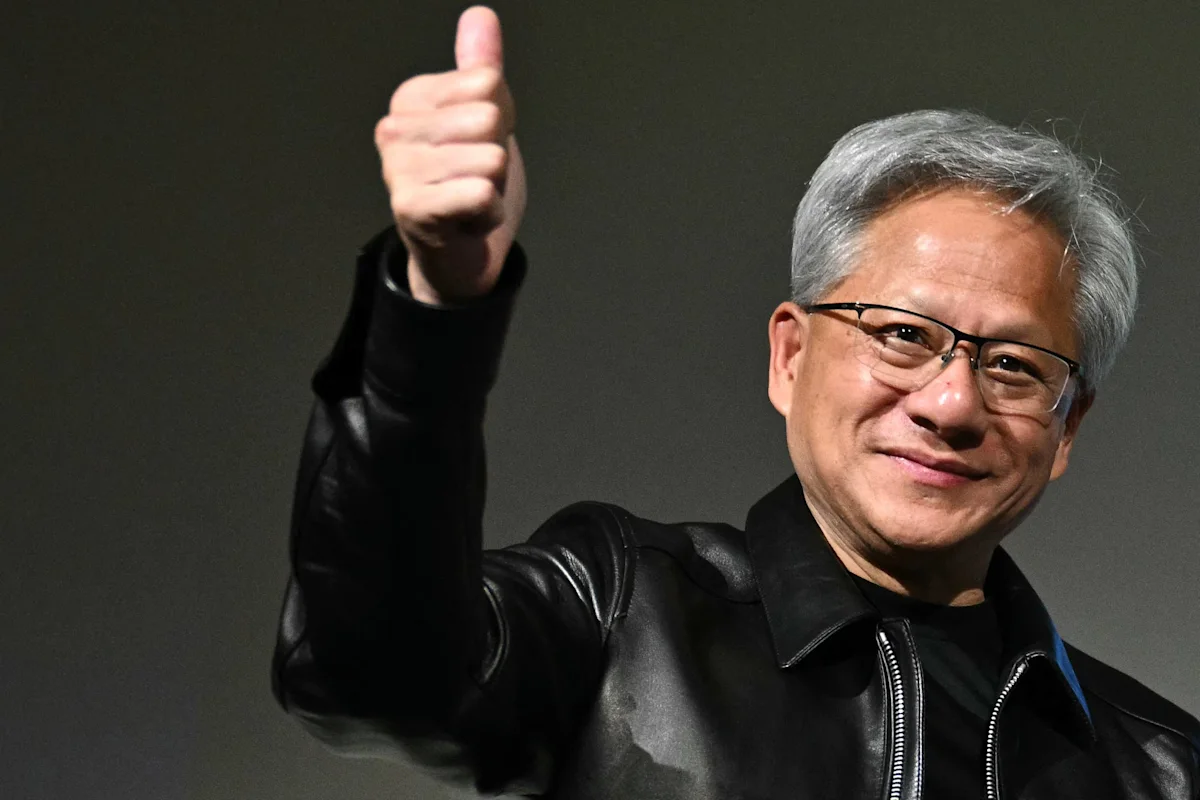
Following the summit, government and industry representatives attended a dinner where President Lee described the group as a family. NVIDIA CEO Jensen Huang reportedly asked for another beer, prompting a joke from the president about the government official responsible for the bill.
The lighter moment followed a day dominated by unusually large financial commitments. The more important outcome will be whether those agreements lead to completed factories, reliable HBM supply and operating AI data centres during the next several years.



Discussion (0)
Be the first to comment.