



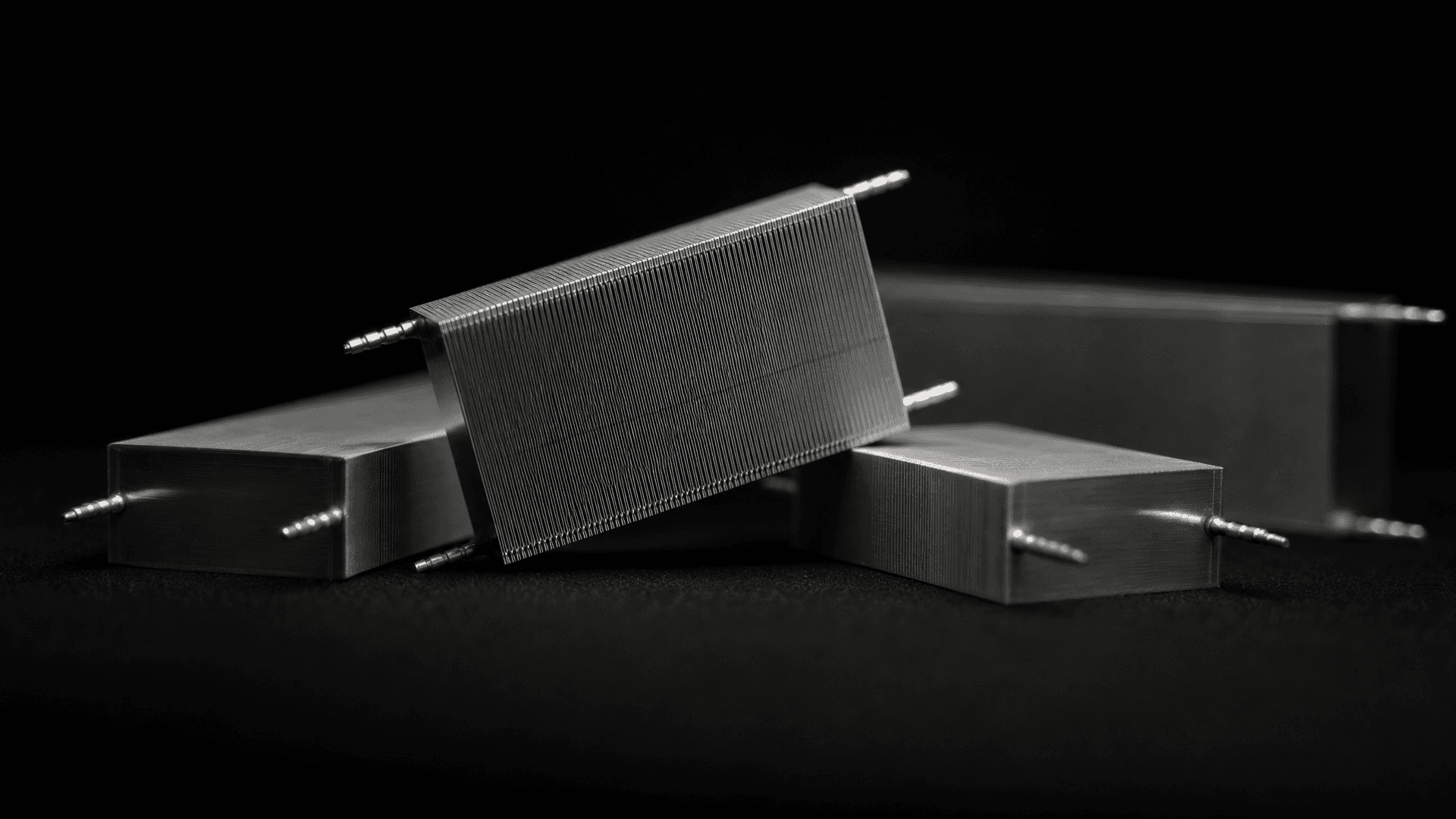
Noctua is exploring a new approach to high performance air cooling through a partnership with Forced Physics, with the companies working on micro channel technology aimed at handling thermal loads of up to 2,000 watts.
The project centers on a cooling concept called JouleForce, which uses a micro channel array and extremely high airflow. The available information describes the airflow as reaching levels comparable to a vacuum pump, suggesting that the design is intended to move far more air through a compact cooling structure than a conventional desktop heatsink.
The technology is still being explored rather than presented as a finished consumer product, so important details such as pricing, launch timing, supported processors, physical dimensions, and noise levels have not been provided in the supplied material.
| Detail | Information available |
|---|---|
| Companies involved | Noctua and Forced Physics |
| Cooling approach | Air cooling |
| Core technology | Micro channel array |
| Project name shown | JouleForce |
| Target thermal load | Up to 2,000W |
| Intended area | Desktop PC cooling |
| Product availability | Not specified |
| Price | Not specified |
Micro channel design could change how air cooling works
Traditional PC air coolers generally rely on a metal cold plate, heat pipes, a large fin stack, and one or more fans.
The concept being explored here appears to take a different route by using very small channels to move air through the cooling structure.
Micro channels can dramatically increase the amount of surface area available for heat transfer, but forcing enough air through such narrow spaces is difficult. That is likely why airflow is such an important part of the JouleForce design.
The supplied information specifically highlights vacuum pump level airflow, indicating that the system is designed around creating unusually strong air movement through the micro channel array.
How that airflow is generated is not explained in the provided source.
There are also no confirmed details about power consumption, acoustic performance, or whether the design uses a conventional fan arrangement.
2,000W figure points to much higher thermal loads
The headline figure is a claimed 2,000 watt cooling target.
That number is far beyond the heat output of a typical desktop gaming processor and suggests the project is being developed with much more demanding hardware in mind.

However, the source does not explain exactly how the 2,000W figure was measured.
It does not specify whether this represents continuous heat dissipation, a laboratory test target, a theoretical design limit, or performance under a particular airflow condition.
Without those details, the figure should be treated as a development target rather than a directly comparable specification against existing CPU coolers.
Noctua is still exploring the technology
The wording of the announcement is important.
Noctua is described as exploring the technology rather than launching a finished cooler.
That means the partnership with Forced Physics may still be in the research and development stage.
The supplied material does not confirm a retail product, prototype dimensions, supported sockets, expected manufacturing cost, or whether the concept can be adapted to normal desktop systems without major compromises.
Noise will also be an important question if the design depends on exceptionally high airflow.
Air coolers must balance thermal performance with acoustic output, especially in desktop PCs where sustained noise can matter as much as peak cooling capacity.
A different path from liquid cooling
The concept is notable because it attempts to push air cooling into thermal ranges normally associated with more complex solutions.
High power processors and accelerators increasingly place greater demands on cooling systems, and manufacturers have been experimenting with a variety of approaches to move heat away from chips more effectively.
Noctua and Forced Physics are taking an air based route with their micro channel system.
If the technology can eventually deliver very high heat dissipation without excessive noise, power consumption, or physical size, it could give PC cooling designers another option beyond conventional tower heatsinks and liquid loops.
For now, the project remains an engineering exploration. The 2,000W target and micro channel approach are the main confirmed points, while practical details about a desktop product have yet to be disclosed.


Discussion (0)
Be the first to comment.