



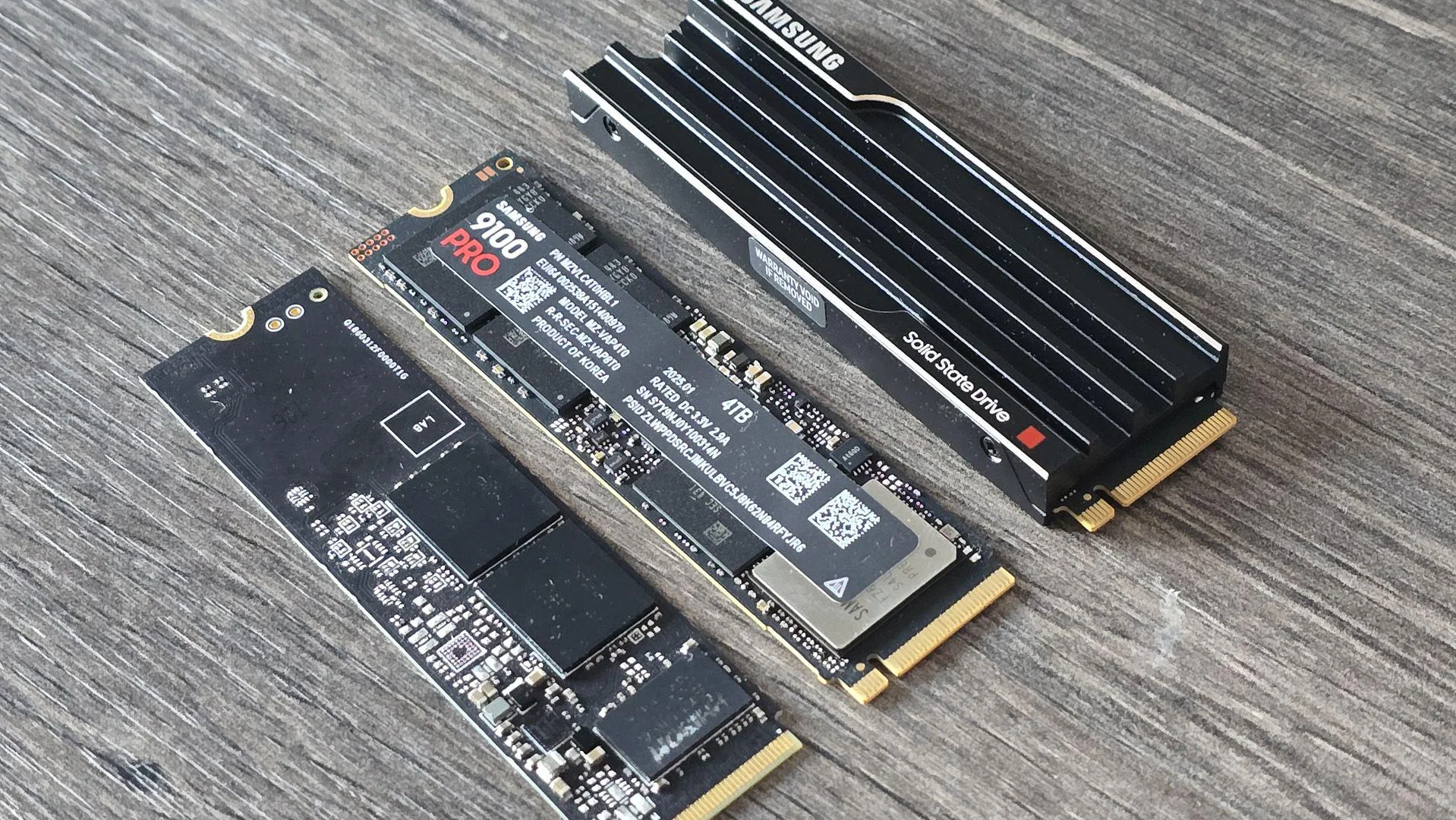
NAND revenue reached a record $46 billion in the first quarter of 2026 as AI data centers continued to absorb more storage supply. The surge shows how strongly enterprise demand is now shaping the memory market, while the traditional PC industry is facing weaker shipments and higher component prices.
According to Counterpoint Research, global NAND revenue increased 3.5 times year over year in Q1 2026. The main driver was agentic AI, which is pushing companies to build larger data center systems with massive storage needs. These AI systems can require petabytes of storage, and that demand is giving NAND suppliers stronger pricing power.
Enterprise demand already accounted for 43 percent of the NAND market in the first quarter. Counterpoint expects that share to cross 60 percent by the end of 2026. The first quarter result was so strong that NAND revenue for Q1 2026 alone reportedly surpassed the full year NAND revenue recorded in 2023.
Samsung stays ahead as YMTC becomes a stronger challenger
Samsung remained the largest NAND supplier in the first quarter with a 29 percent revenue share. SK Hynix followed with 18 percent. Kioxia, Micron, SanDisk, and YMTC were grouped closely behind, showing how competitive the rest of the market has become.
The most notable movement came from YMTC. The Chinese NAND maker reached a 13 percent market share and recorded 246 percent year over year growth. That puts YMTC close to several long established suppliers and shows how quickly China’s domestic memory industry is expanding.
YMTC is also reportedly preparing for an IPO in China. Its expansion comes as CXMT continues to gain attention in DRAM. Both companies are part of a wider push to increase China’s memory production capacity through major fab investments. If those plans move forward as expected, China could become a stronger force in both NAND and DRAM supply over the next several years.
| Area | What changed in Q1 2026 | Why it matters |
|---|---|---|
| NAND revenue | Hit a record $46 billion | AI demand pushed storage spending sharply higher |
| Enterprise NAND | Reached 43 percent of the market | Data centers are now the main growth driver |
| Samsung | Held 29 percent share | It remains the largest NAND supplier |
| YMTC | Reached 13 percent share | China’s NAND industry is gaining ground quickly |
| PC shipments | Forecast to fall 11.3 percent in 2026 | Higher component costs are hurting the broader PC market |
AI demand is creating a split between memory suppliers and PC makers
The memory market is benefiting from AI investment, but the same demand is creating pressure elsewhere. IDC expects global traditional PC shipments to decline 11.3 percent in 2026. The weakness is expected to continue in 2027, with recovery signs likely to appear around 2028 or 2029. A fuller return is projected closer to 2030.

PC shipments are expected to fall to around 260 million units, compared with more than 290 million units in the previous year. That decline reflects several problems at once. Memory prices are rising, consumers are more cautious, and PC brands are trying to balance new product launches against higher bill of material costs.
Some new platforms may help the market adjust. Apple’s MacBook Neo, Intel Wildcat Lake laptops, and Qualcomm’s entry level Snapdragon C series are expected to give buyers more options across different price bands. These products could help PC makers defend demand in the budget and thin laptop segments.
Even so, the larger supply problem may take years to ease. New DRAM and NAND fabs are being built, but meaningful supply relief is not expected until around 2029 or 2030. Until then, AI infrastructure spending may continue to dominate memory allocation and pricing.
For NAND suppliers, this is a strong cycle. For PC makers and buyers, it is a more difficult period where storage and memory costs may remain a major challenge.



Discussion (0)
Be the first to comment.