



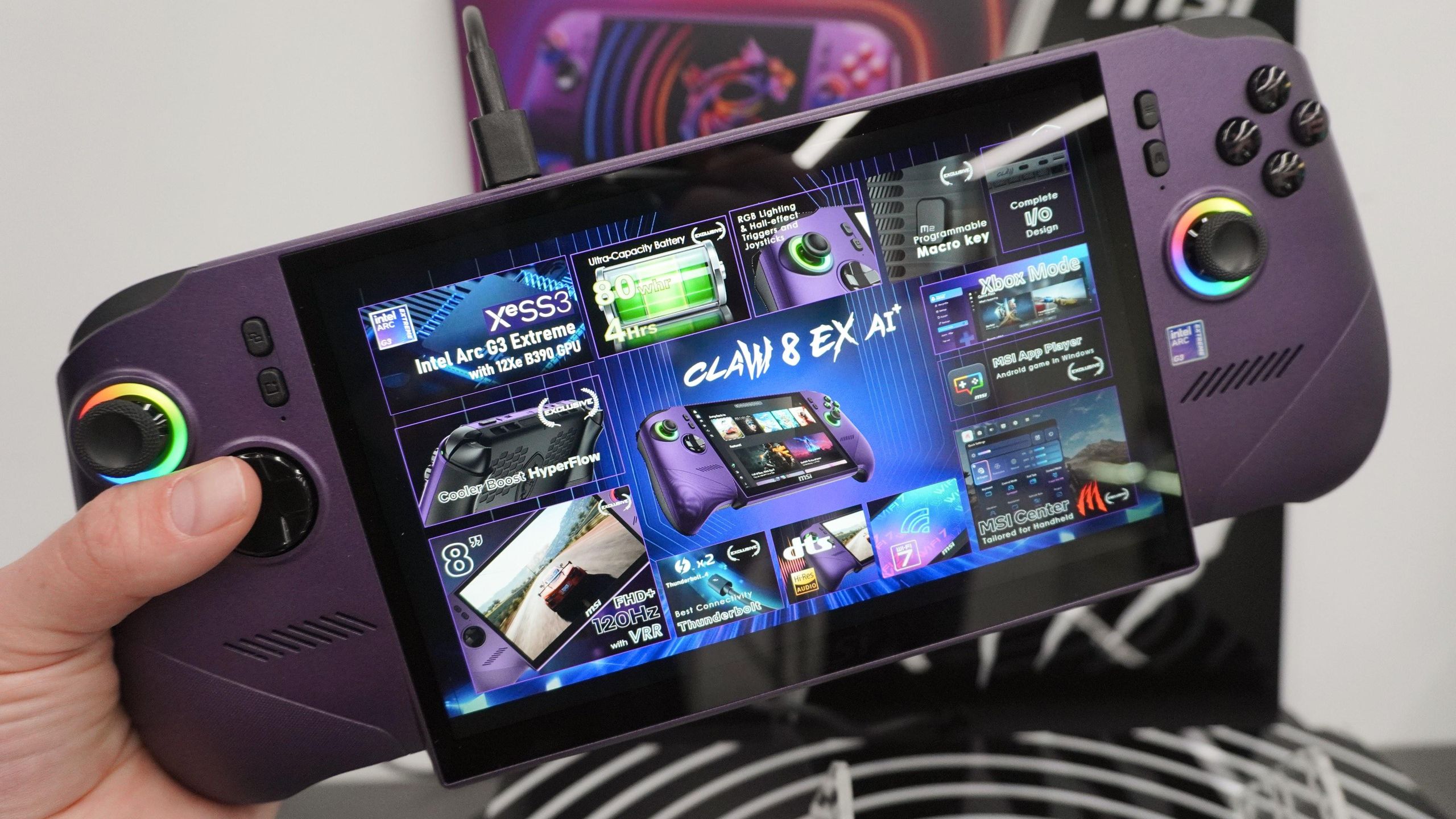
The MSI Claw 8 EX AI is set to launch on June 23 with Intel’s new Arc G3 Extreme chip, giving the handheld gaming market a fresh alternative to AMD’s Ryzen Z2 Extreme. Ahead of release, an Intel engineer shared a look at the device’s internals, showing how MSI and Intel arranged the motherboard and cooling layout to make the new handheld more competitive.
The handheld PC market has been dominated by AMD based devices for a while, especially in the $1,000 to $1,500 range. Systems like the ASUS ROG Xbox Ally X use AMD’s Ryzen Z2 Extreme, which combines Zen 5 CPU cores with Radeon 890M integrated graphics. That chip has been a strong fit for portable gaming, but Intel is now trying to challenge it with newer graphics hardware.
The Arc G3 Extreme is important because it gives Intel a stronger position in handheld gaming PCs. It uses newer Intel graphics technology that is expected to outperform AMD’s Radeon 890M in many workloads, while also offering a more powerful CPU setup.
MSI and Intel worked to shrink the motherboard without raising heat problems
The internal photo shared by Intel’s Jason Cheah shows the MSI Claw 8 EX AI motherboard layout before the device reaches store shelves. According to the post, Intel and MSI worked closely to reduce the size of the PCB while keeping thermals under control.
That matters in a handheld. Smaller boards leave more room for battery, cooling hardware, speakers, and ergonomic design. But if the chip is placed poorly, heat can move toward the grips and make the device uncomfortable during long gaming sessions.
| Device detail | MSI Claw 8 EX AI |
|---|---|
| Launch date | June 23 |
| Chip | Intel Arc G3 Extreme SoC |
| Target market | Premium handheld gaming PCs |
| Main rival | AMD Ryzen Z2 Extreme handhelds |
| Key design point | Centered SoC placement |
| Thermal goal | Keep heat away from handgrips |
| Expected advantage | Stronger graphics and CPU performance |
The SoC appears to be positioned near the center of the board, away from where players hold the device. That should help reduce skin temperatures around the grips.
Intel Arc G3 Extreme gives MSI a chance to compete with Ryzen Z2 Extreme
AMD’s Ryzen Z2 Extreme remains the current reference point for high end handheld gaming PCs. It features eight CPU cores and Radeon 890M graphics with 16 RDNA 3.5 compute units. It has performed well across current handheld designs, but AMD’s integrated graphics architecture is no longer brand new.
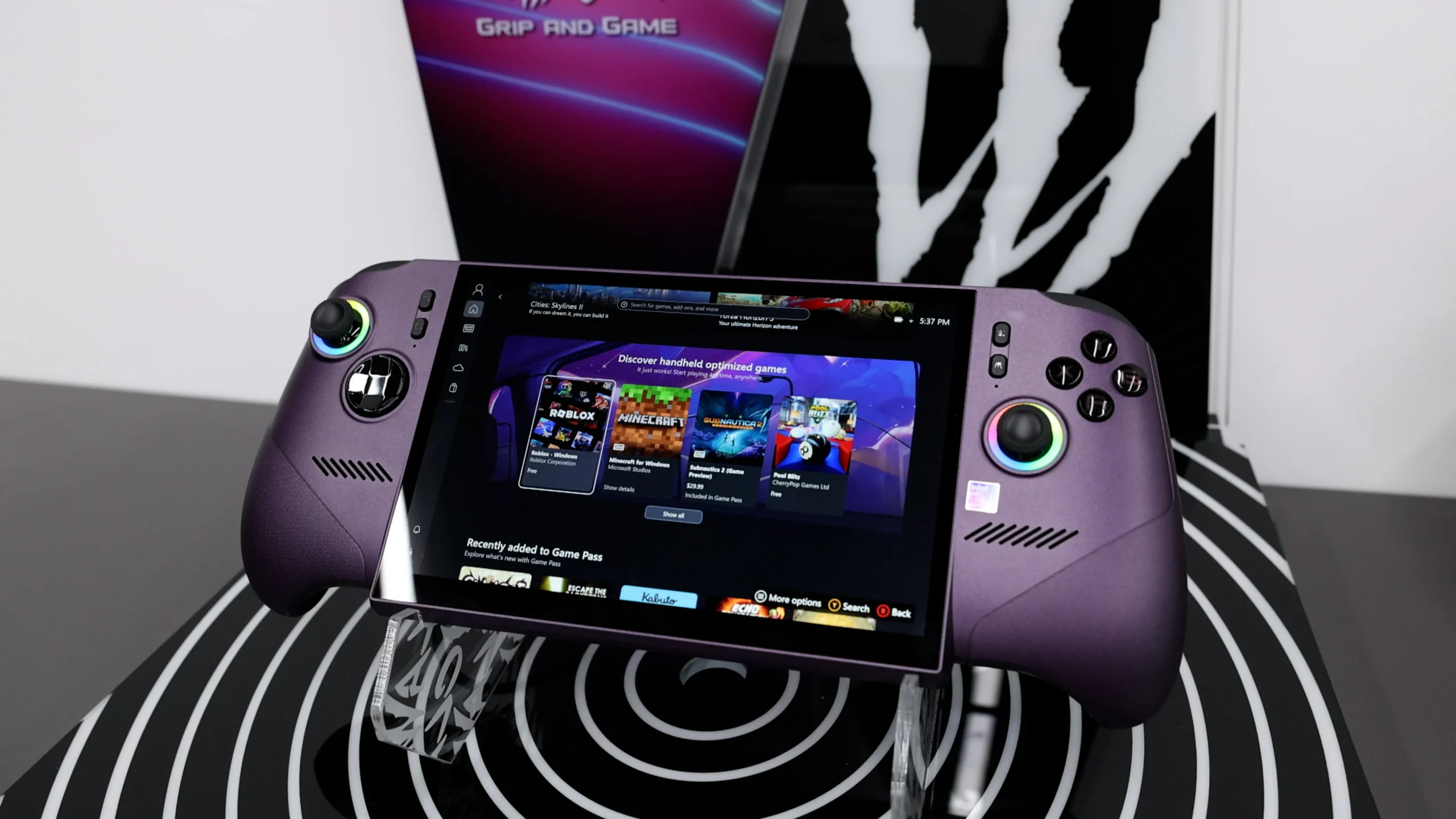
Intel’s Arc G3 Extreme gives MSI a more modern graphics path. If the chip performs as expected, it could make the Claw 8 EX AI one of the first Intel based handhelds that can seriously compete with AMD’s strongest portable gaming chips.
This is especially important for MSI. Earlier Claw models had to fight against strong AMD powered rivals, and Intel’s new silicon gives the company a better chance to stand out.
Handheld performance will depend on power and cooling
Raw chip potential is only part of the story. Handheld gaming PCs live or die by thermal design, battery life, software tuning, and driver stability.
A powerful chip can still struggle if the cooling system cannot sustain performance or if battery drain is too high. That is why the internal layout matters. Centering the SoC and shrinking the board are not just engineering details. They affect comfort, fan behavior, sustained frame rates, and real world gaming sessions.
Intel also needs strong graphics drivers. AMD has years of momentum in handheld gaming, while Intel has been improving but still needs to prove consistency across a large PC game library.
The Claw 8 EX AI could mark a stronger second chance for Intel handhelds
The MSI Claw 8 EX AI arrives at an important time. Handheld gaming PCs are becoming more mainstream, and buyers now expect better displays, stronger battery life, better cooling, and smoother game compatibility.
Intel’s Arc G3 Extreme could help push the category forward if it delivers better performance than Radeon 890M based systems in the same price range. It also gives manufacturers another serious chip option, which could increase competition and lead to better devices.
For MSI, the Claw 8 EX AI is a chance to show that its Intel partnership can produce a more refined handheld than earlier attempts.
The real test starts when reviews arrive
The internal photo is interesting, but the real question is how the device performs once reviewers and buyers test it. Benchmarks, battery life, fan noise, skin temperature, game compatibility, and driver behavior will decide whether the Claw 8 EX AI can challenge AMD powered rivals.
Still, the hardware direction looks promising. MSI and Intel appear to have paid attention to layout and thermals, while the Arc G3 Extreme gives the device a more competitive foundation.
If the Claw 8 EX AI delivers strong sustained performance when it launches, Intel may finally have a real foothold in the premium handheld gaming PC market.



Discussion (0)
Be the first to comment.