



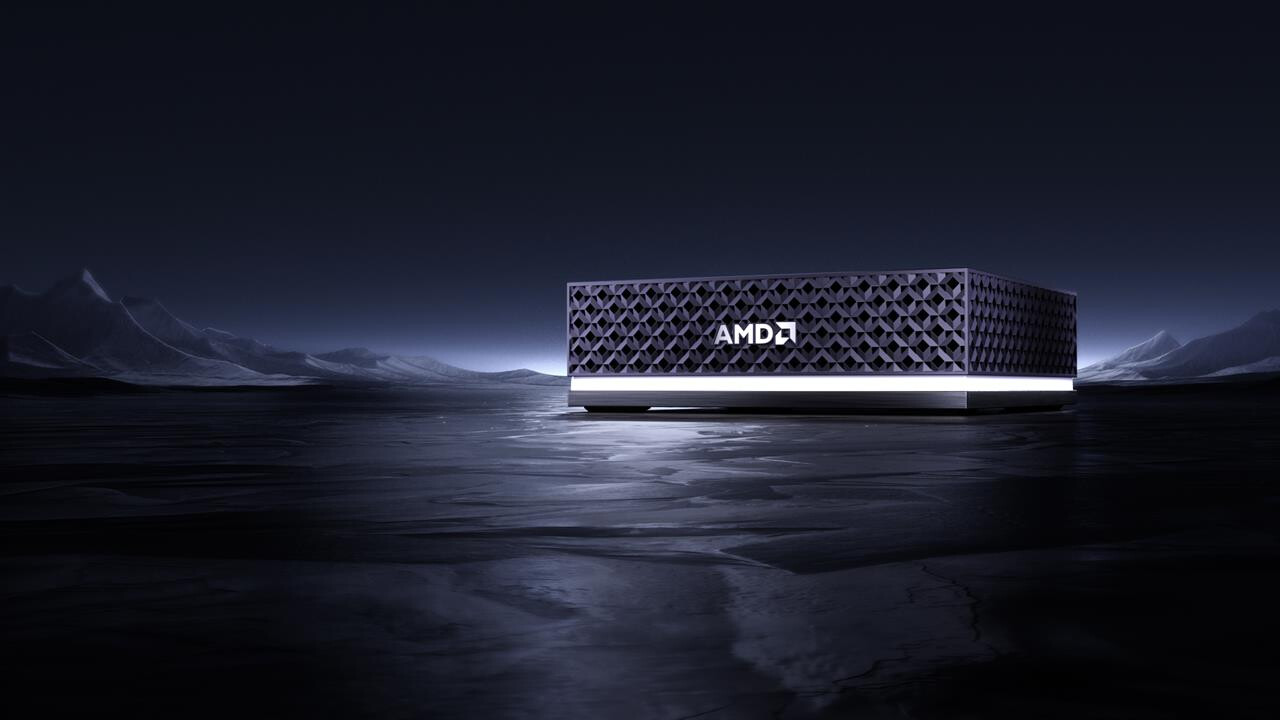
AMD’s Ryzen AI Halo developer platform is now listed for preorder at $3,999.99, giving AI developers a compact local machine with 128GB of unified memory, a Ryzen AI Max Plus 395 processor, and support for large local AI workloads. The system is not aimed at regular consumers, but at developers who want to run AI inference and experimentation locally without relying entirely on cloud services.
The developer kit was first shown earlier this year, and Micro Center now has two versions listed. One ships with Windows 11 Pro, while the other comes with Linux. The hardware appears to be the same across both models, with the operating system being the main difference.
AMD is positioning Ryzen AI Halo as an alternative to Nvidia’s DGX Spark style developer systems, with a focus on unified memory, local model support, and lower cost per token claims.
Ryzen AI Halo is built around AMD’s Strix Halo flagship chip
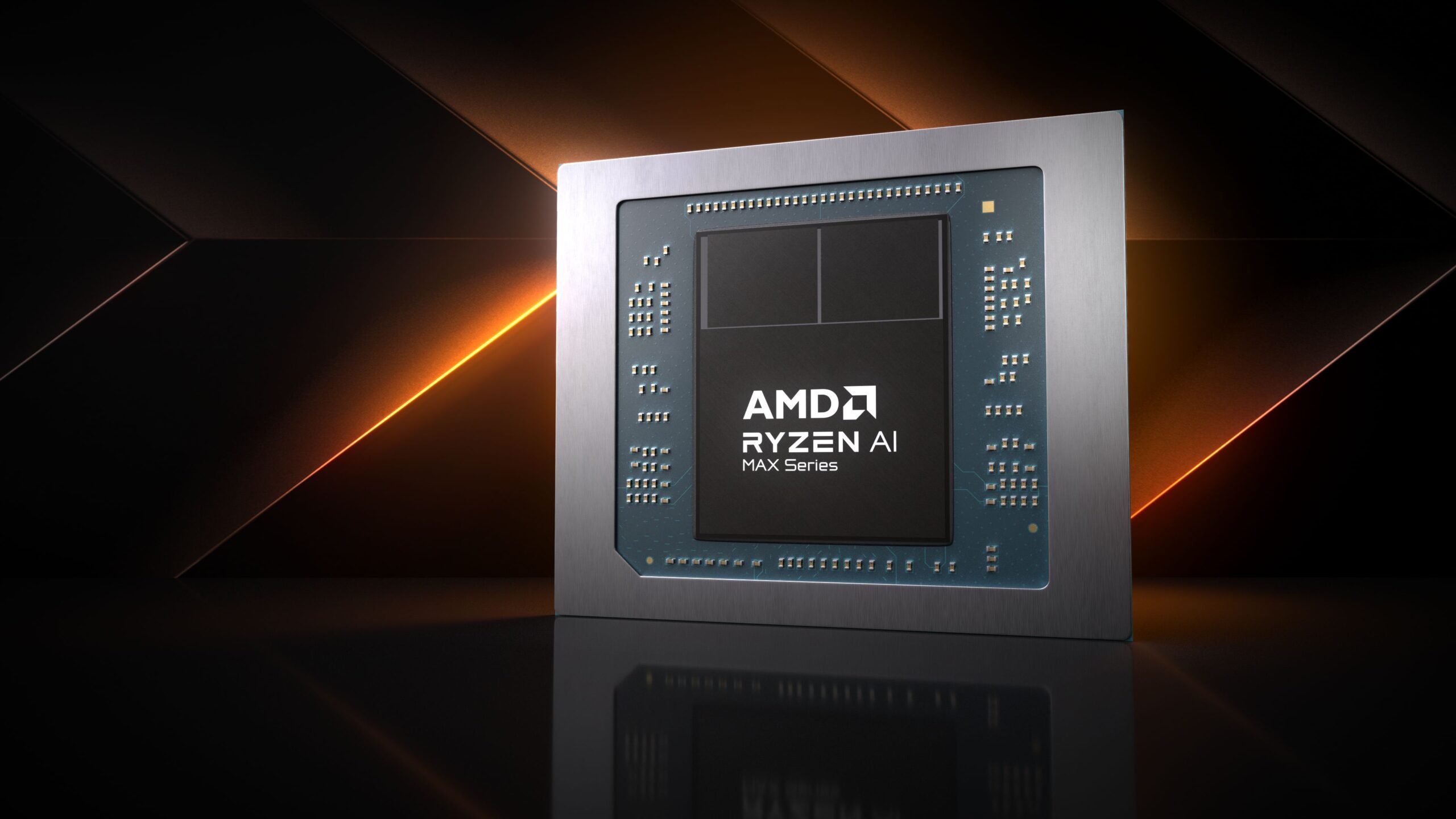
The system uses the Ryzen AI Max Plus 395, which is AMD’s flagship Strix Halo part. It comes with 16 cores and 32 threads, a 3GHz base clock, and a 5.1GHz boost clock. It also includes 16MB of L2 cache and 64MB of L3 cache.
Graphics are handled by Radeon 8060S integrated graphics with 40 compute cores running at up to 2.9GHz. There is also a dedicated NPU rated at 50 TOPS, which helps with AI focused workloads.
| Feature | AMD Ryzen AI Halo Developer Platform |
|---|---|
| Price | $3,999.99 |
| Processor | Ryzen AI Max Plus 395 |
| CPU cores | 16 cores, 32 threads |
| Boost clock | Up to 5.1GHz |
| Graphics | Radeon 8060S |
| GPU cores | 40 compute cores |
| NPU | 50 TOPS |
| Memory | 128GB unified LPDDR5X 8000 |
| Storage | 2TB SSD |
| OS options | Windows 11 Pro or Linux |
| Availability | Listed for preorder |
| Pickup date | July 10, 2026 |
The 128GB unified memory is the most important part of the platform. AMD says the system can support models with up to 200 billion parameters, which makes it useful for developers working with large AI models locally.
Local AI development is the main target
The Ryzen AI Halo kit is expensive if judged like a mini PC, but that is not the right comparison. AMD is selling this as a local AI development box, not a home desktop for browsing and office work.
Local AI systems appeal to developers because they can reduce cloud costs, allow faster testing, and keep sensitive work on local hardware. For teams experimenting with inference, model optimization, app development, and AI workflow testing, having a compact system with large unified memory can be useful.
AMD’s pitch is that developers can run heavy AI workloads without paying for every cloud run. That does not make the machine cheap, but it gives it a clear audience.
Windows and Linux support could help AMD stand apart
One of AMD’s highlighted advantages is support for both Windows and Linux. The two listed models give developers a choice depending on their workflow.
That matters because many AI tools are still heavily tied to Linux, while some developers prefer Windows for app development, testing, or mixed productivity work. Offering both options makes Ryzen AI Halo more flexible than platforms that focus on only one operating system.
The system also includes Wi Fi 7, Bluetooth 5.4, 10GbE LAN, four USB C ports, and HDMI 2.1b. That makes it suitable for desk setups where fast networking and external display support matter.
AMD is comparing Ryzen AI Halo against Nvidia’s developer systems
AMD is clearly trying to challenge Nvidia’s position in local AI developer hardware. Nvidia has a strong software and ecosystem advantage, but AMD is pushing the value of unified memory, Windows support, and AI performance per dollar.
The real test will be software compatibility. For AI developers, strong hardware is only part of the equation. Framework support, driver quality, model compatibility, and real world performance will decide whether Ryzen AI Halo becomes a serious alternative.
AMD’s hardware looks impressive on paper, but developers will want to see how it performs with common AI stacks, local LLMs, code models, and inference workloads.
Ryzen AI Halo gives AMD a stronger local AI story
The launch of Ryzen AI Halo shows that AMD wants a larger role in the local AI developer market. The company already competes in CPUs, GPUs, and data center accelerators, but compact AI workstations are becoming a more visible category as developers look for ways to reduce cloud dependence.
At $3,999.99, this platform will not appeal to casual buyers. But with 128GB unified memory, a 16 core Ryzen AI chip, Radeon 8060S graphics, a 50 TOPS NPU, and a 2TB SSD, it gives developers a powerful local system in a compact package.
The question is whether AMD can match the software smoothness developers expect from Nvidia’s ecosystem. If it can, Ryzen AI Halo could become an important option for local AI development, especially for users who want Windows support and large memory capacity without stepping into much more expensive workstation territory.


Discussion (0)
Be the first to comment.