



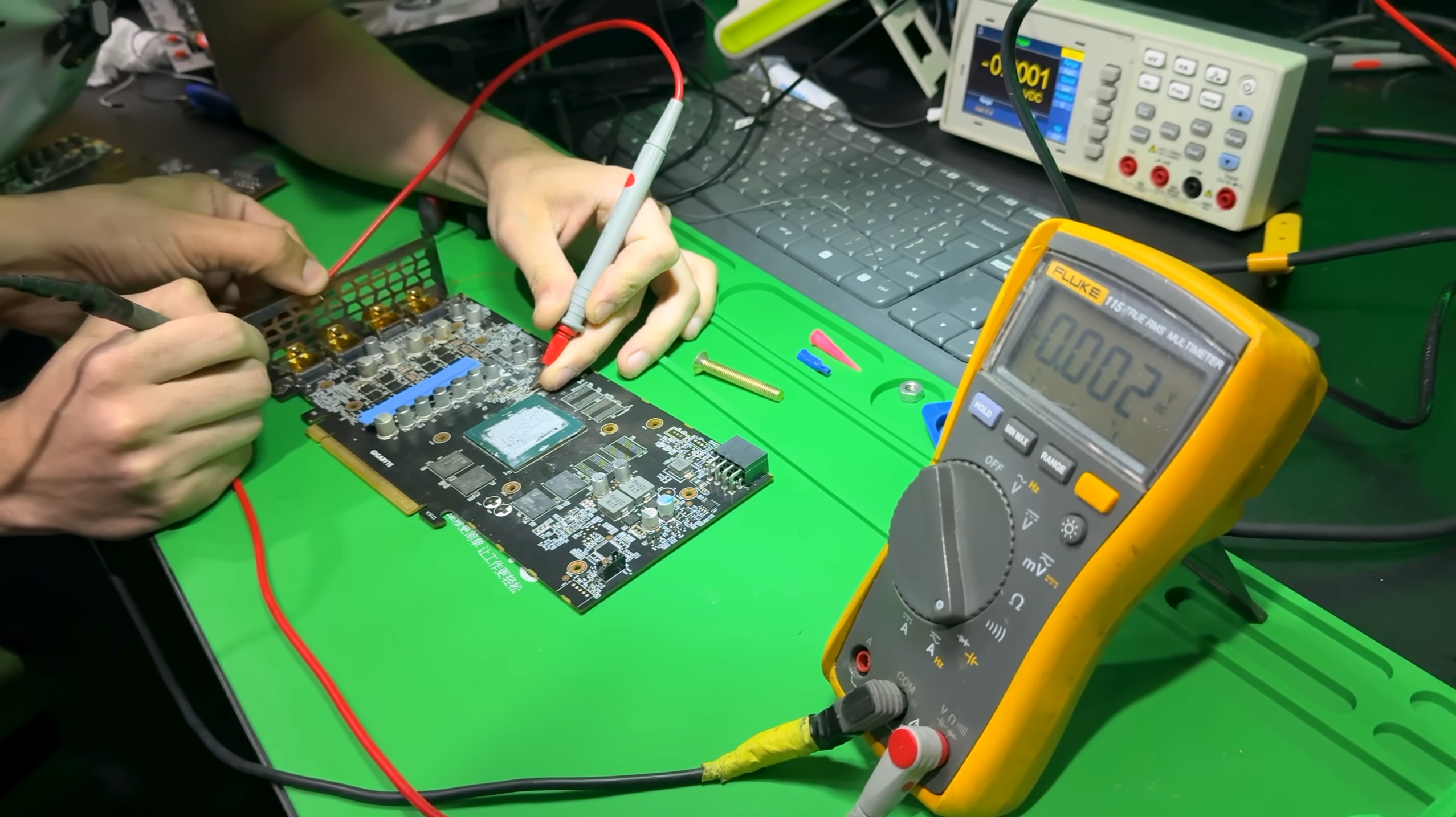
A modder has upgraded an NVIDIA GeForce GTX 1650 from 4GB to 8GB of GDDR6 memory by replacing its original memory chips with higher capacity modules. The modified card reportedly delivered a much higher score in one synthetic benchmark, although the real gaming benefit will likely be smaller and depend heavily on the game.
The project shows that some older graphics cards may have more potential than their original specifications suggest. However, this is not a simple upgrade that every GTX 1650 owner can attempt. Only certain versions of the card use the right NVIDIA GPU die and compatible GDDR6 memory layout.
The modification was carried out on a GTX 1650 using NVIDIA’s TU106 graphics processor. That chip was also used in parts of the GeForce RTX 20 series lineup, making it more flexible than other GTX 1650 variants.
The GTX 1650 used 4GB GDDR6 memory before the upgrade
The original card used four 1GB GDDR6 memory modules for a total of 4GB VRAM. The modder replaced those chips with four 2GB Samsung GDDR6 modules, increasing the total capacity to 8GB.
No major firmware modification was reportedly needed after the memory swap, although the repair involved replacing faulty RAM chips before the upgrade could be completed.
| Specification | Original GTX 1650 | Modified GTX 1650 |
|---|---|---|
| Graphics processor | NVIDIA TU106 | NVIDIA TU106 |
| VRAM capacity | 4GB | 8GB |
| Memory type | GDDR6 | GDDR6 |
| Memory modules | 4 x 1GB | 4 x 2GB |
| Firmware changes | None reported | None reported |
| Compatibility | Limited to certain models | Not suitable for all GTX 1650 cards |
This is important because the GTX 1650 came in several different hardware versions. Some models use TU117, others use TU116, and only select TU106 based cards appear suitable for this particular memory upgrade.
Synthetic benchmark score nearly doubled after the mod
After completing the modification, the card was tested in Unigine Superposition. Its score reportedly increased from 624 points to 1,245 points.
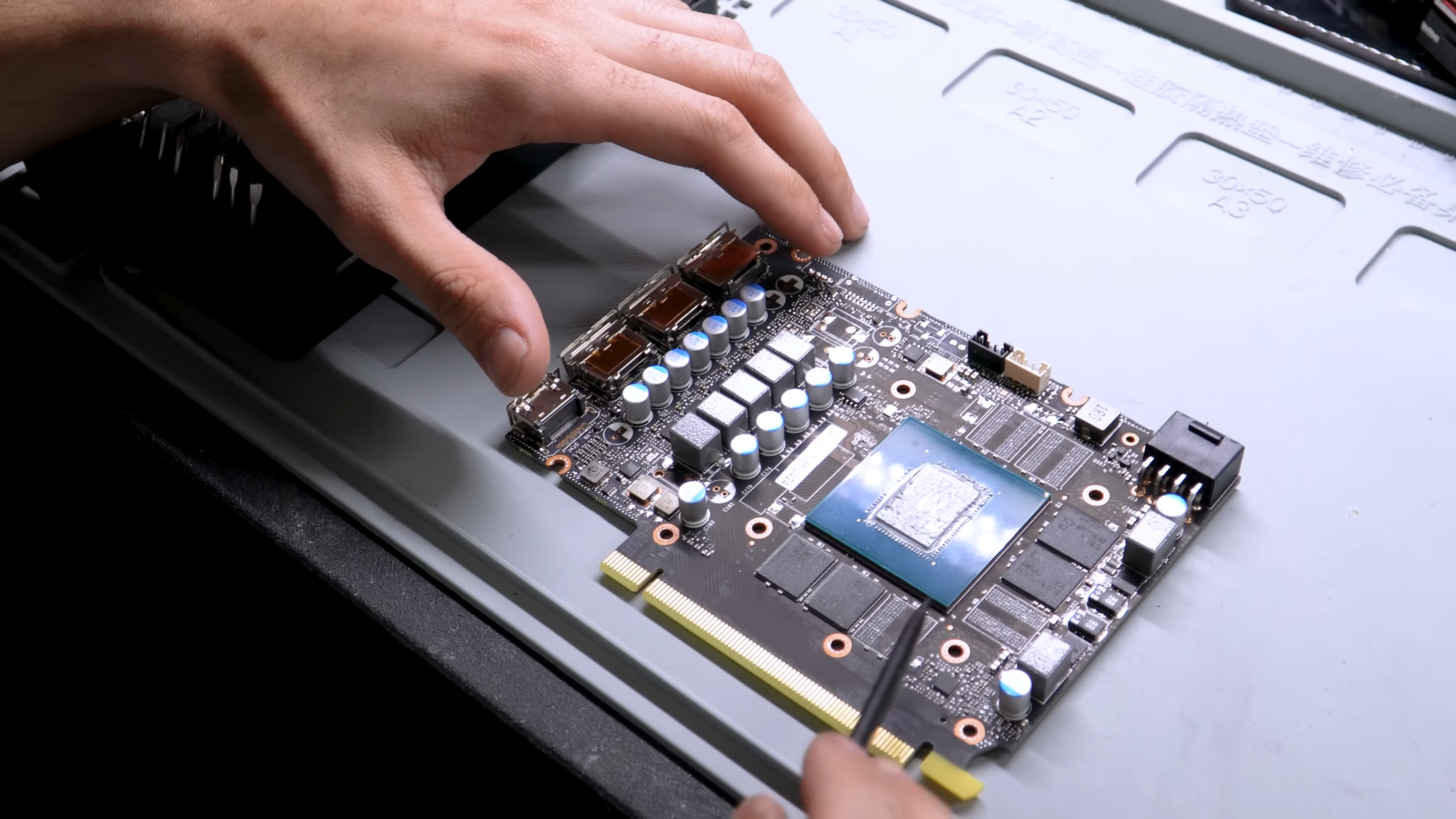
That is close to a two times gain in the benchmark, which is a striking result for a card that received no GPU core upgrade. The additional VRAM appears to have removed a significant memory limitation in the test.
However, synthetic benchmarks do not always reflect normal gaming performance. A VRAM upgrade can reduce stutters, improve texture loading, and help performance in memory heavy games, but it does not add more CUDA cores, increase the memory bus width, or improve raw graphics processing power.
More VRAM could help modern games, but not double FPS
The GTX 1650 launched as a budget graphics card, and its 4GB VRAM capacity is increasingly restrictive in modern games. Many newer titles can use more than 4GB even at 1080p, especially with higher texture settings.
Moving to 8GB can help prevent severe texture pop in, unstable frametimes, and sudden drops caused by VRAM exhaustion. It may also allow games to use better texture settings without immediately running out of memory.
| Gaming situation | Likely benefit from 8GB VRAM |
|---|---|
| Older esports games | Little to no major difference |
| Older AAA games at 1080p | Better texture headroom |
| Newer AAA games | Fewer VRAM related stutters |
| High texture settings | More stable performance |
| Ray tracing workloads | Still limited by weak GPU processing power |
| 1440p gaming | Some improvement, but GPU core remains a limitation |
The biggest gains would likely appear in games where the original 4GB VRAM limit was causing a problem. In titles that are mainly limited by the GTX 1650’s graphics core, performance may change very little.
Why this upgrade is not practical for most owners
The modification may look simple in theory, but it requires serious technical skill. Replacing GDDR6 memory modules involves precision soldering, compatible donor chips, and a graphics card layout that supports the higher capacity modules.
A mistake can permanently damage the card, memory chips, or GPU package. There is also no guarantee that another GTX 1650 model will recognize 8GB correctly.
This makes the project more interesting as a hardware experiment than a recommended upgrade path for most players.
For people using a GTX 1650 today, lowering texture quality, using upscaling, or moving to a newer graphics card will usually be safer and more practical options.
The mod shows how much VRAM matters now
The project is a useful reminder that VRAM capacity has become far more important in modern PC gaming. A graphics card can still have enough raw processing power for older games, but limited memory can create serious problems in newer titles.
The modified GTX 1650 will not suddenly compete with modern mid range GPUs. Its architecture and processing power remain unchanged. Still, doubling its VRAM from 4GB to 8GB could give it a more usable life in games that struggle with tight memory limits.
It is an impressive repair and modification, but one best left to experienced hardware enthusiasts.



Discussion (0)
Be the first to comment.