




Microsoft may have abandoned Surface phones, but one newly discovered patent shows the company was still thinking seriously about how to improve foldable devices.
The patent reveals a spring loaded hinge design that Microsoft explored for what would have been Surface Duo 3. Unlike the first two Surface Duo models, which used two separate screens, the third generation device was expected to switch to a single folding display.
That would have put Microsoft closer to phones like the Galaxy Z Fold, but the company also seemed aware of one common foldable problem: opening the device can be awkward.
Many folding phones close tightly, either because of strong magnets, flat edges, or the stiffness of the hinge. That can make them hard to open with one hand. Microsoft’s idea was simple: add a spring assisted release.
The design would let you press a button, causing the two halves of the phone to pop open slightly. From there, you could open it more easily with your fingers or thumb.
| Surface Duo 3 hinge idea | What it would do |
|---|---|
| Spring loaded hinge | Helps separate the two halves when closed |
| Release button | Pops the phone open slightly |
| Possible button location | Spine of the device or power button |
| Goal | Easier one handed opening |
| Device codename | Neon |
The patent describes two possible versions. One places the release button on the spine of the phone. Another builds it into the power button. According to Windows Central, some Surface Duo 3 prototypes used a two stage power button, where pressing it fully would trigger the spring loaded hinge.
That is a practical idea. It does not reinvent the foldable phone, but it solves a small daily annoyance. Foldables are expensive and complex, yet basic handling still matters. If a phone is difficult to open, that friction appears every time you use it.
Microsoft reportedly pivoted from dual screens to a folding display in 2022 because the original Surface Duo concept failed to find a large audience. Surface Duo 3, codenamed Neon, was expected to launch around 2023 or 2024, but the project never reached market.
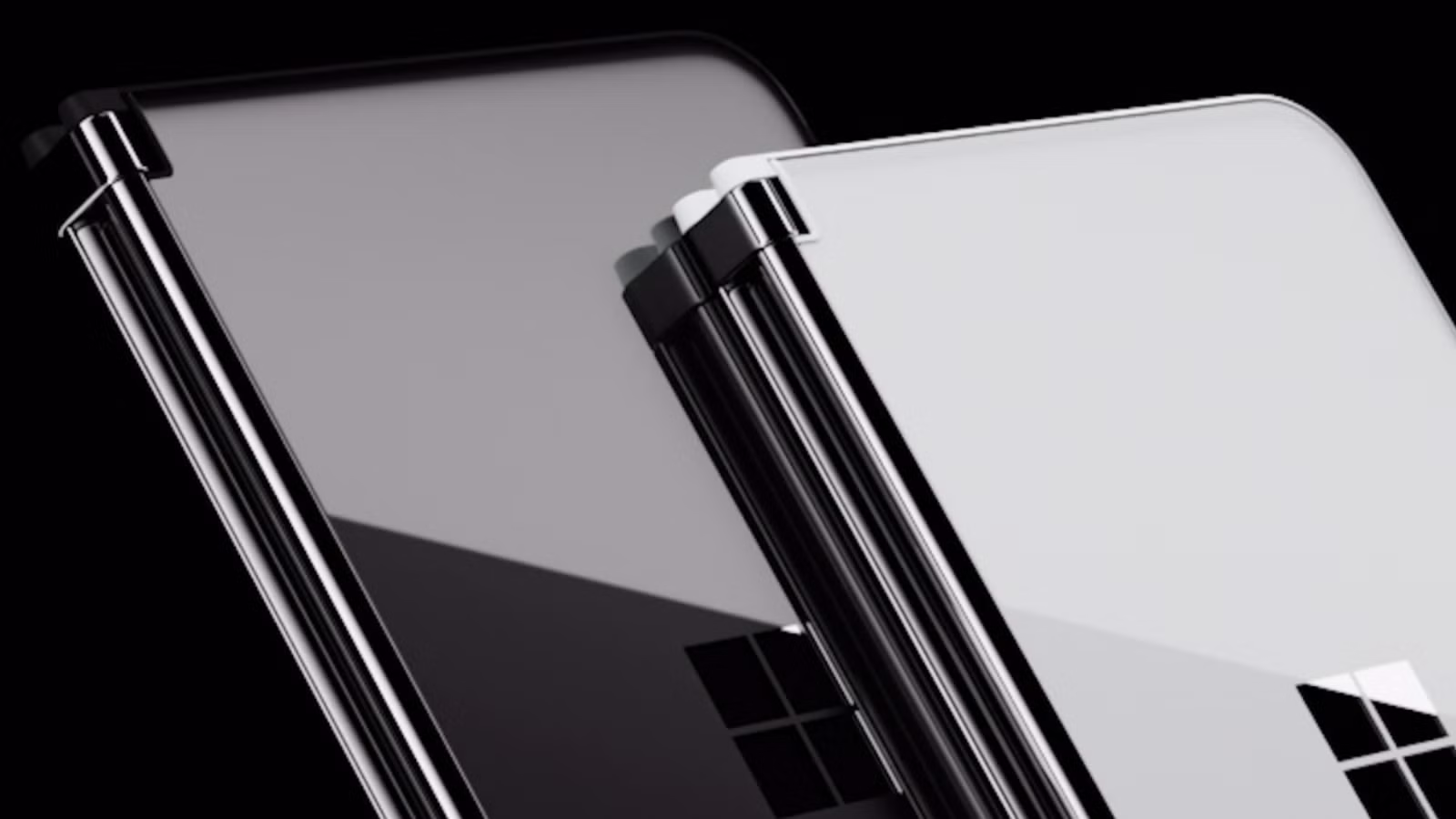
The company eventually cut back its Surface hardware plans and reduced the lineup to more essential products. Surface Duo was scrapped in 2023, and the patent appears to be a leftover from that earlier development work rather than proof that Microsoft is returning to phones.
That makes the discovery bittersweet. Surface Duo had interesting ideas, but weak execution, high pricing, and poor software support hurt the line. A proper foldable Surface phone with a clever hinge might have been more competitive, especially if Microsoft had fixed the software experience.
Still, trust would have been a major problem. Microsoft had already abandoned Windows Phone, then moved on from Surface Duo. Even if Surface Duo 3 had launched with better hardware, many buyers may have been cautious about long term support.
The spring loaded hinge shows that Microsoft was trying to solve real foldable phone problems, not just copy existing designs. But like many Surface experiments, the idea may remain more interesting as a prototype than as a product people could actually buy.


Discussion (0)
Be the first to comment.