



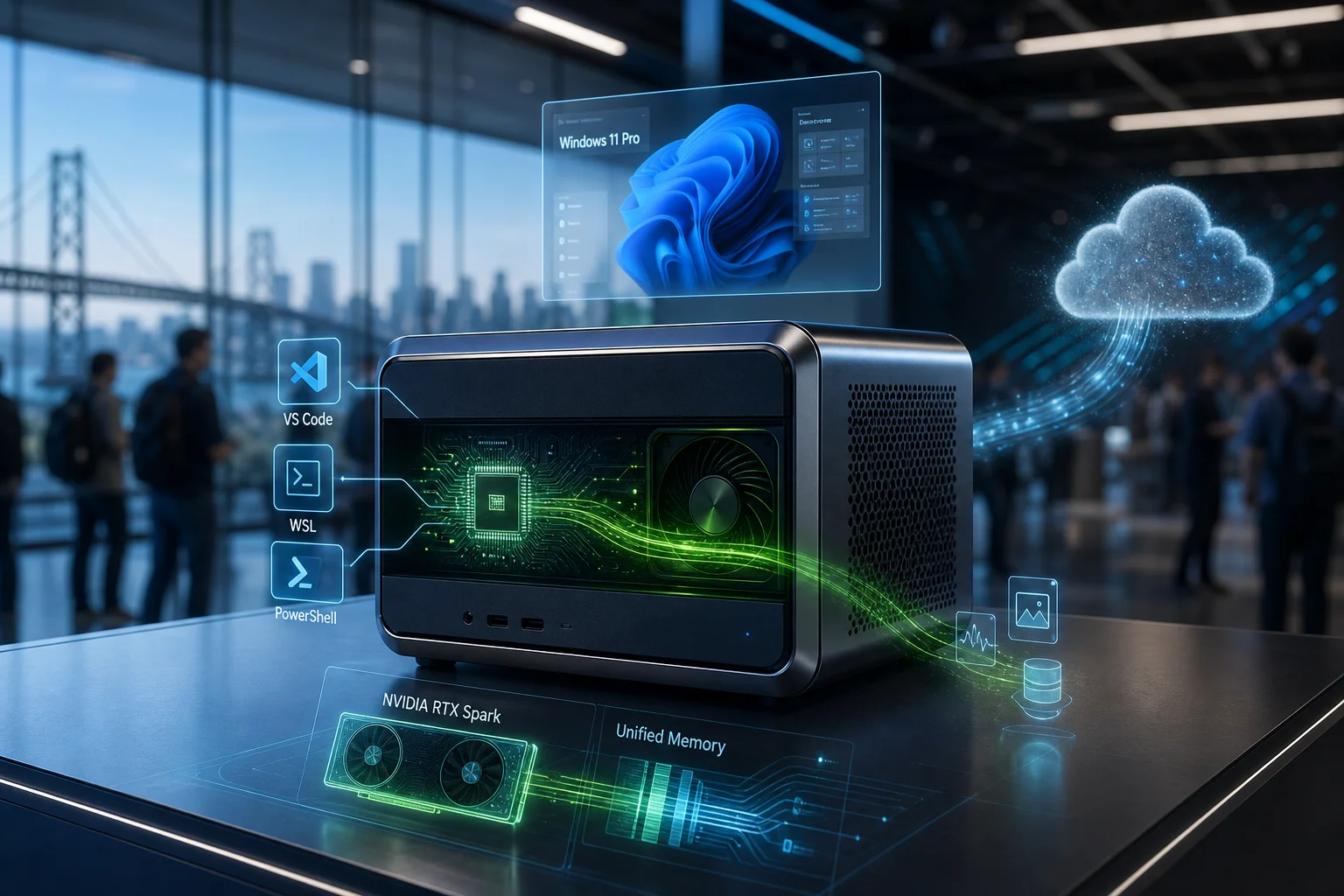
Microsoft is preparing a new Surface RTX Spark Dev Box for developers who want to run AI workloads locally without depending fully on cloud systems. The compact machine is powered by NVIDIA’s RTX Spark platform and is expected to launch later this year in the United States through Microsoft’s official store.
The system is designed for developers working with large AI models, local testing, model tuning, and Windows based AI applications. Microsoft is positioning it as a powerful developer machine with a quiet passive cooled design, high memory capacity, and a software setup built around Windows 11.
The Surface RTX Spark Dev Box is based on NVIDIA’s RTX Spark SoC, which brings 1 PFLOP of AI compute. The chip includes 20 Arm CPU cores and a Blackwell GPU with 6,144 CUDA cores. It is paired with 128GB of LPDDR5X unified memory, with up to 112GB available for the GPU. That memory setup is important because it allows the system to run large AI models locally.
Microsoft says the machine can handle AI models with more than 120 billion parameters and support a 1 million token context. This makes it useful for developers who need to test advanced models on their desk instead of moving every workload to remote servers.
The dev box is built around Windows 11 and local AI tools
The main difference between Microsoft’s Surface RTX Spark Dev Box and other RTX Spark systems is the software experience. Microsoft is shipping the device with a developer optimized version of Windows 11. The goal is to reduce setup time and give developers faster access to the tools they already use.
The system includes support for Visual Studio Code, GitHub Copilot in Windows Terminal, Windows Subsystem for Linux, and PowerShell 7. Microsoft is also adding WindowsML with TensorRT, Windows Copilot Runtime, and a toolkit for Visual Studio Code that can help with model conversion, fine tuning, and evaluation.
Security is also part of the package. The Surface RTX Spark Dev Box includes Secured core PC architecture, BitLocker encryption, and Microsoft Defender protection. That matters because AI development systems can handle sensitive code, private datasets, and internal models.
| Feature | Surface RTX Spark Dev Box detail |
|---|---|
| AI compute | 1 PFLOP |
| CPU | 20 Arm CPU cores |
| GPU | NVIDIA Blackwell GPU with 6,144 CUDA cores |
| Memory | 128GB LPDDR5X unified memory |
| GPU memory access | Up to 112GB |
| Cooling | Fully passive cooled design |
| Software | Developer optimized Windows 11 |
| Security | Secured core PC, BitLocker, Microsoft Defender |
Microsoft is using a silent aluminum chassis for the new AI system
The hardware design is also a major part of the product. Microsoft is using a premium anodized aluminum chassis with a 3D printed body. The case includes 1,000 air vents arranged through the grid design, allowing the system to cool itself without active fans.
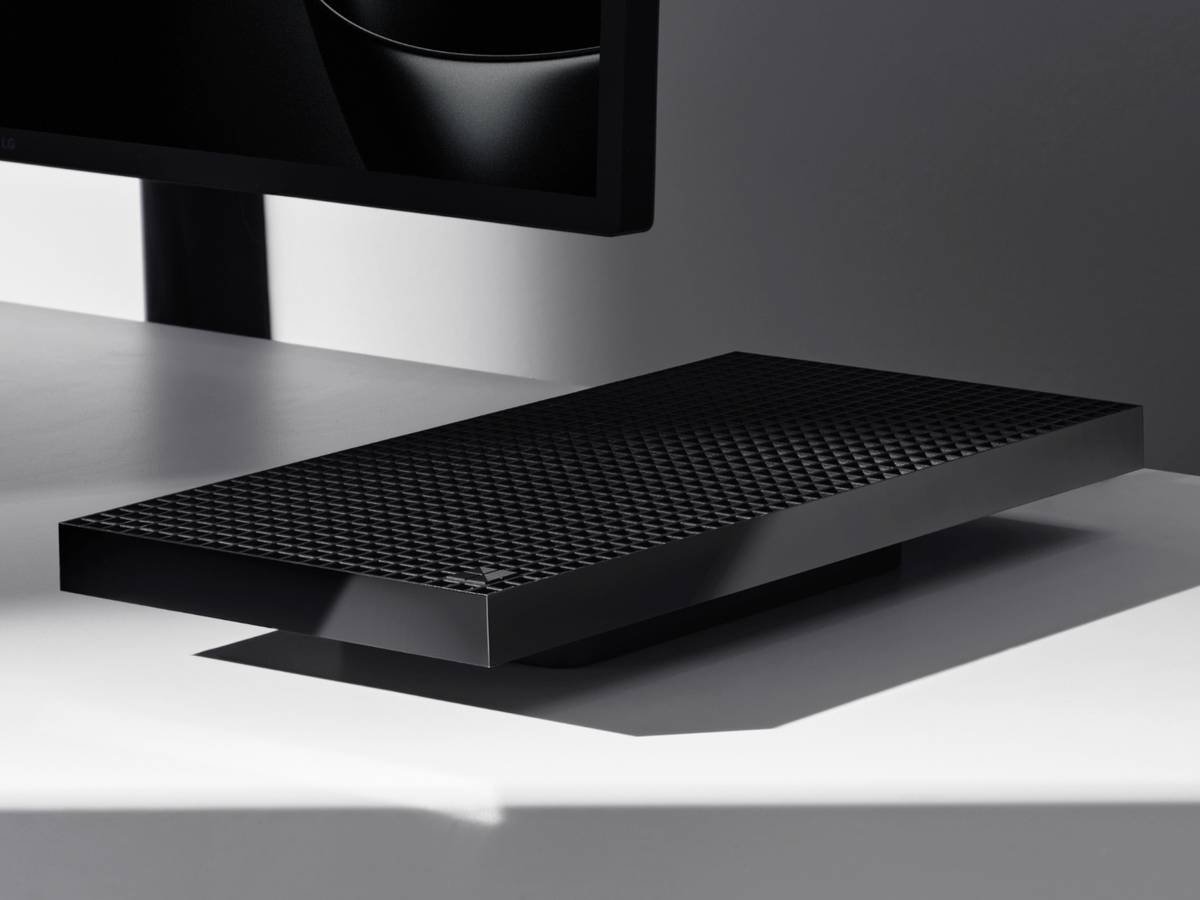
The chassis is built to support up to a 100W TDP. Since the cooling is passive, the device should run with zero fan noise, which could make it useful for offices, labs, and home development setups where noise matters.
For connectivity, the Surface RTX Spark Dev Box includes two USB Type C ports, one USB A port, HDMI, Ethernet LAN, and a headphone jack. That gives developers enough basic ports for displays, networking, peripherals, and local accessories.
Microsoft has not confirmed the final price yet, but the system is expected to cost slightly more than the Surface Laptop Ultra. That suggests the device will sit in a premium category rather than compete with mainstream mini PCs.
The Surface RTX Spark Dev Box shows how Microsoft wants to bring more AI work onto local Windows hardware. Cloud AI will still remain important, but a silent desktop machine with 128GB of unified memory and NVIDIA Blackwell graphics could give developers more control when building, testing, and refining AI applications.



Discussion (0)
Be the first to comment.