



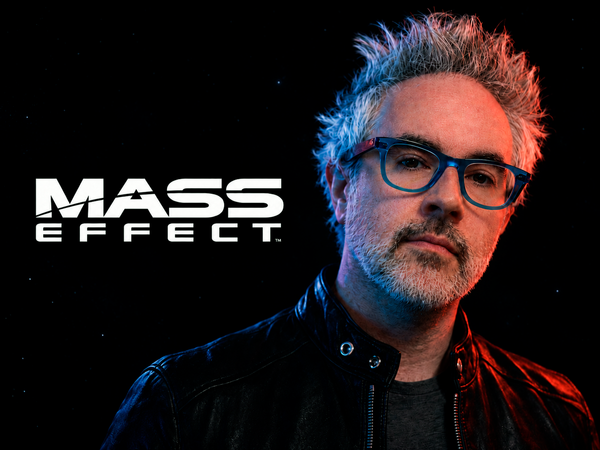
Jack Wall, the composer behind Mass Effect and Mass Effect 2, has revealed how BioWare used innovative music production tools to develop the distinctive soundtracks of its science fiction RPGs.
In a recent interview, Wall discussed the creative decisions and technical methods that helped establish the musical identity of the first two Mass Effect games.
He explained that the series' music was heavily influenced by its visual design, with the development team combining synthesizers, orchestral instruments and electronic elements to create a recognizable sound.
Wall also highlighted the technical improvements introduced during Mass Effect 2, particularly the use of Wwise audio middleware, which allowed the studio to implement music more effectively than in the original game.
According to the composer, the second game's music playback system represented a significant improvement over its predecessor.
Mass Effect's Soundtrack Was Inspired by 1980s Synthesizer Music
Wall explained that game director Casey Hudson wanted Mass Effect to feature music influenced by electronic compositions from the 1980s.
The original idea involved combining synthesizer sounds with orchestral arrangements, giving the game a distinctive musical identity.
This approach helped establish the atmosphere of Mass Effect's futuristic setting while supporting its characters and narrative.
Wall said the soundtrack was built around three important elements: sound, melody and overall atmosphere.
He used Moog synthesizers and other analog instruments alongside orchestral recordings, vocals and percussion.
Arpeggiated synthesizer patterns also became an important part of the musical arrangements.
By combining these elements, Wall created compositions that could support both the series' science fiction environments and its more dramatic moments.
BioWare Used Advanced Synthesizer Plugins for the First Mass Effect
During development of the original Mass Effect, Wall experimented with software instruments that recreated the characteristics of analog synthesizers.
These included plugins developed by Arturia and other music technology companies.
At the time, using such tools represented an important advancement in the composer's production process.
Traditional analog synthesizers could be difficult to manage when working on multiple variations of the same musical composition.
Changing settings and returning to an earlier configuration often required considerable manual effort.
Software instruments made this process more convenient by allowing settings to be saved and recalled immediately.
Wall explained that this capability helped him revisit previous compositions, create alternative versions and reuse musical ideas across different scenes.
It also made the production workflow more manageable as the soundtrack developed.
Mass Effect 2 Introduced a More Advanced Music Playback System
The biggest technical improvement arrived during the development of Mass Effect 2.
BioWare adopted Wwise, an interactive audio middleware system designed to help developers integrate sound and music into games.
Wall described the technology as a major improvement because the original Mass Effect had been developed without it.
Wwise allowed the team to manage how compositions were implemented and played during gameplay.
This was particularly important for a story driven RPG where music needed to accompany different situations and transitions.
According to Wall, the way music played in Mass Effect 2 was considerably better than in the first game.
His comments suggest that improvements in audio implementation were as important as the compositions themselves when refining the sequel's soundtrack.
Visual Design Played a Major Role in Jack Wall's Creative Process
Wall also discussed how he approaches composing music for video games, movies and television.
Rather than relying on one established musical formula, he considers each project to have its own creative requirements.
Visual material is particularly important to his process because it helps him understand the atmosphere and direction of a production.
In the case of Mass Effect, the futuristic environments, characters and cinematic presentation provided inspiration for the soundtrack.
These visual references helped shape the selection of instruments and the overall musical style.
Wall's experience with the first two games illustrates how improvements in music production technology and close collaboration with developers influenced their soundtracks.
While Mass Effect established the series' musical identity through analog inspired synthesis and orchestral arrangements, Mass Effect 2 expanded on that foundation with more sophisticated audio implementation tools.
The result was a soundtrack production process that gave the composer greater flexibility while allowing BioWare to integrate music more effectively into its gameplay and storytelling.



Discussion (0)
Be the first to comment.