



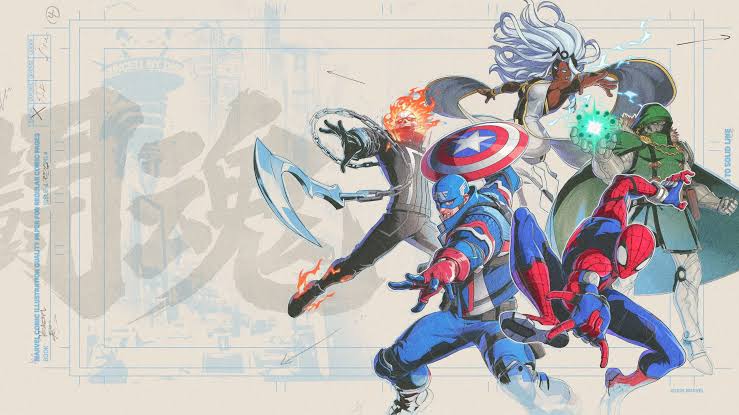
MARVEL Tōkon: Fighting Souls has received its first PC patch after players reported serious performance problems that made it difficult to maintain the 60 FPS required for smooth fighting game play.
The PC version launched with noticeably worse performance than the PlayStation 5 edition, with some systems suffering from slowdowns during both offline and online matches. Because fighting games depend heavily on consistent frame timing, drops below 60 FPS can affect inputs, animation speed and online synchronization.
The first update focuses mainly on reducing CPU load, fixing sudden performance drops and improving crash reporting so future stability problems can be identified more easily.
First PC patch targets CPU load and sudden slowdowns
| Area | Update |
|---|---|
| CPU performance | Reduced processor load |
| Gameplay stability | Fixed sudden performance drops |
| Online experience | Intended to reduce slowdown related issues |
| Crash tracking | Improved backend crash reporting |
| Platforms affected | PC |
| PlayStation 5 performance | No major issues reported |
The update arrived following a maintenance period and was immediately available for testing in offline modes.
Early player feedback has been broadly positive, with several reports pointing to improved performance after installing the patch.
The most important change is the reduction in CPU load. MARVEL Tōkon: Fighting Souls appears to have placed unusually high demands on processors at launch, preventing some otherwise capable gaming PCs from maintaining a stable 60 FPS.
Reducing that workload should make frame delivery more consistent, especially on systems where the CPU was previously the limiting factor.
Frame rate stability matters more in fighting games
Performance problems can be particularly disruptive in a fighting game because the game logic is normally tied closely to a fixed frame rate.
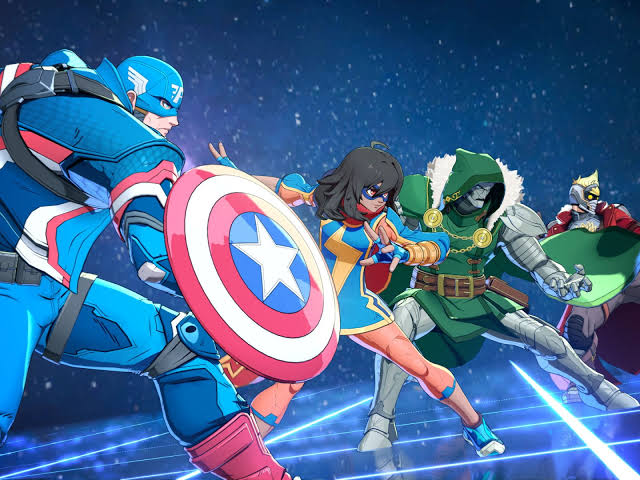
A traditional fighting game expects gameplay to run at 60 FPS. If one system cannot maintain that target, the result can feel much worse than a similar frame rate drop in many other genres.
Animations can slow down, inputs may feel inconsistent and online rollback systems have to work harder to keep both players synchronized.
That was one of the main complaints surrounding the PC version at launch.
Some online matches reportedly suffered from severe slowdown and five or more rollback frames, making them difficult to play even when the network connection itself was not necessarily the main problem.
If one player's PC cannot process the game quickly enough, online performance can deteriorate for both participants.
More powerful PCs were less affected
The scale of the problem varied significantly depending on hardware.
High end systems were sometimes powerful enough to maintain the required frame rate despite the underlying optimization issues. A configuration using an Intel Core i7 13700F, RTX 4080 and 32 GB of RAM, for example, could reportedly avoid most major offline performance drops.
That does not mean the launch version was properly optimized.
A fighting game should not require flagship level hardware simply to maintain its intended 60 FPS target, particularly when the console version already demonstrates stable performance.
The patch therefore matters most for players using mainstream processors and GPUs that should reasonably be capable of running the game smoothly.
Online play will be the bigger test
Offline improvements are encouraging, but online matches will provide the more important test of whether the patch has solved the main problems.
Rollback netcode works best when both systems can maintain the expected simulation speed. If either PC suffers repeated performance drops, rollback frames can increase and the match can become visibly unstable.
The reduced CPU load should help, but it may take more updates before the PC version reaches consistent performance across a wider range of hardware.
The improved crash reporting included in the patch should also help the development team collect better information about systems still experiencing problems.
That could make future patches more targeted.
Arc System Works responded quickly after launch
MARVEL Tōkon: Fighting Souls only launched last week, so the first performance update arrived relatively quickly.
The game has otherwise received positive attention for its four versus four combat system and its attempt to combine easier accessibility with the mechanical depth expected from an Arc System Works fighting game.
Technical problems on PC threatened to overshadow those strengths during the launch period.
The first patch does not guarantee that every performance issue has been solved, but reducing CPU overhead and addressing sudden frame drops are important first steps.
For PC players, the key question now is whether 60 FPS remains stable during longer sessions and online matches. If the initial improvements hold across a wider range of hardware, MARVEL Tōkon: Fighting Souls should be in a much better position than it was at launch.
Discussion (0)
Be the first to comment.