



Ludus Magnatus: Gladiator Manager Simulator offers an interesting management experience built around running a gladiator school in ancient Rome. However, its Early Access version struggles to make combat and tactical decisions as engaging as the management systems surrounding them.
Developed by Contec Games, the title puts players in the role of a lanista, responsible for recruiting gladiators, training fighters, upgrading equipment, and managing a school while competing against rival teams.
The game features 112 teams across seven competitive tiers, with the ultimate goal of reaching the Imperium Romanum Allstar League.
Although the premise provides plenty of opportunities for strategic gameplay, the current experience can become repetitive, particularly when players have limited influence over how their gladiators perform during matches.
Gladiator Management Offers Some Interesting Decisions
Players begin by managing a relatively modest gladiator school and gradually improving their roster through recruitment, training, and equipment purchases.
The school features seven upgradeable areas, including training facilities, scouting, medical support, and equipment availability.
Improving the training ground helps develop gladiator attributes, while scouting upgrades provide access to stronger recruits.
The antiquarian also becomes important because better equipment can make a significant difference during combat.
However, the training system offers limited complexity. Gladiators have only four main attributes, and training requires an instructor with stronger attributes than the fighters being trained.
Instructors can also pass certain skills to their gladiators, adding another consideration when developing the roster.
Despite these mechanics, the management systems do not always provide enough variety to sustain the lengthy journey through all seven competitive divisions.
Combat AI Reduces the Value of Tactical Planning
Combat is currently the game's biggest weakness.
Players can create five different tactical formations and assign instructions such as attacking, defending, maintaining formation, or targeting weaker opponents.
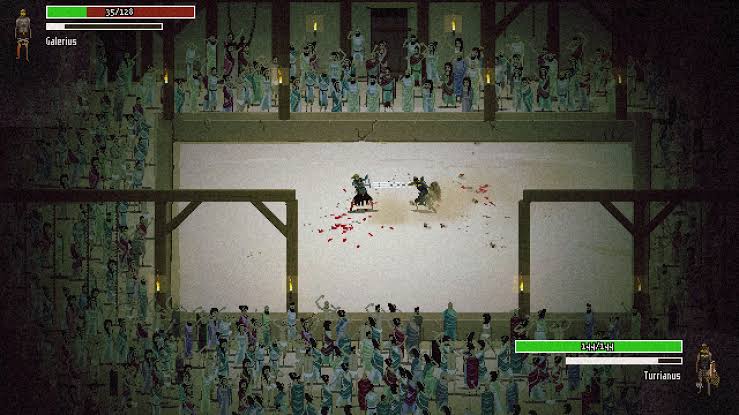
Unfortunately, the AI does not consistently follow those commands.
Gladiators sometimes ignore tactical instructions or fail to attack opponents even when they possess superior equipment and attributes.
As a result, battles can become unpredictable for reasons unrelated to the player's preparation.
This reduces the satisfaction of improving fighters and preparing strategies because the outcome often appears disconnected from the decisions made beforehand.
A more reliable combat AI or the option to simulate matches could improve the experience considerably.
Injuries, Death, and Loyalty Add Consequences
One area where Ludus Magnatus succeeds is roster management.
Gladiators can suffer injuries or die during combat, making it important to balance participation and recovery.
Frequently using the same fighters increases the risk of losing valuable members of the team.
However, leaving gladiators inactive for too long can reduce their loyalty.
Maintaining a rotating roster therefore becomes an important strategy, particularly when equipment and recruitment costs increase.
These mechanics introduce consequences that make managing a gladiator school more interesting than simply purchasing stronger fighters.
Frequent Updates Show Potential for Improvement
Contec Games has continued releasing updates throughout Early Access, addressing bugs, making adjustments, and introducing improvements.
Although these updates have not resolved the most significant combat problems, the developer's continued support provides opportunities for further refinement.
The game currently costs £20.99, which may be difficult to justify for players expecting a polished management simulator.
Those particularly interested in gladiator management may still find enjoyment in its progression and roster systems.
However, the limited tactical depth, unreliable combat behavior, and repetitive matches make it harder to recommend at full price.
Ludus Magnatus has a promising foundation, but meaningful improvements to combat AI and player control will be important if it is to deliver a more satisfying gladiator management experience beyond Early Access.


Discussion (0)
Be the first to comment.