



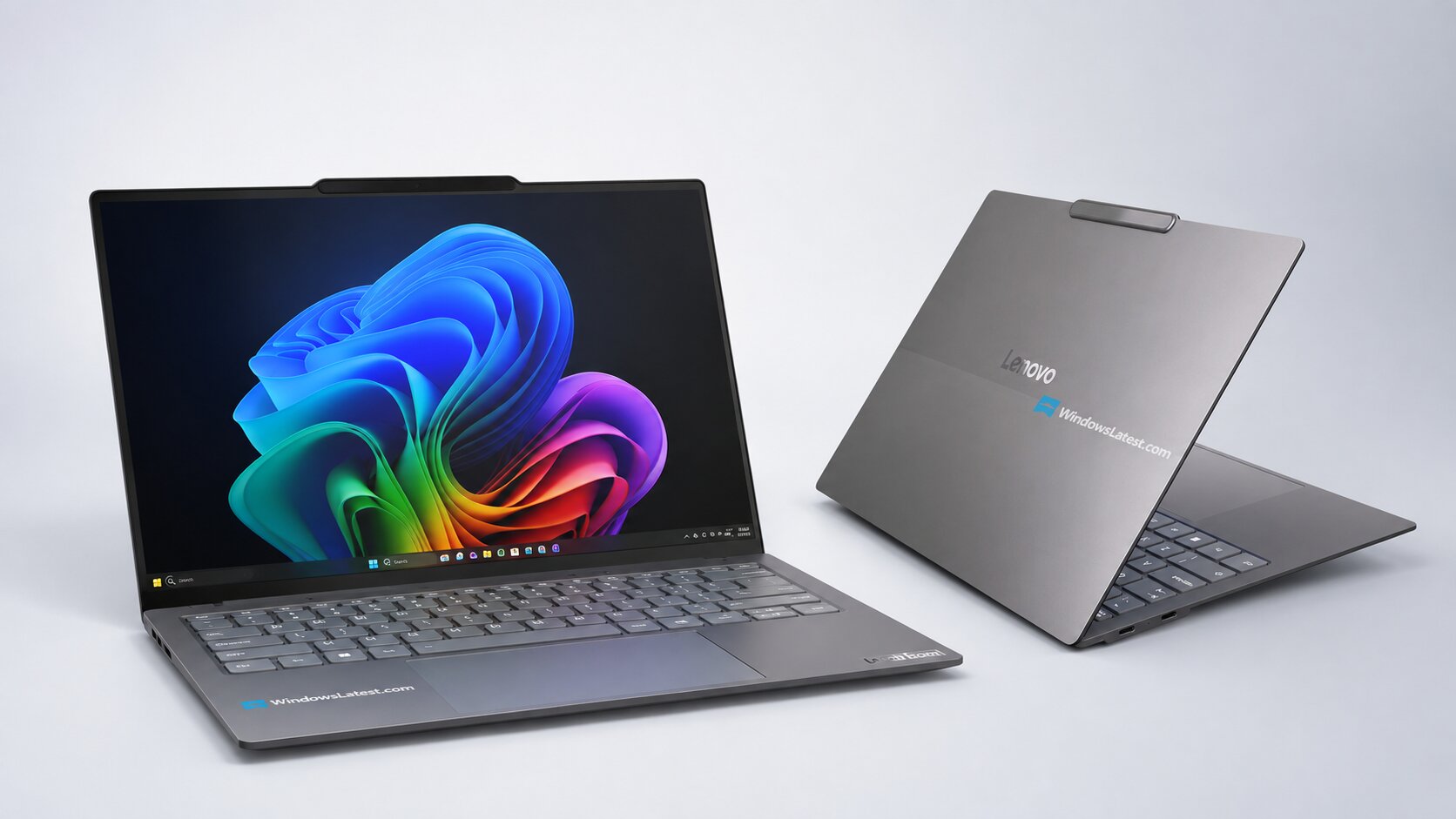
Lenovo is reportedly preparing a new ThinkBook laptop called the Aeroblade, with leaked images showing an unusually thin chassis that appears to push portability further than the company's existing business notebooks.
The design is notable because the main base looks extremely slim, while the rear section becomes visibly thicker to accommodate two USB C ports. The keyboard also appears flatter than on a typical ThinkBook, suggesting Lenovo may have reduced key travel to reach the thinner profile.
The Aeroblade name has reportedly appeared in marketing material, although it is not visible on the laptop itself. Lenovo has not officially announced the model, so specifications, pricing and launch timing remain unknown.
Lenovo ThinkBook Aeroblade details so far
| Area | Reported detail |
|---|---|
| Product line | Lenovo ThinkBook |
| Reported name | Aeroblade |
| Main focus | Extremely thin and lightweight design |
| Ports visible | Two USB C ports |
| Keyboard | Very flat keys with likely reduced travel |
| Touchpad | Large integrated touchpad |
| Internal hardware | Not yet known |
| Cooling system | Not yet disclosed |
| Price | Not announced |
| Launch date | Not announced |
The leaked images suggest that the base may be only a few millimeters thick across much of its surface. It is difficult to determine the exact measurement from images alone, so any estimate should be treated cautiously until Lenovo publishes official dimensions.
Still, the design clearly prioritizes reducing thickness.
USB C ports require a thicker rear section
One of the most interesting parts of the chassis is the raised area near the back.
USB C connectors require a minimum amount of vertical space, and the rest of the laptop appears thin enough that Lenovo could not place them directly into the main body without changing its shape.
As a result, the two USB C ports sit inside a thicker section near the rear.
This approach allows Lenovo to keep most of the chassis exceptionally slim while still including physical connectivity. It also illustrates one of the practical limits faced by manufacturers when reducing laptop thickness.
Ports, batteries, cooling hardware and keyboards all need physical space, even when processors and motherboards become smaller.
Keyboard travel appears to be one compromise
The keyboard is another area where Lenovo may have made sacrifices.
Traditional ThinkBook models usually offer more visible key depth, but the Aeroblade's keys appear nearly flat with the surrounding surface.
That could mean shorter key travel.
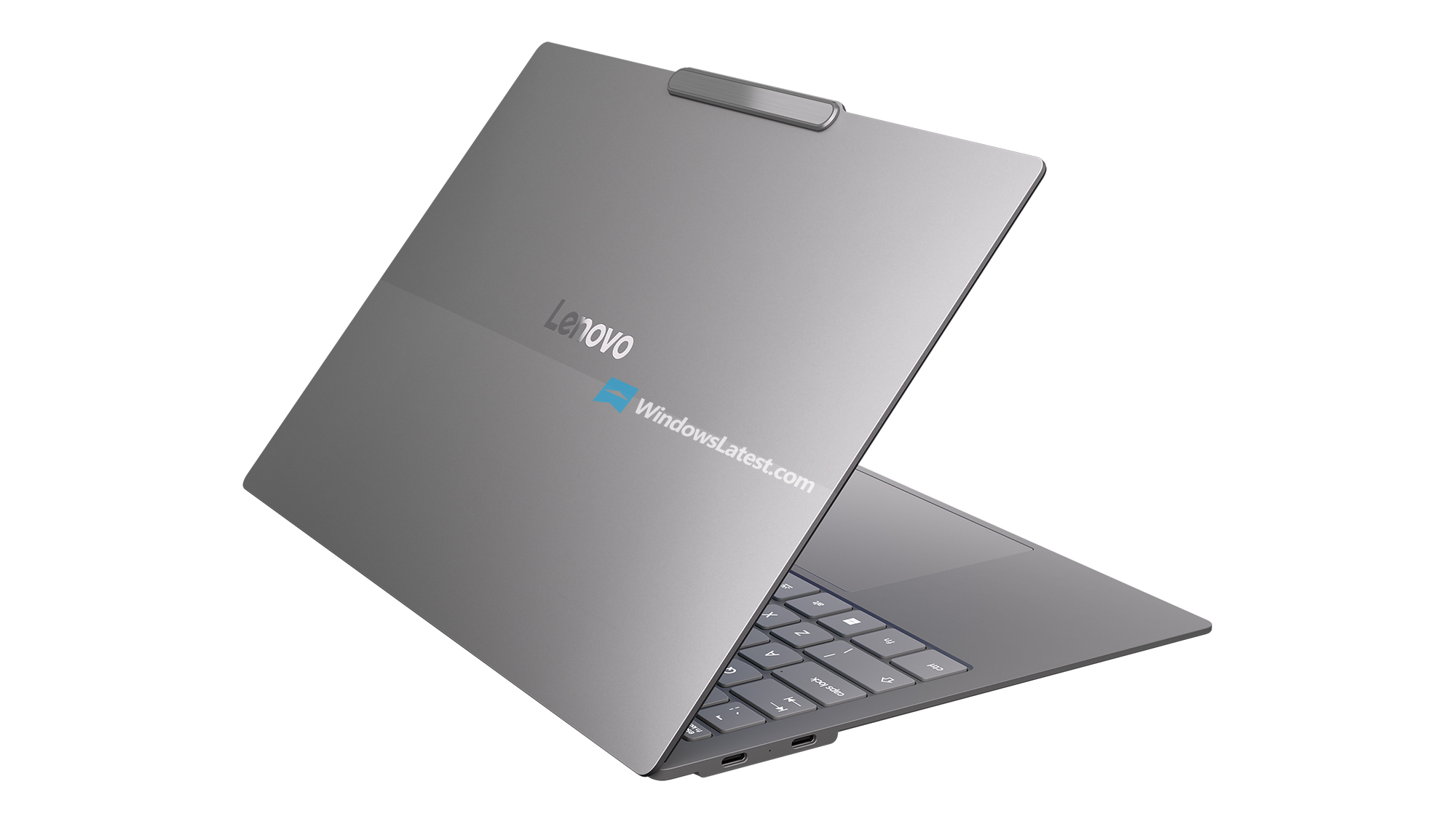
Reduced key travel is common in very thin notebooks because the keyboard mechanism needs to fit inside the limited vertical space available. The tradeoff is that typing can feel less substantial compared with a thicker business laptop.
Whether this becomes a meaningful weakness will depend on the final keyboard mechanism and how Lenovo tunes the key response.
The rest of the layout still resembles the broader ThinkBook family. A large touchpad occupies much of the palm rest, while ThinkBook branding remains visible near the lower corner.
Cooling could be the bigger engineering challenge
The leaked material does not reveal what processor Lenovo plans to use or how the cooling system works.
Those details could determine whether the Aeroblade is simply a very thin productivity notebook or a more ambitious premium system.
Thin laptops have less internal space for fans, heat pipes and vapor chambers. Manufacturers often compensate by using lower power processors, larger passive cooling areas or carefully controlled boost limits.
Battery capacity can also become a compromise because a thinner chassis limits the vertical space available for cells.
Lenovo will therefore need to balance performance, temperature, noise and battery life carefully if the final design is as thin as the images suggest.
ThinkBook continues moving toward thinner premium designs
ThinkBook traditionally sits between Lenovo's mainstream consumer notebooks and its more business focused ThinkPad family.
The lineup has increasingly adopted premium materials, compact designs and modern displays while remaining aimed partly at small businesses and professionals.
Aeroblade appears to take that approach further by making physical size one of its defining characteristics.
For now, there are too many unanswered questions to judge whether the design will be practical. Processor choice, battery capacity, display specifications, weight and cooling performance have not been revealed.
The leaked chassis is still notable because it shows how aggressively Lenovo may be pursuing thinner portable PCs. If the final product closely matches these images, the ThinkBook Aeroblade could become one of the company's slimmest laptops, though that thinness may come with compromises in keyboard travel, connectivity and thermal headroom.



Discussion (0)
Be the first to comment.