



Fresh Korean customs data shows how sharply memory and storage prices are moving as AI demand continues to reshape the semiconductor market.
The latest import and export numbers for South Korea show major month over month price increases across DRAM, NAND flash, HBM, and broader memory products. Since Samsung and SK hynix are two of the world’s most important memory suppliers, Korean export pricing is a useful signal for where the wider market may be heading.
The biggest jump came from NAND flash, which is used in SSDs and other storage products. NAND flash export unit prices rose 63.1 percent compared with the previous month and 351.6 percent year over year.
DRAM also climbed sharply. DRAM unit prices rose 20.9 percent month over month and nearly 497.4 percent year over year. HBM, which is critical for AI accelerators, rose 18.7 percent month over month and 165.5 percent year over year.
Here is the breakdown from the report:
| Category | Unit price | Year over year growth | Month over month growth |
|---|---|---|---|
| Memory | $82,680 per kg | 326.3 percent | 28.8 percent |
| DRAM | $89,498 per kg | 497.4 percent | 20.9 percent |
| Flash memory | $67,307 per kg | 351.6 percent | 63.1 percent |
| MCP, including HBM | $78,752 per kg | 165.5 percent | 18.7 percent |
| DRAM module | $29,882 per kg | 351.2 percent | Down 13.9 percent |
The data shows how uneven the market has become. AI focused memory and storage products are seeing strong demand and higher pricing, while some consumer products are behaving differently.
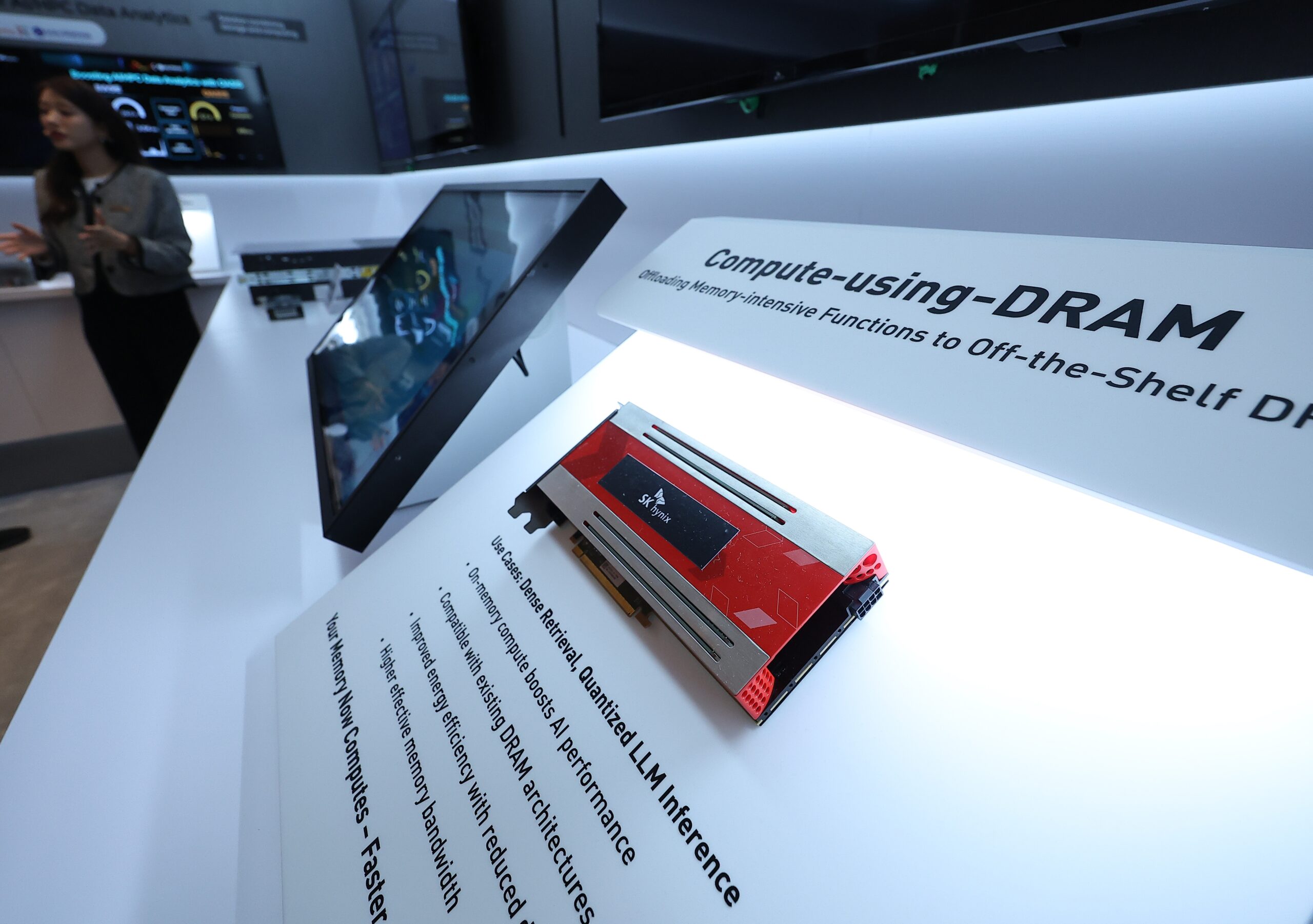
(¶ó½ºº£À̰Žº=¿¬ÇÕ´º½º) ±è¼º¹Î ±âÀÚ = CES °³¸· 3ÀÏÂ÷ÀÎ 8ÀÏ(ÇöÁö½Ã°£) ¹Ì±¹ ³×¹Ù´ÙÁÖ ¶ó½ºº£À̰Žº º£³×½Ã¾È ÄÁº¥¼Ç¼¾ÅÍ SK ÇÏÀ̴нº ºÎ½º¿¡ µð·¥ °ü·Ã Á¦Ç°ÀÌ Àü½ÃµÅ ÀÖ´Ù. 2026.1.9
[email protected]/2026-01-09 09:08:16/
TrendForce reports that spot prices for some consumer NAND products, including TLC based SSDs, have declined by around 30 to 40 percent. That is likely because the PC market has slowed as consumers delay upgrades due to higher overall hardware prices.
But contract prices for other storage products are still rising. MLC based SSD contract prices reportedly rose 50 percent, while SLC based SSDs rose 20 percent. The focus for major suppliers remains AI storage and AI memory, where demand is stronger and customers are willing to pay.
The broader situation is still difficult for normal PC buyers. AI companies are locking up memory supply, and new factories cannot be built quickly. It can take two to three years to construct new production facilities and bring them to mass production.
Samsung has already warned that the memory shortage could be worse in 2027 than in 2026. That lines up with the current data, which shows prices are still rising sharply in important categories.
Chinese memory makers are also expanding production, but much of that supply is expected to serve domestic demand, especially from Chinese data centers and AI firms. That may help China reduce dependence on foreign suppliers, but it may not quickly solve the global shortage.
For consumers, the message is mixed. Some consumer SSD deals may still appear because of excess inventory in parts of the PC market. But DRAM, HBM, enterprise SSDs, and AI focused memory products remain under heavy pressure.
That means RAM and SSD prices may stay unpredictable. Budget PCs, gaming laptops, consoles, phones, handhelds, and DIY upgrades could all feel the impact if suppliers keep shifting capacity toward AI customers.
The AI boom is not only raising GPU demand. It is pulling on the entire memory and storage chain, and Korean export data shows just how quickly prices can move when demand outruns supply.

Discussion (0)
Be the first to comment.