




BioShock creator Ken Levine believes games do not need cutting edge graphics technology to stand out.
In a new IGN Icons interview, Levine said chasing ultra realistic visuals can make games more expensive and can also make them age faster. His argument is that strong art direction often lasts longer than technical realism.
Levine pointed to BioShock as an example. The game was not trying to render every object with perfect realism. It had a realistic foundation, but its world, characters, lighting, and architecture were stylized enough to remain visually memorable years later.
That is the same idea Blizzard has followed for a long time. Games like World of Warcraft do not depend on photorealism. Their art style is exaggerated, readable, and consistent, which helps them stay recognizable even as hardware improves.
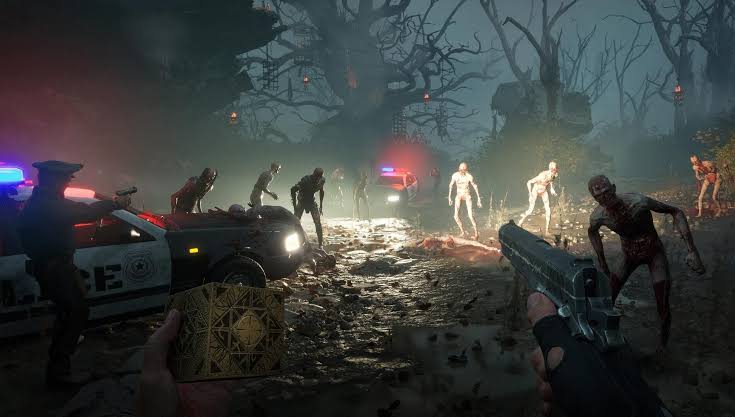
Levine said a studio with the right art director and visual approach does not always need the newest rendering technology. That thinking also appears to apply to Judas, his next game at Ghost Story Games. Judas uses Unreal Engine, but its look is more stylized than photorealistic. Based on Levine’s comments, it seems unlikely the game will focus on features like path tracing just for the sake of technical spectacle.
His comments also touch on a larger issue in game development. Modern AAA games are becoming more expensive, and visual realism is one of the reasons. More detailed assets, more realistic lighting, more complex animation, and higher fidelity worlds all take time and money. But that does not always make a game better.
Levine also compared Judas to games like Baldur’s Gate 3, saying some of the hardest work in modern games is not always about hardware. It can be about structure, writing, systems, and choice.
That is especially true for Judas. Levine said the game has taken a long time because the team is building a “narrative Lego” system. The idea is to combine story pieces dynamically at runtime so the game can react more strongly to player actions.
That is different from BioShock and BioShock Infinite. Those games had strong stories, but they were mostly linear outside combat. Judas is meant to be more reactive, with story elements changing based on what the player does.

That kind of design is not necessarily CPU intensive, according to Levine. It is work intensive. The challenge is writing, engineering, and organizing many possible story combinations so they still feel meaningful.
Judas still does not have a release date. More news could arrive during Summer Game Fest, but for now, Levine’s comments make the game’s direction clearer.
Judas is not trying to win attention by being the most realistic looking game on the market. It is trying to stand out through style, systems, and narrative reactivity.
That may be the smarter path. Realism can impress at launch, but it often gets replaced by the next technical leap. A strong art style can last much longer. BioShock proved that once, and Levine seems to be betting Judas can do it again.

Discussion (0)
Be the first to comment.