


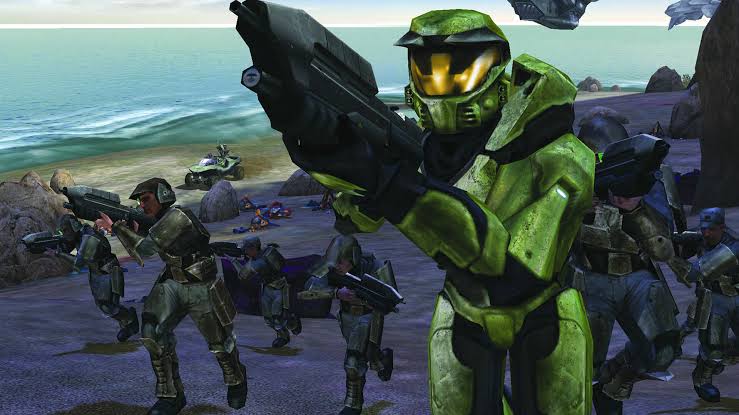
Halo: Combat Evolved has been successfully ported to the SEGA Dreamcast through an unofficial community project, allowing Microsoft's iconic shooter to run on hardware significantly less powerful than the original Xbox. The experimental port can reach approximately 60 FPS in certain areas, although performance remains inconsistent throughout the game.
The project, called Halo: Dreamcast Evolved, is being developed by a creator known as JiltedValkyrie. Its long term objective is to bring the complete Halo: Combat Evolved experience to SEGA's discontinued console.
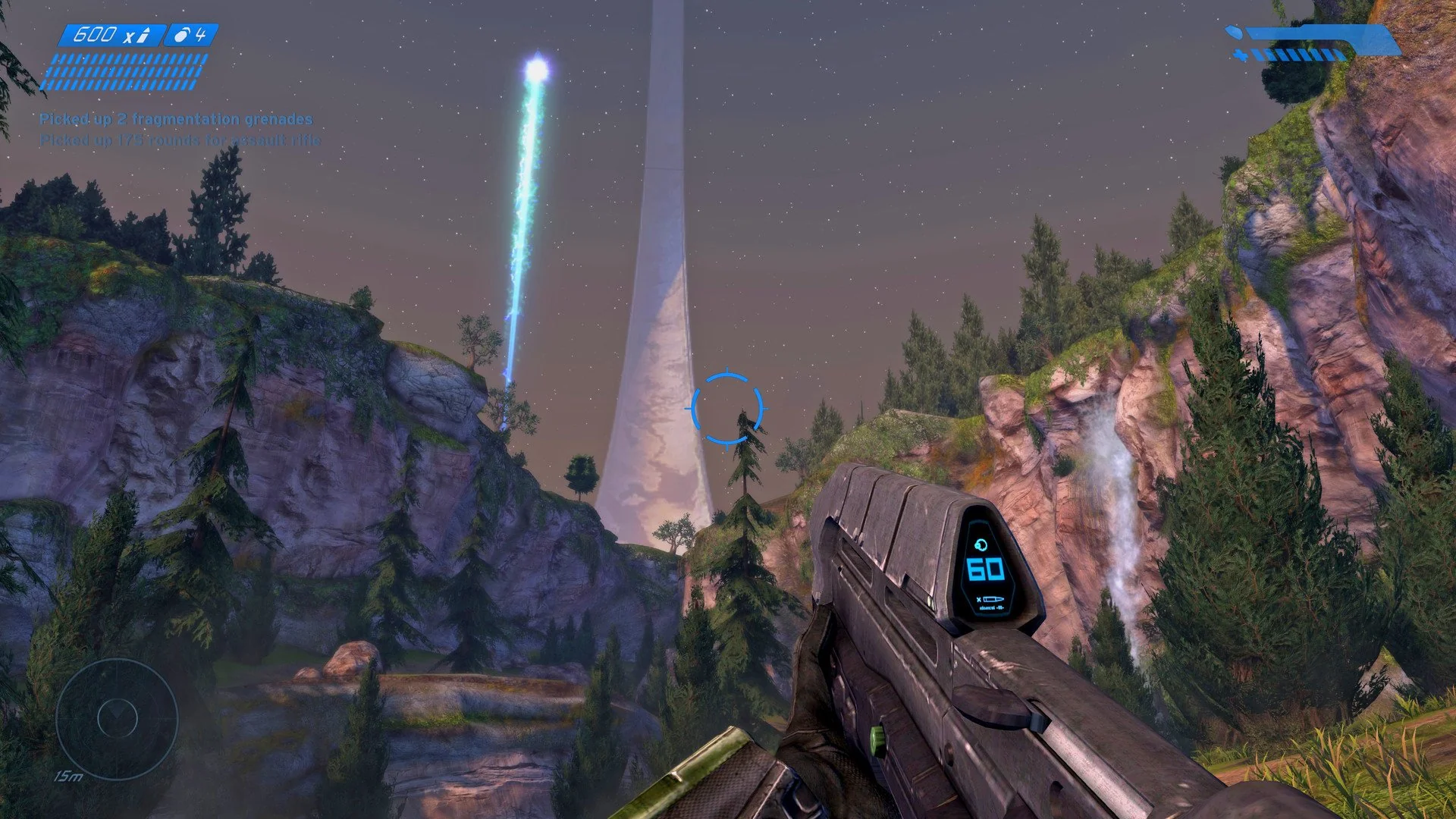
Early footage shows the game running on Dreamcast hardware, including recognizable environments, weapons, and vehicles from the original release.
However, the developer has acknowledged that considerable optimization is still required before the port becomes suitable for regular gameplay.
Halo: Dreamcast Evolved Faces Major Hardware Limitations
One of the biggest challenges is the performance difference between the SEGA Dreamcast and Microsoft's original Xbox.
The Dreamcast launched in 1998 in Japan, while the original Xbox arrived in 2001. Although only a few years separate the consoles, their hardware capabilities differ considerably.
The Xbox offers substantially more processing power and system memory, making it difficult to run software originally developed for Microsoft's console on the older SEGA hardware.
Here is how their specifications compare.
| Hardware specification | SEGA Dreamcast | Original Xbox |
|---|---|---|
| Initial release year | 1998 | 2001 |
| Main processor | Hitachi SH 4 | Intel Pentium III based CPU |
| CPU clock speed | 200 MHz | 733 MHz |
| System memory | 16 MB | 64 MB |
| Reported graphics performance | Approximately 1.4 GFLOPS | Approximately 20 GFLOPS |
| Primary storage format | GD ROM | DVD ROM |
These differences help explain why the Halo port requires extensive modifications.
The original Xbox has four times the system memory of the Dreamcast, while the reported graphics performance figures suggest a substantial difference in theoretical processing capability.
The Dreamcast's slower processor is another important limitation, particularly because Halo relies heavily on enemy behavior, animations, and other gameplay calculations.
Early Halo Gameplay Reaches 60 FPS but Usually Runs Much Slower
The developer has shared approximately 24 minutes of gameplay footage demonstrating the current state of the project.
During testing, the game occasionally reaches around 60 FPS in less demanding sections. However, performance generally falls between 10 and 20 FPS.
This means the port is functioning, but the current experience is not yet comparable to playing Halo on its original hardware.
According to the developer, the Dreamcast's CPU is currently the main performance bottleneck.
Enemy artificial intelligence and character animations consume substantial processing resources, leaving limited capacity for other gameplay systems.
Several technical improvements are still planned, including changes to object visibility, model complexity, and mathematical calculations.
One modification already introduced involves removing defeated enemies and allied Marines from the environment after a period of time.
In the original Xbox release, bodies can remain visible after combat. Removing them helps reduce the amount of information the Dreamcast must continue processing.
More Optimizations Are Planned for the Dreamcast Port
The developer has identified several areas requiring further improvements.
One involves culling, a technique that prevents the game from rendering objects that do not need to appear on screen.
Another involves adjusting levels of detail, which allows distant objects to use simpler models that require fewer hardware resources.
Additional mathematical optimizations could also help reduce processor workloads.
Together, these changes may improve performance, although there is currently no guarantee that the complete game will eventually run at a consistent frame rate.
The project remains in an extremely early development stage, and no final release date has been announced.
Halo Is Appearing on More Unofficial Platforms
The Dreamcast experiment follows several other community efforts to bring Halo: Combat Evolved to devices outside its original supported platforms.
Recent projects have demonstrated the game running on iOS, Android, Linux, and even Nintendo 64 hardware.
These developments have drawn comparisons with Doom, the classic first person shooter that developers have repeatedly adapted to unconventional devices.
Halo is now attracting similar technical experiments as enthusiasts investigate how the game can operate on older consoles and alternative computing platforms.
However, each project uses different methods, and successful demonstrations do not necessarily indicate complete compatibility or stable performance.
Halo: Dreamcast Evolved is particularly interesting because the Dreamcast predates the original Xbox and was never designed to handle a game with Halo's hardware requirements.
The current build still has major performance limitations, but it has already demonstrated that portions of Halo: Combat Evolved can operate on the older console.
Further optimization will determine how much of the campaign can eventually become playable and whether the developer can improve performance beyond the current 10 to 20 FPS range.
Discussion (0)
Be the first to comment.