



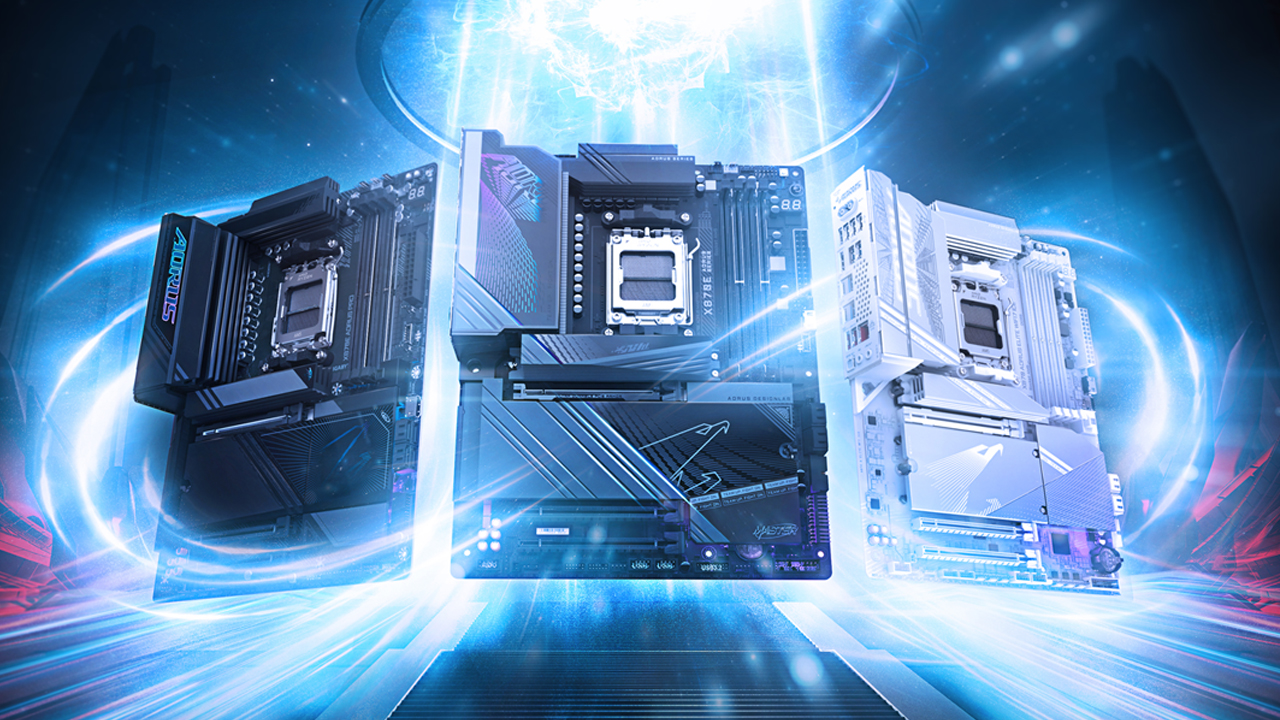
Gigabyte's X870 AORUS Infinity is a flagship AM5 motherboard built for Ryzen enthusiasts who want strong overclocking support, modern connectivity and a platform that can remain useful for several processor generations.
The board sits on AMD's X870 chipset and supports Ryzen 7000, Ryzen 8000 and Ryzen 9000 processors. It also benefits from AMD's longer term commitment to the AM5 socket, which is expected to remain supported through at least 2029.
That gives the X870 AORUS Infinity a wider role than simply serving today's Zen 5 processors. Buyers can potentially keep the same motherboard while moving to future Ryzen chips, depending on BIOS support and platform compatibility.
X870 brings PCIe 5.0 and USB4 as standard
AMD's X870 platform adds several features that were not mandatory across older AM5 chipsets.
| Feature | X870 support |
|---|---|
| CPU socket | AM5 LGA 1718 |
| Memory | DDR5 |
| GPU interface | PCIe 5.0 |
| NVMe support | PCIe 5.0 |
| USB4 | Standard |
| CPU overclocking | Supported |
| Memory overclocking | Supported |
| EXPO support | Yes |
| PBO support | Yes |
| AM5 support target | Through 2029 and beyond |
USB4 is standard on X870 motherboards, while PCIe 5.0 support is available for both graphics cards and NVMe storage.
The platform also supports newer AMD Precision Boost Overdrive and Curve Optimizer features introduced alongside recent Ryzen processors.
Memory support starts at DDR5 5600 officially, while higher end motherboards such as the X870 AORUS Infinity are designed for much faster overclocked memory speeds. DDR5 configurations beyond 8000 MT/s are possible on suitable kits and processors.
X870 sits below X870E but keeps the main features
AMD's X870E and X870 chipsets share many headline capabilities, but they differ in available chipset resources.
X870E uses two Promontory 21 chipset dies, while X870 uses one. This gives X870E more total I/O lanes, but X870 still keeps USB4, PCIe 5.0 graphics support and PCIe 5.0 storage support.
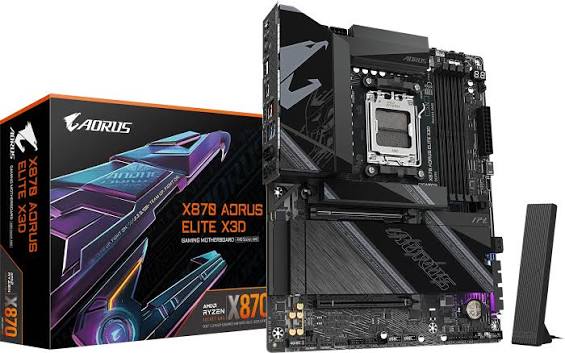
That makes X870 an attractive option for high end gaming systems that do not need the additional expansion capacity of X870E.
B850 sits further down the range and also uses the Promontory 21 design, but USB4 is not mandatory. PCIe 5.0 graphics support can also vary depending on the motherboard.
B840 targets entry level systems and reduces platform capabilities further, focusing on lower cost builds rather than CPU overclocking.
AM5 remains one of the board's biggest advantages
AMD moved from the older PGA layout used by AM4 to the LGA 1718 socket with AM5.
The pins are located in the motherboard socket rather than on the processor itself. The larger number of electrical contacts helps support DDR5, newer PCIe standards and the additional communication requirements of modern Ryzen CPUs.
Platform longevity is also a major selling point.
AM4 remained relevant for many years and supported several generations of Ryzen processors. AMD is following a similar strategy with AM5 and has committed to supporting the socket through 2029 and potentially longer.
That could make a premium motherboard easier to justify for buyers who expect to upgrade processors without replacing the rest of the platform.
Existing CPU coolers remain useful
AM5 processors use a different socket design from AM4, but AMD maintained cooler compatibility with many existing cooling solutions.
Ryzen 7000, Ryzen 8000 and Ryzen 9000 desktop processors use the same general mounting arrangement, which means many AM4 compatible coolers can continue to work on AM5 motherboards without requiring an entirely new cooling system.
That can reduce the cost of moving from an older Ryzen system.
The processors use a 45 mm by 45 mm package with a relatively thick integrated heat spreader designed around the AM5 socket.
X870 AORUS Infinity focuses heavily on overclocking
The X870 AORUS Infinity is positioned as Gigabyte's flagship overclocking focused board rather than a basic AM5 model.
That puts emphasis on power delivery, memory tuning, BIOS features and stability under higher CPU loads.
Ryzen 9000 processors already support AMD technologies such as Precision Boost Overdrive and Curve Optimizer, allowing enthusiasts to adjust boost behavior, voltage and efficiency without relying only on traditional manual overclocking.
A motherboard designed around these features can offer more tuning flexibility than cheaper AM5 boards.
The final value of the X870 AORUS Infinity will depend heavily on pricing, which has not yet been confirmed. Premium X870 and X870E motherboards can become expensive, so features need to justify the additional cost compared with capable B850 alternatives.
For enthusiasts who want PCIe 5.0, USB4, fast DDR5 support and extensive Ryzen overclocking controls, the X870 AORUS Infinity is positioned as one of Gigabyte's most ambitious AM5 options.
Its strongest advantage may ultimately be the platform around it. AM5 already supports several Ryzen generations and remains part of AMD's roadmap through at least 2029, giving a high end motherboard more time to remain relevant than a platform approaching the end of its upgrade path.



Discussion (0)
Be the first to comment.