



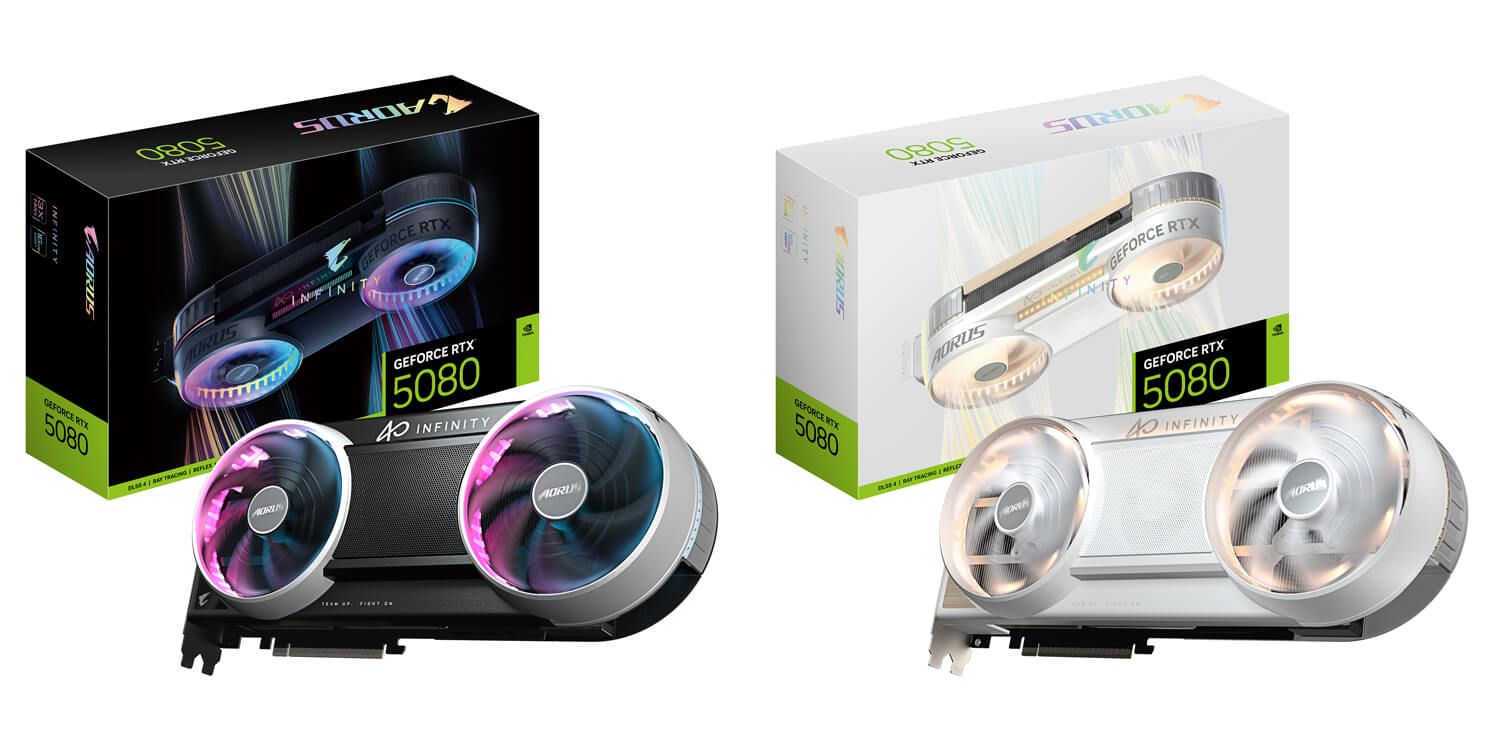
GIGABYTE has expanded its AORUS INFINITY graphics card lineup with new GeForce RTX 5080, RTX 5070 Ti and RTX 5070 models.
The new cards follow the RTX 5090 INFINITY, which launched earlier, and carry over the same design language first shown at Computex 2026. The series focuses heavily on cooling, airflow and cleaner cable management, while one RTX 5080 model also introduces a wood themed exterior.
Pricing has not yet been announced for the new cards.
AORUS RTX 50 INFINITY lineup
| Model | Status | Key design feature |
|---|---|---|
| AORUS RTX 5090 INFINITY | Already available | Flagship INFINITY model |
| AORUS RTX 5080 INFINITY | Now available | WindForce Hyperburst cooling |
| AORUS RTX 5080 INFINITY WOOD | Now available | Wood grain exterior elements |
| AORUS RTX 5070 Ti INFINITY | Now available | Rear positioned power connector |
| AORUS RTX 5070 INFINITY | Now available | Double Flow Through cooling |
The expanded lineup gives buyers several performance tiers while keeping the same general cooler and chassis design.
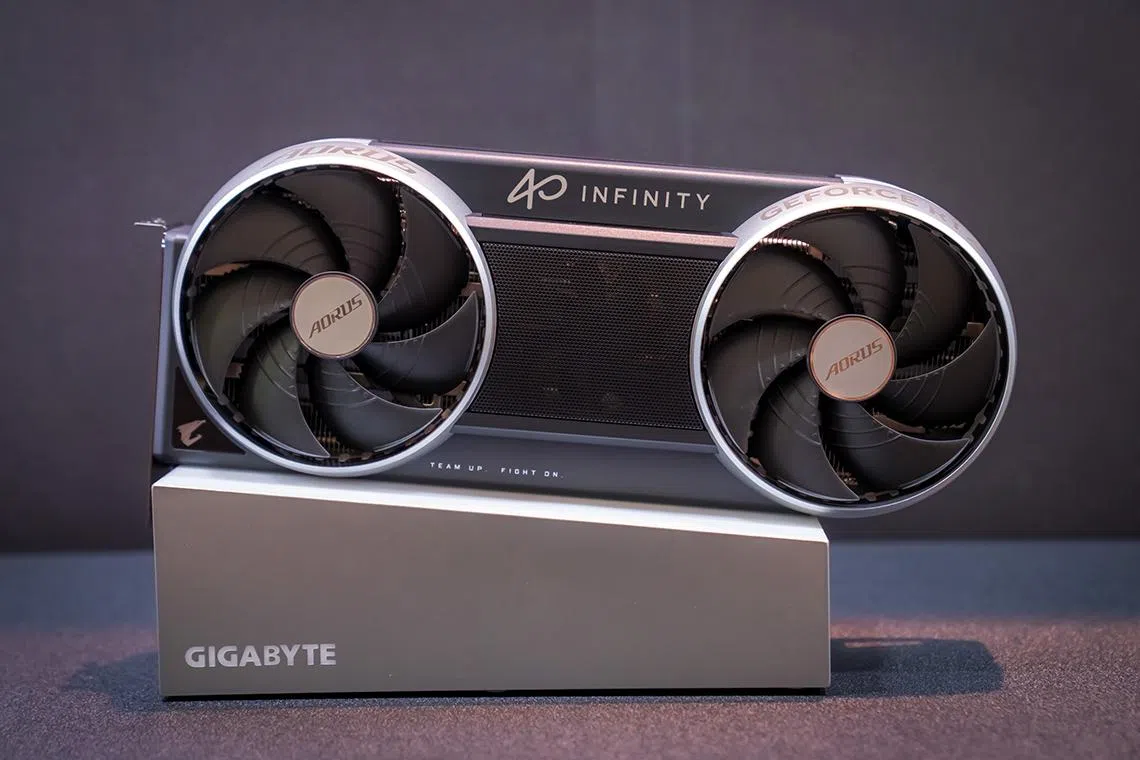
WindForce Hyperburst cooling handles the higher end GPUs
The INFINITY cards use GIGABYTE’s WindForce Hyperburst cooling system.
A Double Flow Through layout allows air to pass through both sides of the backplate, creating a more direct path for heat to leave the heatsink.
The cooler also uses GIGABYTE Hawk fans.
According to the company, these fans can produce up to 53.6 percent higher air pressure and 12.5 percent more airflow compared with its reference point while keeping noise under control.
Another unusual feature is a concealed Overdrive fan positioned in the center of the card.
This fan remains hidden during lighter use and automatically activates when the GPU is under a heavier workload, providing additional airflow when needed.
Rear power connectors aim for cleaner PC builds
GIGABYTE has also changed the location of the power connector compared with more conventional graphics card designs.
The INFINITY models move the connector toward the rear of the card.
The idea is to make cable routing easier and reduce visible wiring inside a PC case.
That approach also fits GIGABYTE’s STEALTH ecosystem, which is built around moving connectors out of normal sight wherever possible.
For builders using compatible cases and motherboards, the rear positioned power connection can make the finished system look cleaner.
RTX 5080 INFINITY WOOD adds a different visual style
The most distinctive model in the new lineup is the AORUS GeForce RTX 5080 INFINITY WOOD edition.
Instead of relying entirely on the usual metal, plastic and RGB focused gaming design, this version adds wood grain elements to the exterior.
The change gives the card a warmer visual style that may suit builds designed around wood accents or less aggressive gaming aesthetics.
GIGABYTE has not announced whether the WOOD edition will command a significant premium over the standard RTX 5080 INFINITY.
Pricing remains unknown
The company has confirmed availability but has not disclosed official prices for the RTX 5080, RTX 5070 Ti or RTX 5070 INFINITY cards.
That leaves one of the most important details unresolved.
The earlier RTX 5090 INFINITY appeared at a very high retail price, and the wider RTX 50 market is already facing significant price increases.
That suggests the new INFINITY models are unlikely to target the lower end of their respective GPU categories.
Their custom cooling systems, rear power connectors and premium AORUS positioning also point toward higher prices than standard partner cards.
INFINITY series expands beyond the flagship
The arrival of RTX 5080, RTX 5070 Ti and RTX 5070 versions turns INFINITY into a broader product family rather than a design reserved only for the RTX 5090.
The main features remain consistent across the range: enhanced airflow, a concealed auxiliary fan, rear power connectivity and premium exterior styling.
For builders focused on cable management and custom PC aesthetics, those design choices may be the main attraction.
The final value of the cards will depend heavily on pricing, however, especially as GeForce RTX 50 series costs continue to rise across the market.



Discussion (0)
Be the first to comment.