



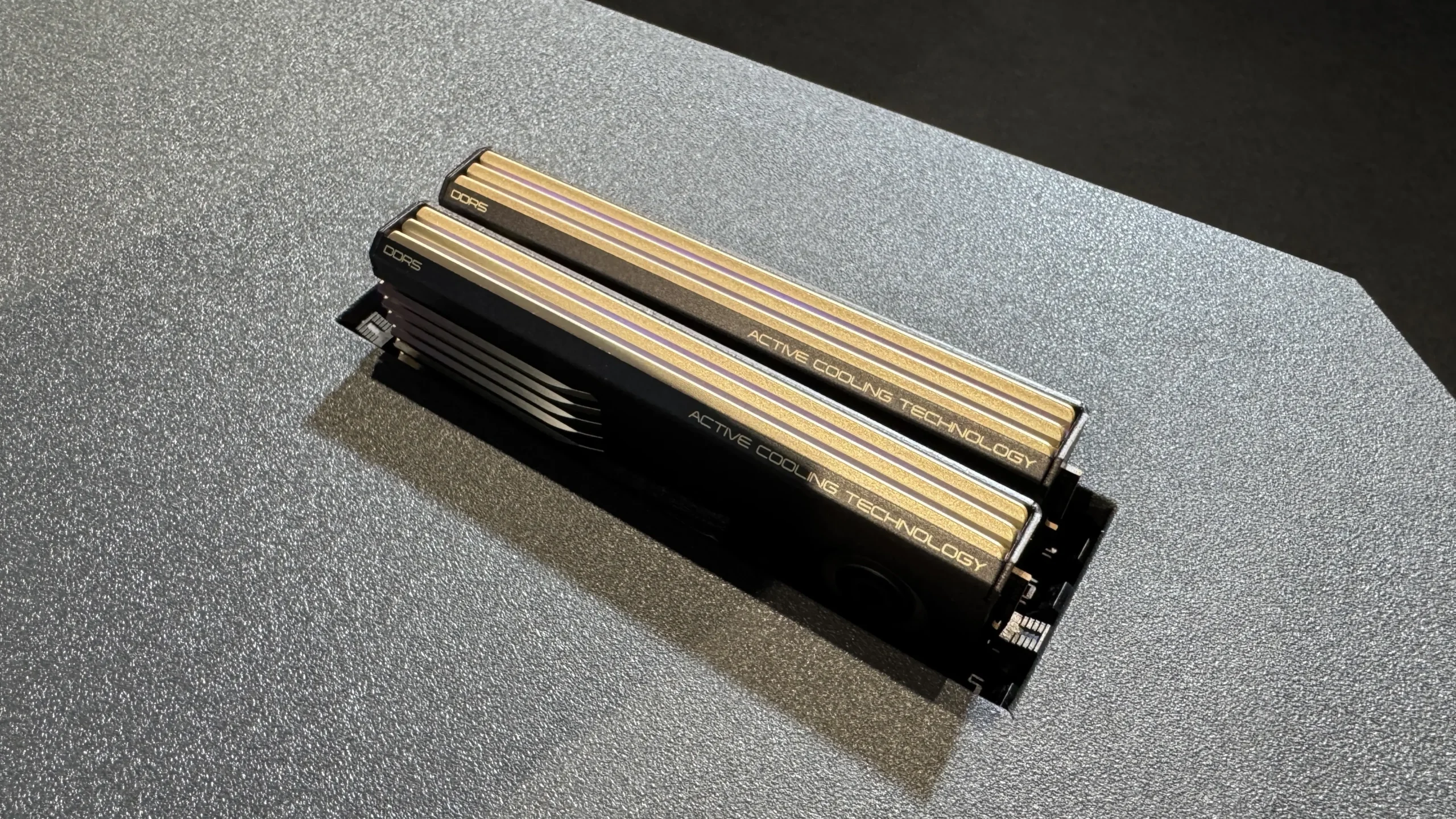
G.Skill is using Computex 2026 to show how far DDR5 memory tuning has moved, even as memory prices remain high across the PC market. The company displayed several DDR5 kits with high transfer speeds, low latency profiles, large capacities, and new cooling designs aimed at enthusiasts, overclockers, and next generation desktop platforms.
The showcase covered both Intel XMP and AMD EXPO memory profiles. G.Skill demonstrated modules running as high as DDR5 10933, along with a 256GB DDR5 8000 setup using two 128GB CUDIMM modules. That 256GB demo is one of the more interesting parts of the lineup because it used passive cooling, showing that high capacity DDR5 kits can still reach strong speeds without active fans in the right setup.
The broader message is clear. DDR5 performance is still improving, but affordability remains a problem. Memory prices are still elevated, and that makes these high end kits more relevant to premium PC builds than mainstream systems for now.
G.Skill is showing faster DDR5 kits for both Intel and AMD systems
The company’s Computex demos included several memory configurations across different motherboards. The fastest example was a DDR5 10933 CUDIMM kit using two 24GB modules on an ASUS ROG Maximus Z890 APEX board. G.Skill also showed DDR5 9200 and DDR5 8800 kits on MSI high end Z890 boards.
For capacity focused systems, the DDR5 8000 256GB demo stood out. It used two 128GB 4 rank CUDIMM modules on a Gigabyte Z890 AORUS Elite DUO X board. That kind of configuration is aimed at users who need both large memory capacity and strong bandwidth, such as creators, workstation builders, and heavy multitaskers.
AMD systems were also part of the showcase. G.Skill displayed several DDR5 6000 kits with tight timings on X870E and B850 motherboards. These demos focused more on low latency than extreme transfer speed, which makes sense because AMD Ryzen platforms often benefit from carefully tuned DDR5 6000 profiles.
| Demo memory kit | Capacity | Platform focus | Main highlight |
|---|---|---|---|
| DDR5 10933 CUDIMM | 48GB | Intel Z890 | Highest speed demo shown |
| DDR5 8000 4 rank CUDIMM | 256GB | Intel Z890 | High capacity with passive cooling |
| DDR5 9200 CUDIMM | 32GB | Intel Z890 | High speed XMP profile |
| DDR5 6000 CL30 UDIMM | 32GB | AMD X870E | Balanced EXPO performance |
| DDR5 6000 CL26 ULL | 32GB | AMD platform | Ultra low latency tuning |
EXPO ULL shows why latency still matters for AI and gaming workloads
G.Skill also highlighted AMD EXPO ULL, which stands for Ultra Low Latency. The company showed a DDR5 6000 low latency setup that delivered noticeable performance gains in LocalScore.ai testing.
Compared with a standard DDR5 5600 CL46 kit, the EXPO ULL setup delivered up to 32 percent better token generation performance. It also showed gains of more than 25 percent against a standard EXPO DDR5 6000 CL30 kit in some tests.
This is important because memory performance is not only about raw transfer speed. Latency can also affect workloads that move data frequently between the CPU and memory. That includes some AI tasks, gaming workloads, and productivity applications. For AMD Ryzen systems in particular, a well tuned DDR5 6000 kit with tight timings can often be more practical than chasing much higher speeds.
MasterDIMM AC adds active cooling for next generation DDR5 modules
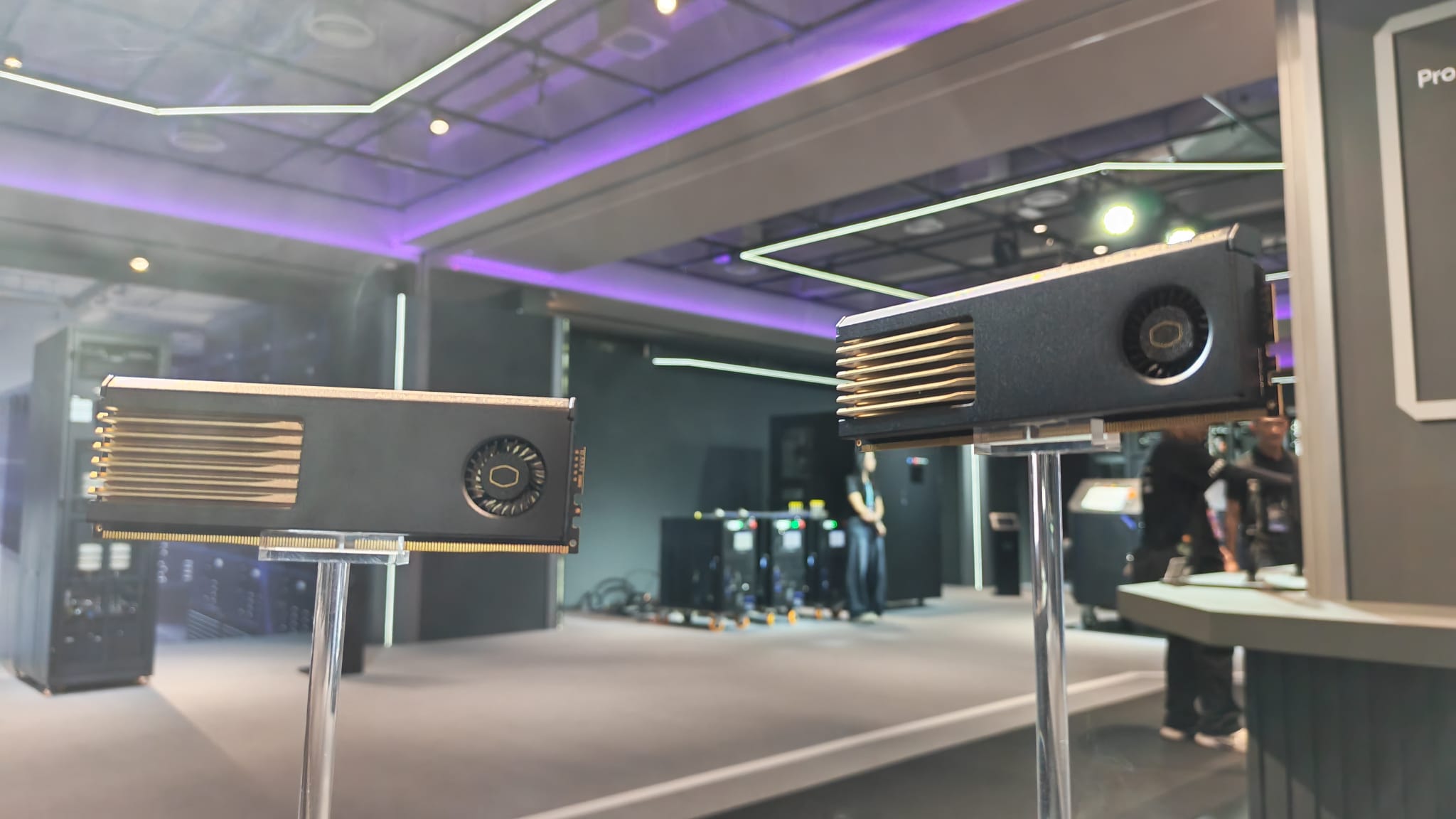
G.Skill also showed its new MasterDIMM AC memory series, developed in collaboration with Cooler Master. These modules use G.Skill memory with a Cooler Master heatsink design. Unlike standard memory kits, MasterDIMM AC includes a thicker cooler with a small built in fan to actively cool the memory components.
The active cooled design is aimed at future DDR5 platforms where higher speeds and tighter timings may increase thermal demands. G.Skill says the MasterDIMM AC series can reach up to DDR5 6000 at CL26 through AMD EXPO and up to DDR5 8400 using Intel XMP 3.0.
The idea is not new in spirit, since memory cooling has existed for years, but this design makes active cooling part of the module itself. That could appeal to overclockers and premium builders who want more thermal headroom without adding separate cooling hardware around the DIMM slots.
G.Skill’s Computex lineup shows that DDR5 still has room to grow in speed, capacity, and tuning. The challenge is price. Until memory costs ease, these kits will likely remain focused on enthusiasts and high end builds. Still, the demos give a clear view of where desktop memory is heading, with larger capacities, lower latency profiles, and more serious cooling designs becoming part of the next wave.



Discussion (0)
Be the first to comment.