



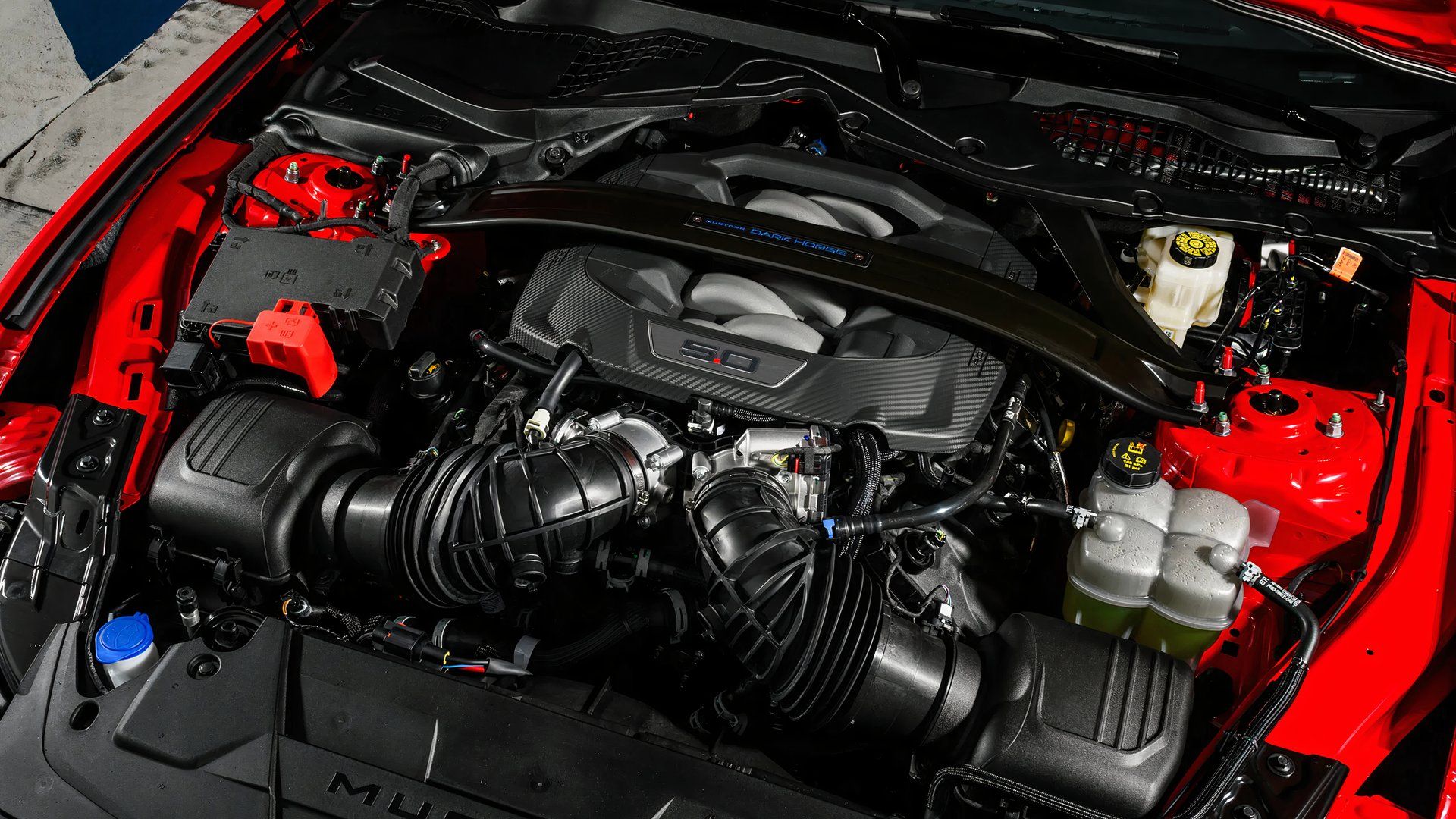
Ford Racing has offered an early preview of the naturally aspirated V8 that will power its upcoming endurance racing prototype, running the engine through a simulated lap of the Circuit de la Sarthe on a test dyno.
The 5.4 litre engine is based on Ford’s Coyote V8 architecture and can reach 9,000 RPM. It will be combined with a standardised hybrid system and installed in an Oreca supplied chassis for competition in the LMDh category.
Rather than relying only on programmed throttle cycles, Ford used telemetry created by professional drivers in its Driver in the Loop simulator. The dyno then reproduced the throttle inputs, downshifts, sustained high speed sections, and energy management patterns recorded during the simulated lap.
This process gives engineers a more realistic picture of how the engine will behave during an endurance race, where driving styles and changing conditions place different loads on its components.
Dyno test recreates a lap of Le Mans
The test was based on the 8.46 mile Circuit de la Sarthe, home of the 24 Hours of Le Mans.
| Engine detail | Information |
|---|---|
| Displacement | 5.4 litres |
| Configuration | Naturally aspirated V8 |
| Maximum engine speed | 9,000 RPM |
| Architecture | Based on the Ford Coyote V8 |
| Racing category | LMDh |
| Chassis supplier | Oreca |
| Powertrain | Combustion engine with standardised hybrid system |
| Test method | Driver telemetry reproduced on a dyno |
A traditional bench test can use precise and repeatable instructions, but it may not represent the irregular inputs made by real drivers. Human drivers lift the throttle at different points, attack curbs with varying aggression, and manage energy in their own ways.
Ford’s method captures these differences and converts them into physical engine loads. This allows the team to study how the V8 responds before the complete prototype begins serious track running.
Human driving creates more realistic stress
Endurance racing places unusual demands on an engine because the car must remain competitive for many hours without sacrificing reliability.
At Le Mans, three drivers normally share the car. Each person has a different approach to braking, acceleration, gear changes, and fuel management. Those differences can produce changing temperatures, oil movement, and mechanical loads throughout the race.
| Area tested | Why it matters |
|---|---|
| Throttle response | Measures behaviour during rapid acceleration changes |
| Downshifts | Tests stress from high engine speeds |
| Oil scavenging | Helps maintain lubrication under heavy forces |
| Heat dissipation | Shows whether the engine can control temperature |
| Energy management | Reflects lift and coast driving techniques |
| Component endurance | Evaluates reliability over long running periods |
The simulator based process therefore gives Ford more useful data than an idealised lap completed through fixed computer instructions.
It may also reveal weaknesses earlier, reducing the risk of discovering major problems after the vehicle reaches the track.
Simulator footage may reveal the car’s shape
The preview included wider views of Ford’s Driver in the Loop simulator, where physical bodywork was fitted around the cockpit.
Such simulators are often designed to reproduce the view a driver will have from the real car. The visible bodywork showed high front wheel arches and a low, flat nose, which may reflect the aerodynamic packaging of the final prototype.
Ford has not fully revealed the car, so these details should not be treated as confirmation of its finished design. Bodywork can still change as engineers complete aerodynamic development and cooling work.
The Oreca chassis also provides a shared foundation, but Ford will develop the external styling and engine installation within the category’s technical rules.
Ford is preparing for top level endurance racing
The new prototype will compete in the FIA World Endurance Championship’s Hypercar class.
LMDh cars use approved chassis supplied by selected manufacturers and share standard hybrid components. Automakers can still develop their own combustion engines, bodywork, and vehicle identity.
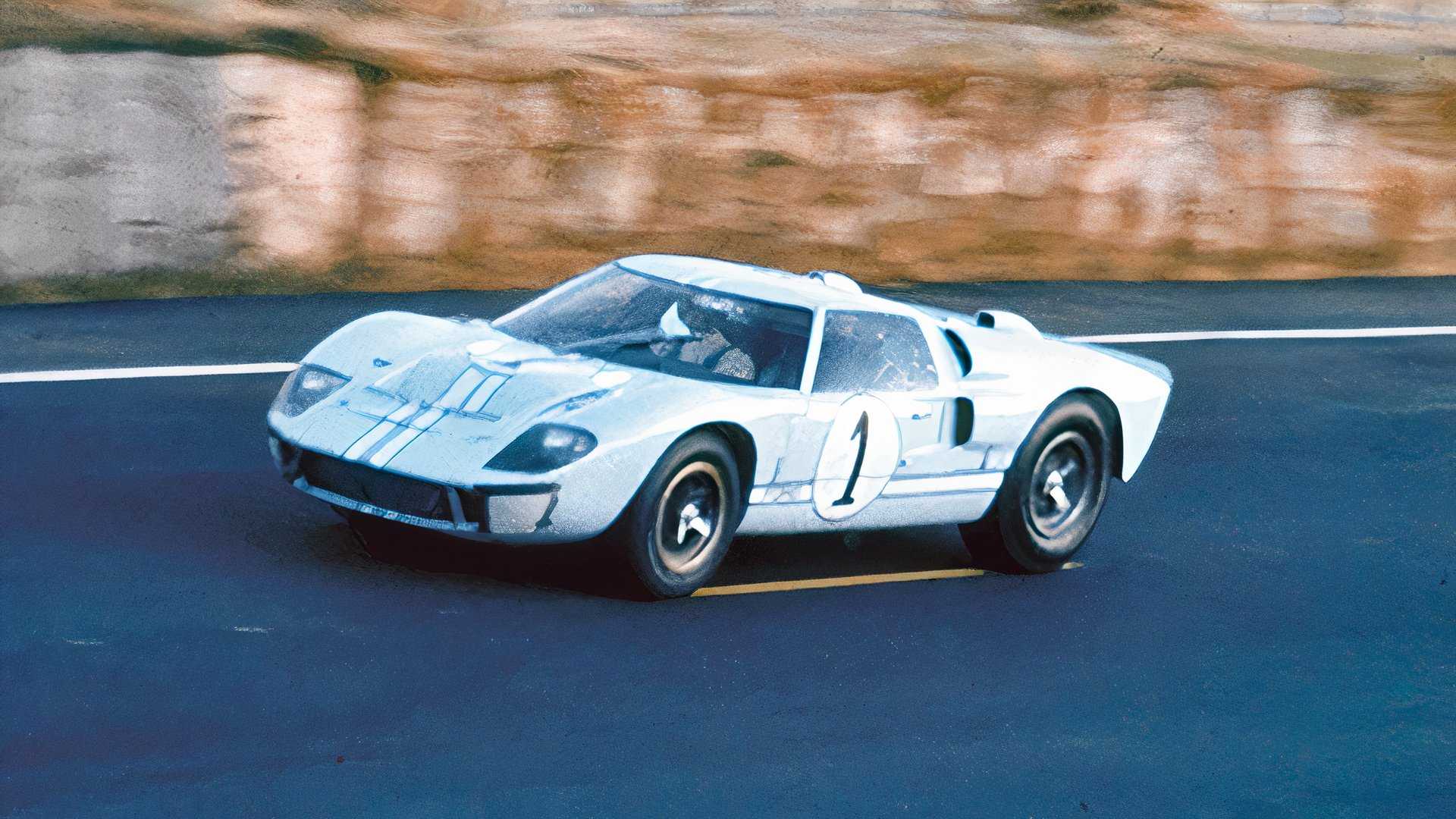
Ford’s naturally aspirated V8 gives the project a distinctive sound and character compared with turbocharged rivals. Reaching 9,000 RPM should also provide a wide operating range for the long straights and repeated acceleration zones found at Le Mans.
| Development stage | Planned timing |
|---|---|
| Engine dyno testing | Underway |
| Complete car track testing | Expected to begin shortly |
| Public reveal | Planned before the end of 2026 |
| World Endurance Championship debut | Early next season |
| Le Mans appearance | Planned for June 12 |
The company intends to reveal the complete race car before the end of the year. Track testing is expected to begin soon as development moves from individual components to the full vehicle.
Ford’s simulated Le Mans run shows that the programme is already testing the V8 under conditions designed to reflect real driver behaviour. The next major step will be proving that the engine, hybrid system, chassis, and aerodynamics can deliver the same reliability when the prototype reaches an actual circuit.



Discussion (0)
Be the first to comment.