



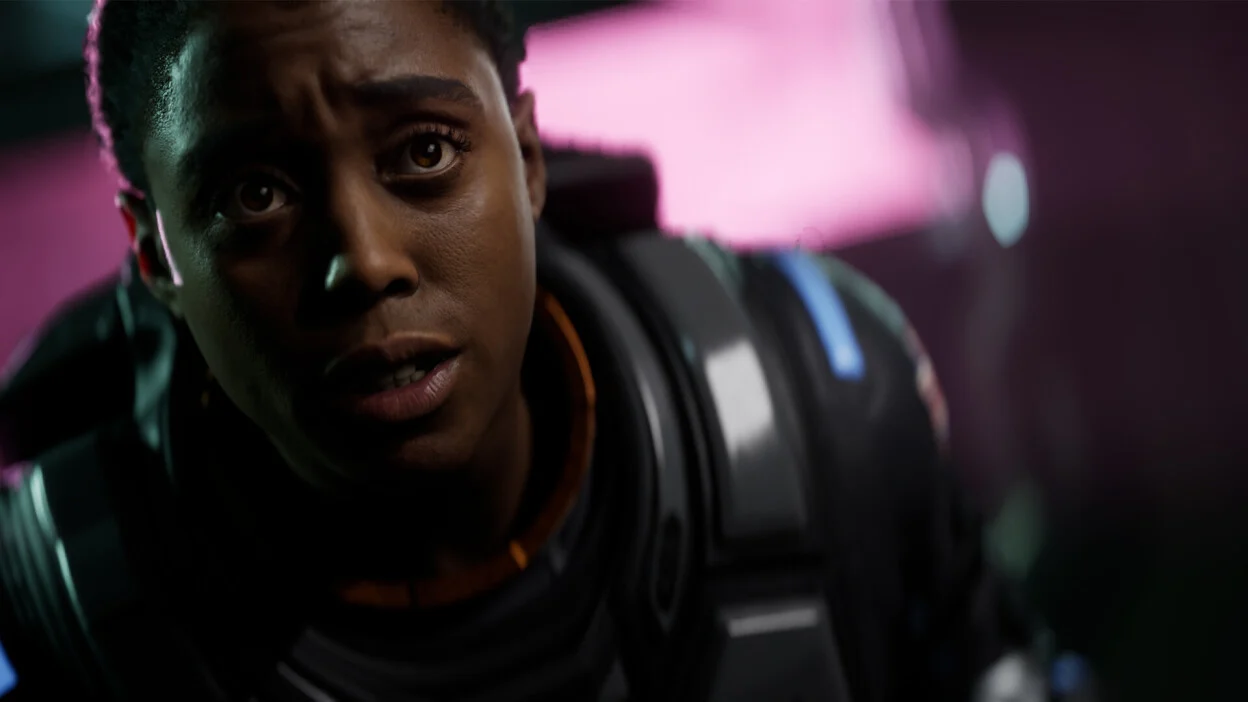
Directive 8020 takes Supermassive Games into deep space, but it does not fully escape the studio’s familiar formula.
The game drops the Dark Pictures branding, yet it still feels closely tied to the same choice driven horror structure that powered Man of Medan, House of Ashes, The Devil in Me, and other Supermassive projects. This time, the setting is different. Instead of haunted towns, ancient ruins, or modern supernatural mysteries, Directive 8020 takes place aboard the Cassiopeia, a ship exploring Tau Ceti f as humanity searches for a possible new home.
That mission quickly falls apart. A mysterious alien lifeform begins killing and copying the crew. The central hook is strong because the alien can disguise itself as one of your own characters. In some moments, even the character you control may not be what they appear to be.
That gives Directive 8020 its best tension. You may be forced to decide which crewmate is real and which one is an impostor, and choosing badly can get the wrong person killed.
The cast can die, lose limbs, distrust each other, or be left behind depending on your choices and quick time event performance. As usual for Supermassive, one mistake can change the shape of your playthrough.
| Area | Directive 8020 |
|---|---|
| Developer | Supermassive Games |
| Platforms | PS5, Xbox Series X/S, PC |
| Genre | Sci fi cinematic horror |
| Setting | Deep space aboard the Cassiopeia |
| Main threat | Shapeshifting alien lifeform |
| Review score | 7/10 |
| Campaign length | Around 8 to 10 hours |
| Completionist replay time | Around 25 to 30 hours |
The performances are one of the stronger parts of the game. Supermassive continues to deliver impressive facial capture, and the crew’s fear, suspicion, and exhaustion sell the situation well. Still, the animation sometimes slips into uncanny territory, with blank stares or expressions that feel almost human but not quite natural.

Gameplay remains simple. Most of the time, you walk, sneak, explore linear areas, and trigger scripted events. Optional paths usually lead to audio logs or collectibles rather than deeper exploration. Puzzles are light, often built around redirecting power or moving batteries from one place to another.
The new Turning Points system is the most useful addition. It shows key decisions and lets players see where choices can branch. This makes replaying chapters easier, especially for players chasing trophies or trying to save everyone.
But even with that system, the story still feels more linear than it first appears. Choices may change who survives or how certain scenes unfold, but the journey still tends to arrive at the same broad destination.
That hurts replay value. Directive 8020 clearly wants players to return and test different paths, but the reviewer felt satisfied after one playthrough. The golden path, where all five crew members survive, may be tempting for some, but not enough to make every player want to spend another 15 to 20 hours repeating scenes.
The pacing is also uneven. The first half moves slowly, sometimes too slowly, before the game finally turns into a more urgent survival horror experience. The ending also arrives abruptly and may not feel fully satisfying after the long buildup.
There are still reasons to play. Survivor Mode removes second chances and makes every decision feel more permanent. Party Mode remains a good option for friends who enjoy campy horror together. The shapeshifter concept also gives the game a few memorable moments of paranoia.
But Directive 8020 also shows that Supermassive’s formula is starting to feel worn. The sci fi setting and alien threat are fresh, but the structure underneath is very familiar.
The result is a solid but not essential horror game. Directive 8020 has good acting, a strong central idea, and some tense decisions. But its slow pacing, abrupt ending, and limited replay appeal keep it from becoming a major step forward for Supermassive.
For fans of cinematic horror, it is worth one playthrough. For everyone else, it may feel like another Dark Pictures game in a new spacesuit.
Discussion (0)
Be the first to comment.