



China's Changxin Memory Technology has started mass production of LPDDR6 memory, putting the company ahead of several established memory manufacturers in bringing the next mobile memory standard to market.
The first smartphone expected to use the new memory is Xiaomi's 18 Fold, which is scheduled to launch in September. The move could give Xiaomi an early advantage in memory bandwidth, particularly for demanding workloads such as gaming, artificial intelligence, photography, and multitasking.
LPDDR6 is designed to offer more bandwidth than LPDDR5X while maintaining the low power characteristics required in smartphones and other portable devices. Xiaomi is expected to pair the memory with its XRING O3 processor.
The early implementation reportedly operates at a transfer rate of 10,667 Mbps. That figure is similar to the fastest LPDDR5X memory currently available, but LPDDR6 introduces a wider memory interface that can substantially increase total bandwidth.
| Specification | Early LPDDR6 implementation |
|---|---|
| Transfer rate | 10,667 Mbps |
| Total bus width | 96 bit |
| Theoretical usable bandwidth | About 113.8 GB per second |
| Expected future speed | 14.4 Gbps and higher |
| First planned device | Xiaomi 18 Fold |
The 96 bit interface is an important part of the performance increase. LPDDR6 transfers 288 bits during each transaction, although 32 bits are reserved for metadata. After accounting for that overhead, the memory can provide peak usable bandwidth of about 113.8 GB per second.
That level of bandwidth is unusually high for a smartphone. Many current mobile processors rely on LPDDR5X connected through a 64 bit interface, which limits the amount of data that can move between the processor and memory at the same time.
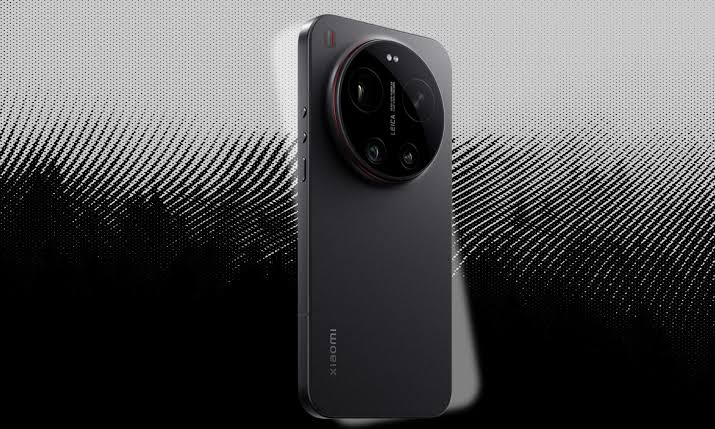
Xiaomi says the XRING O3 platform offers 48 percent more memory bandwidth than its earlier XRING O1 processor. Higher memory bandwidth can help the processor and graphics hardware access data more quickly, although actual performance will depend on the processor design, software, cooling, and workload.
The first LPDDR6 products should also be viewed as the beginning of the standard rather than its performance limit. A transfer rate of 10.67 Gbps is already possible with high end LPDDR5X, but LPDDR6 is expected to scale to 14.4 Gbps and potentially higher speeds as manufacturing and memory controllers improve.
CXMT reaching mass production first is significant because the global DRAM market has traditionally been dominated by Samsung, SK hynix, and Micron. An early LPDDR6 launch gives the Chinese manufacturer an opportunity to establish itself in a new generation of mobile memory before competing products become widely available.
The development does not mean desktop PCs will immediately move to DDR6. LPDDR6 is designed primarily for mobile and low power systems, where power efficiency is more important than the very low memory latency expected from desktop memory.
Desktop DDR6 also remains further away. The specification has not yet completed the same transition into mainstream PC platforms, while current AMD and upcoming Intel platforms are expected to continue using DDR5 for several years. That means LPDDR6 could become common in premium mobile devices well before DDR6 starts replacing DDR5 in desktop computers.



Discussion (0)
Be the first to comment.