



China’s decision to restrict helium exports has added another supply concern for the semiconductor industry, especially as AI chip demand continues to rise. The move comes shortly after Intel CEO Lip Bu Tan warned that helium could become one of the overlooked bottlenecks for semiconductor growth.
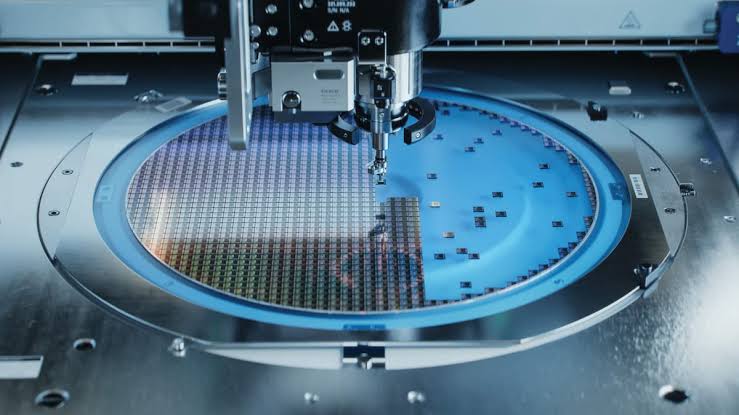
Helium is not usually discussed as often as wafers, packaging capacity, power supply, or advanced lithography tools, but it plays an important role inside chip factories. It is used in several manufacturing stages, including deposition, wafer cooling, etching, and the cooling systems for advanced extreme ultraviolet lithography machines. Any shortage or price pressure in helium can therefore create problems for chipmakers that are already trying to expand output for AI hardware.
China’s export restriction appears broad, but its direct impact on the global helium market may be limited because China is not one of the largest producers. Data cited from the US Geological Survey places China sixth in global helium production as of March 2026, tied with Poland. Both produced around three million cubic meters, giving each a 1.6 percent share. The United States remained the largest producer with 81 million cubic meters, followed by Qatar and Russia.
Helium matters because chip factories rely on stable gas supplies
The decision still matters because semiconductor supply chains are sensitive to even small disruptions. AI demand has already placed pressure on power, advanced packaging, memory, and leading edge manufacturing capacity. A tighter helium market would add another cost and planning problem for chipmakers.
China’s own position is also complicated. The country imports most of its helium, yet it needs stable supplies to support its domestic semiconductor industry. US sanctions have limited China’s access to the most advanced chips and manufacturing tools, making local production more important. Freezing exports may help protect domestic supply, even if China’s share of global production is relatively small.
| Factor | Why it matters |
|---|---|
| Helium use in chipmaking | Supports deposition, etching, wafer cooling, and EUV machine cooling |
| China’s production share | Around 1.6 percent of global output, tied with Poland |
| Largest helium producer | United States, with 81 million cubic meters cited |
| Main risk | Tighter supply could raise pressure on semiconductor manufacturing |
| AI chip connection | AI demand is already stretching fabrication and supply chains |
| China’s motivation | Protect domestic supply as local chip production becomes more critical |
Lip Bu Tan had already pointed to helium as a possible issue for AI growth during a podcast appearance in June. He said power constraints were widely understood, but the helium impact on semiconductors was something many people did not fully recognize. China’s latest move gives that warning more weight, even if the immediate global shock may be smaller than the headline suggests.
The Middle East situation adds another layer of uncertainty. Qatar is one of the world’s major helium producers, and renewed regional tension can make buyers more cautious about long term supply stability. Even when there is no immediate shortage, semiconductor companies tend to plan around risk because fabrication plants need consistent input materials to stay online.
For now, China’s export freeze is unlikely to stop global chip production by itself. The country’s helium market share is too small for that. The larger concern is what it signals. As AI infrastructure expands, the chip industry is becoming more exposed to materials and utilities that previously received less attention. Helium may now join power, memory, advanced packaging, and lithography access as another pressure point that chipmakers cannot ignore.



Discussion (0)
Be the first to comment.