



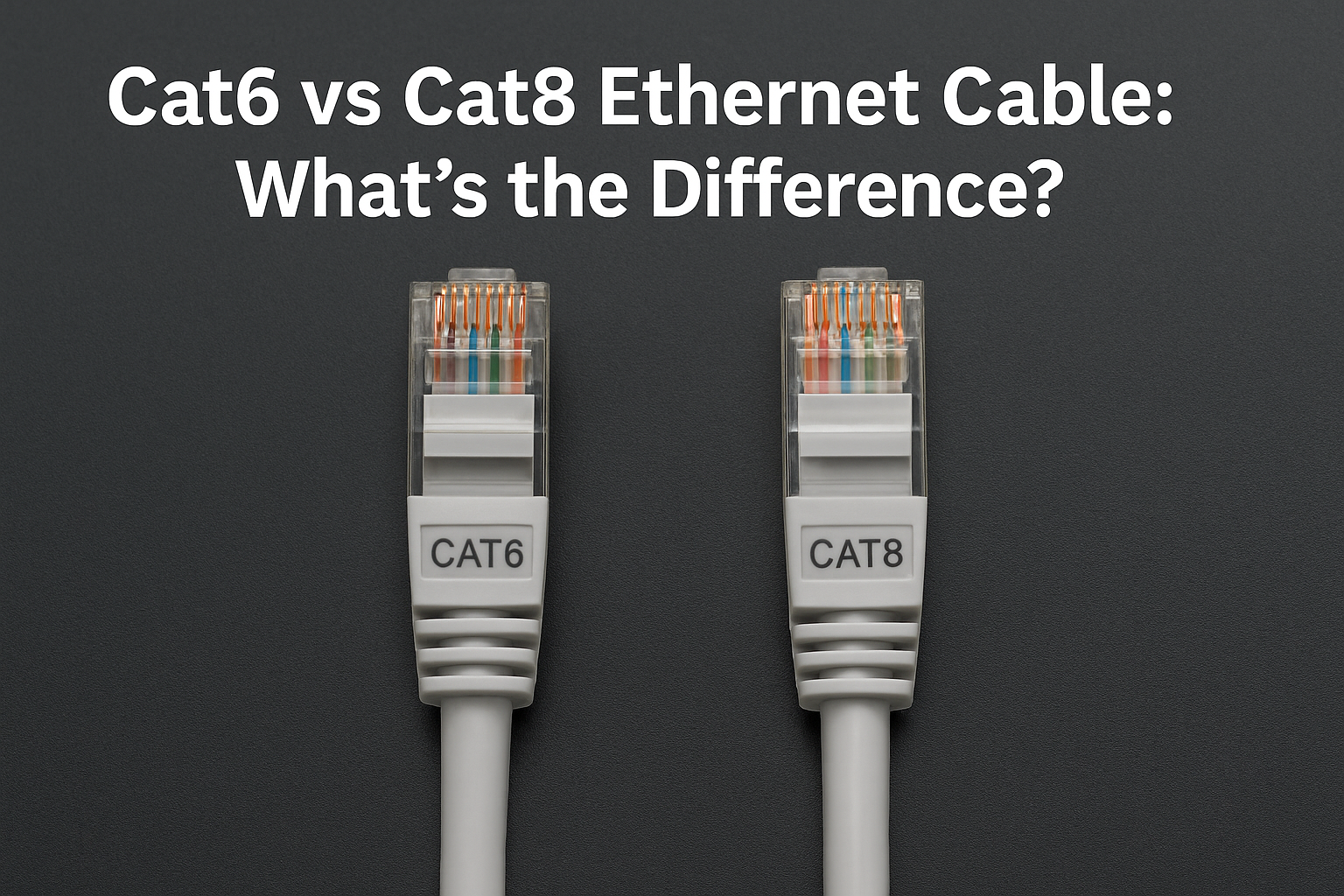
Ethernet cables still power most of the world’s wired internet connections. Whether it’s gaming, streaming, or running an office, your cable type can make a real difference in speed and reliability. Two of the most common options in 2025 are Cat6 and Cat, but they serve very different needs.
If you’ve ever wondered whether Cat8 is worth it, or if Cat6 is still good enough for fast home internet, this guide breaks down everything you need to know in plain English.
Cat6 vs Cat8 at a Glance
Here’s a simple comparison between Cat6 and Cat8 Ethernet cables, showing how they differ in speed, range, shielding, and use cases.
Speed: Cat6 supports speeds of up to 10 Gbps, which is more than enough for home networks and gaming setups. Cat8 takes it further, reaching speeds up to 40 Gbps, ideal for servers or professional environments that demand extremely fast data transfer.
Frequency: Cat6 operates between 250–500 MHz, while Cat8 can handle up to 2000 MHz, offering much higher bandwidth capacity for modern networking hardware.
Maximum Distance: Cat6 cables can maintain full 10 Gbps speed up to 55 meters (and 1 Gbps up to 100 meters). Cat8 cables have a shorter maximum distance — about 30 meters — since they prioritize ultra-fast performance over long range.
Shielding: Cat6 is available as unshielded (UTP) or with basic shielding (STP), offering limited interference protection. Cat8 uses heavy-duty S/FTP shielding, meaning each pair and the entire cable are shielded for maximum noise reduction and stability.
Typical Use: Cat6 is best suited for homes, small offices, streaming, and gaming. Cat8 is designed for data centers, server racks, and short-distance high-speed applications where consistent top performance is critical.
Cost: Cat6 cables are budget-friendly and easy to find, while Cat8 cables are premium-priced due to their advanced shielding and performance capabilities.
What Is Cat6 Ethernet Cable?
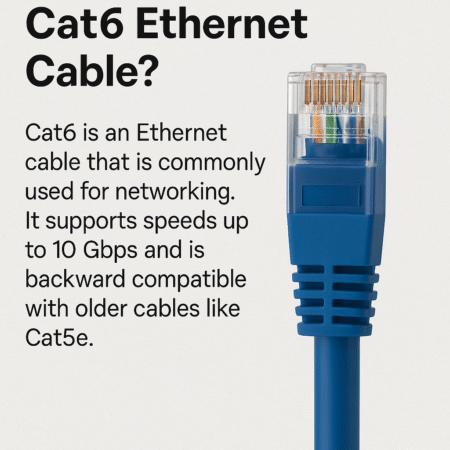
Cat6, short for Category 6, is the modern standard for home and small-office Ethernet. It can handle up to 10 Gbps speeds over shorter runs (typically under 55 meters) and supports 1 Gbps connections over longer distances up to 100 meters.
It uses tightly twisted copper pairs that help cut down on crosstalk and interference. Most Cat6 cables are unshielded (UTP), but shielded (STP) versions are available for noisy environments.
Cat6 strikes a balance between cost, performance, and compatibility. It’s plug-and-play with older devices, routers, and switches. For most households and small offices, it’s still the best value choice.
What Is Cat8 Ethernet Cable?
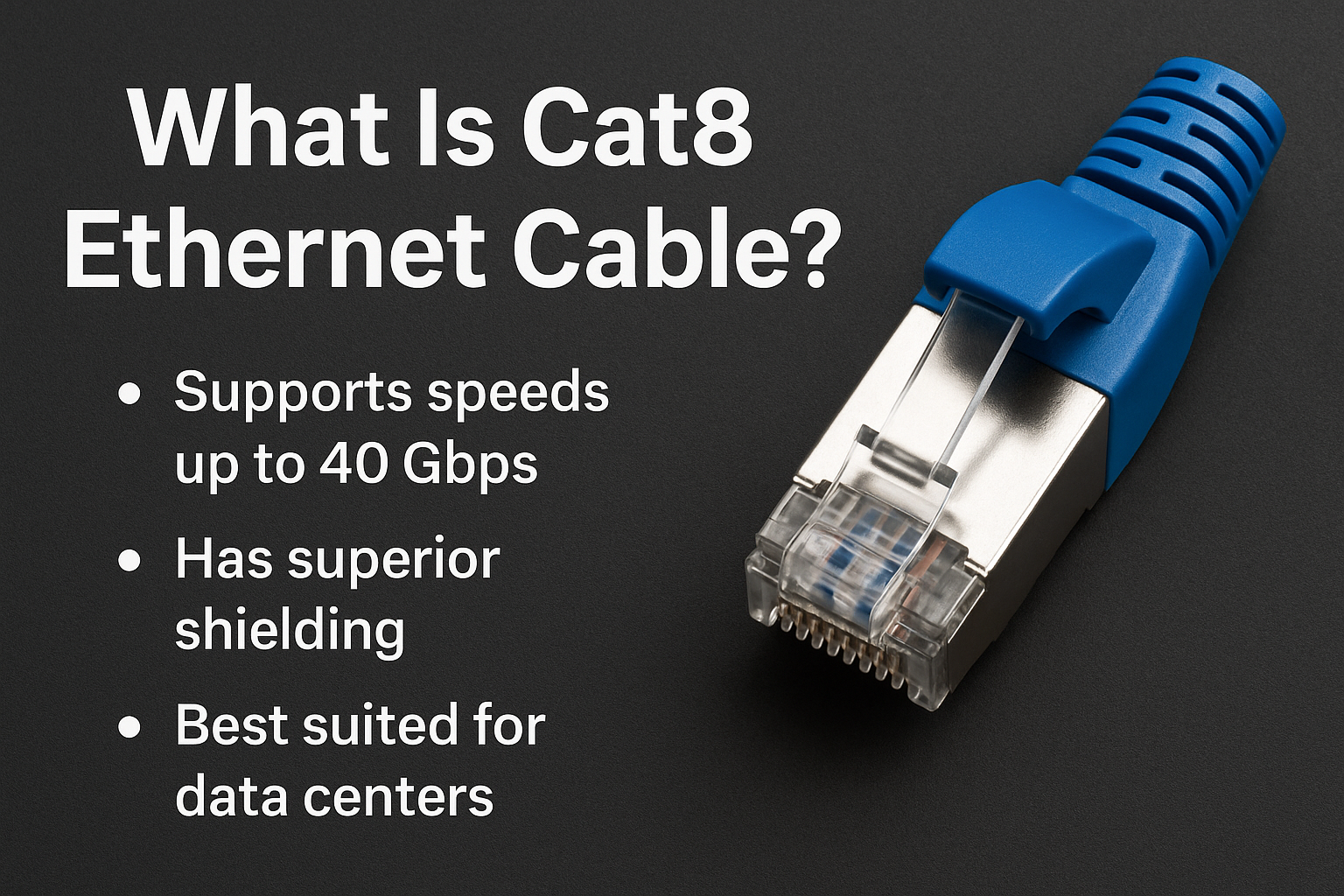
Cat8, or Category 8, is the latest and fastest copper Ethernet cable available. It supports up to 40 Gbps speeds and operates at frequencies up to 2000 MHz; four times higher than Cat6.
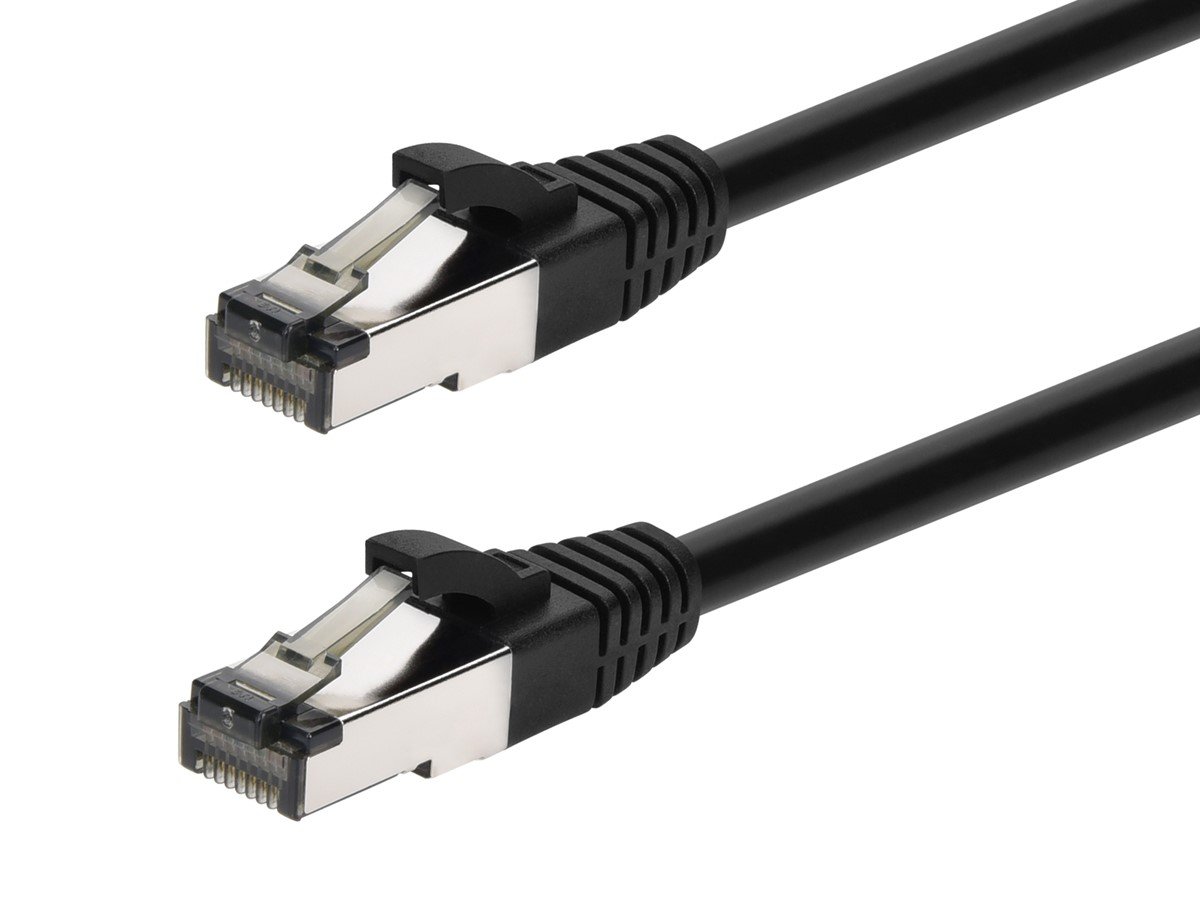
Each wire pair inside Cat8 is individually shielded, and the entire cable is wrapped in an overall shield to block outside interference. That makes it ideal for high-density setups like server rooms or data centers.
However, Cat8’s maximum length for full performance is only 30 meters (about 98 feet). It’s designed for short-range, high-speed links, not whole-house wiring.
Do You Get Faster Internet With Cat8?
Not necessarily. Cat8 won’t make your internet connection faster unless your ISP plan already exceeds the limits of your Cat6 cable. For example, most home internet plans cap out below 2 Gbps, which is well within Cat6’s range.
What Cat8 does improve is local network speed. If you’re transferring huge files between two PCs, editing 4K video off a NAS, or connecting servers in a rack, Cat8’s 40 Gbps potential matters. But for gaming, streaming, and browsing, Cat6 performs identically.
Which One Should You Buy?
Here’s a quick guide to help you choose the right cable for your setup.
- Buy Cat6 if: You’re wiring your home or small office, using gigabit internet, or gaming/streaming. It’s fast, affordable, and future-proof for most uses.
- Buy Cat8 if: You run a data center, have multiple 10 Gbps+ devices, or need the highest possible shielding over short distances.
- Avoid overkill: Cat8 is far more expensive and won’t improve normal browsing or streaming speeds.
Cat6 vs Cat8: Real-World Performance
Independent testing and user feedback show that Cat8’s raw speed rarely benefits typical households. Reddit’s r/HomeNetworking users report minimal difference between Cat6 and Cat8 for gaming or streaming; latency stays the same.
However, enterprise users in r/firewalla and r/sysadmin note that Cat8 cables reduce interference and packet loss in multi-rack setups. That’s where its extra shielding shines.
FAQs
Q: Is Cat8 backward compatible?
Yes. Cat8 works with Cat6 and Cat5e equipment using standard RJ-45 connectors. The connection speed will match the slowest device in the chain.
Q: Does Cat8 make Wi-Fi faster?
No. Ethernet cables don’t affect wireless speeds; they only improve wired connections between devices.
Q: Is Cat8 worth it for gaming?
Not really. Latency and ping times depend on your router and ISP, not cable category. Cat6 already handles gigabit gaming traffic with ease.
Q: Is Cat8 future-proof?
Only for specific environments. Cat8 supports 25 Gbps and 40 Gbps gear, but consumer routers rarely exceed 2.5 Gbps. Cat6A or Cat7A might be smarter middle-ground upgrades.
Conclusion
Cat6 cables remain the best all-around option for most users. It's affordable, reliable, and fast enough for today’s home networks. Cat8 delivers extreme performance but only shines in professional or enterprise setups with high-bandwidth needs.
If you’re wiring your house or upgrading your office, stick with Cat6 (or Cat6A). If you’re connecting servers or handling massive data transfers, Cat8’s advanced shielding and speed are worth the premium.
Either way, using quality cables ensures stable connections, fewer drops, and faster file transfers, so your network runs as smoothly as your devices allow.

Discussion (0)
Be the first to comment.