


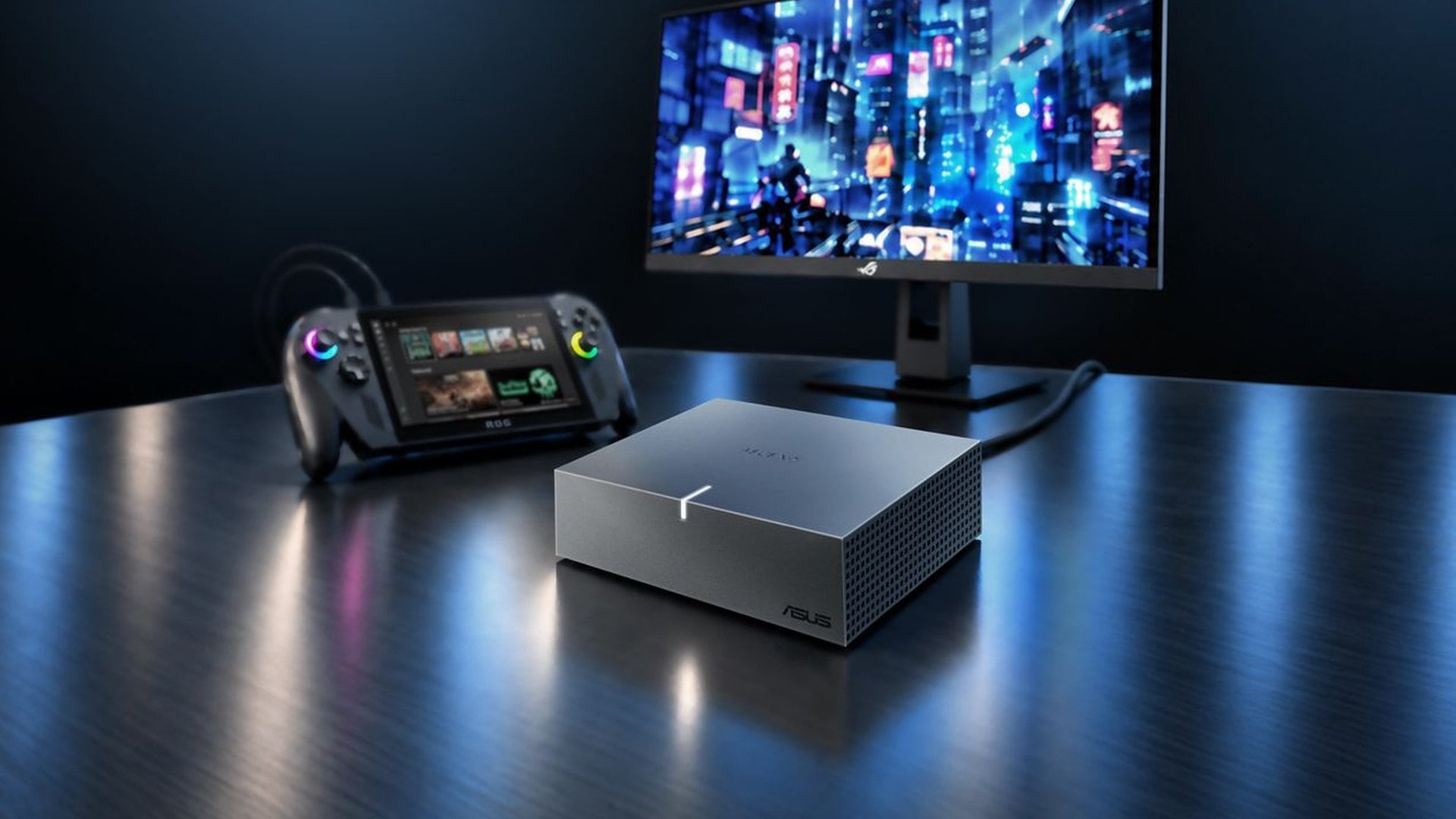
ASUS has announced the XG Core, a small USB4 box that adds a Radeon RX 9060 XT LP with 16GB of GDDR6 to a laptop, mini PC or gaming handheld. Its spec sheet shows what it costs to fit a desktop graphics chip into something you can pack in a bag. It has the same 2,048 stream processors as AMD's desktop RX 9060 XT, running at about half the clock speed.
The November 6 announcement names the ROG Ally X and ROG Xbox Ally X among the handhelds it supports, and says compatible Thunderbolt 3 systems work too. It does not include a price or a release date.
The idea is simple enough. You keep the handheld or thin laptop you already own. When you sit down at a desk, one cable turns it into something closer to a gaming PC, with a real graphics card and a big monitor.
How the XG Core compares with a desktop Radeon RX 9060 XT
On paper, the chip inside matches the desktop RX 9060 XT. The XG Core spec sheet lists 2,048 stream processors and 16GB of GDDR6 at 20Gbps on a 128-bit bus, which matches the desktop card.
The clocks are where the two part ways. In its default mode, the XG Core boosts to up to 1,600MHz with a game clock of up to 1,010MHz. AMD rates the desktop RX 9060 XT at up to 3,130MHz boost and 2,530MHz game clock, so the box runs at roughly 51% of the boost clock and 40% of the game clock.
AI throughput follows the same pattern. The XG Core is rated for 406.3 TOPS of INT4 performance with sparsity, against 821 TOPS for the desktop card. The OC mode in ASUS's GPU Tweak III adds just 20MHz, lifting the boost clock to 1,620MHz.
ASUS has not published a power figure for the XG Core. For scale, the desktop RX 9060 XT is rated at 160W typical board power and calls for a 450W power supply. The XG Core runs from its own power cord rather than drawing from the handheld or laptop it is connected to.
What the XG Core adds to a ROG Ally X or thin laptop
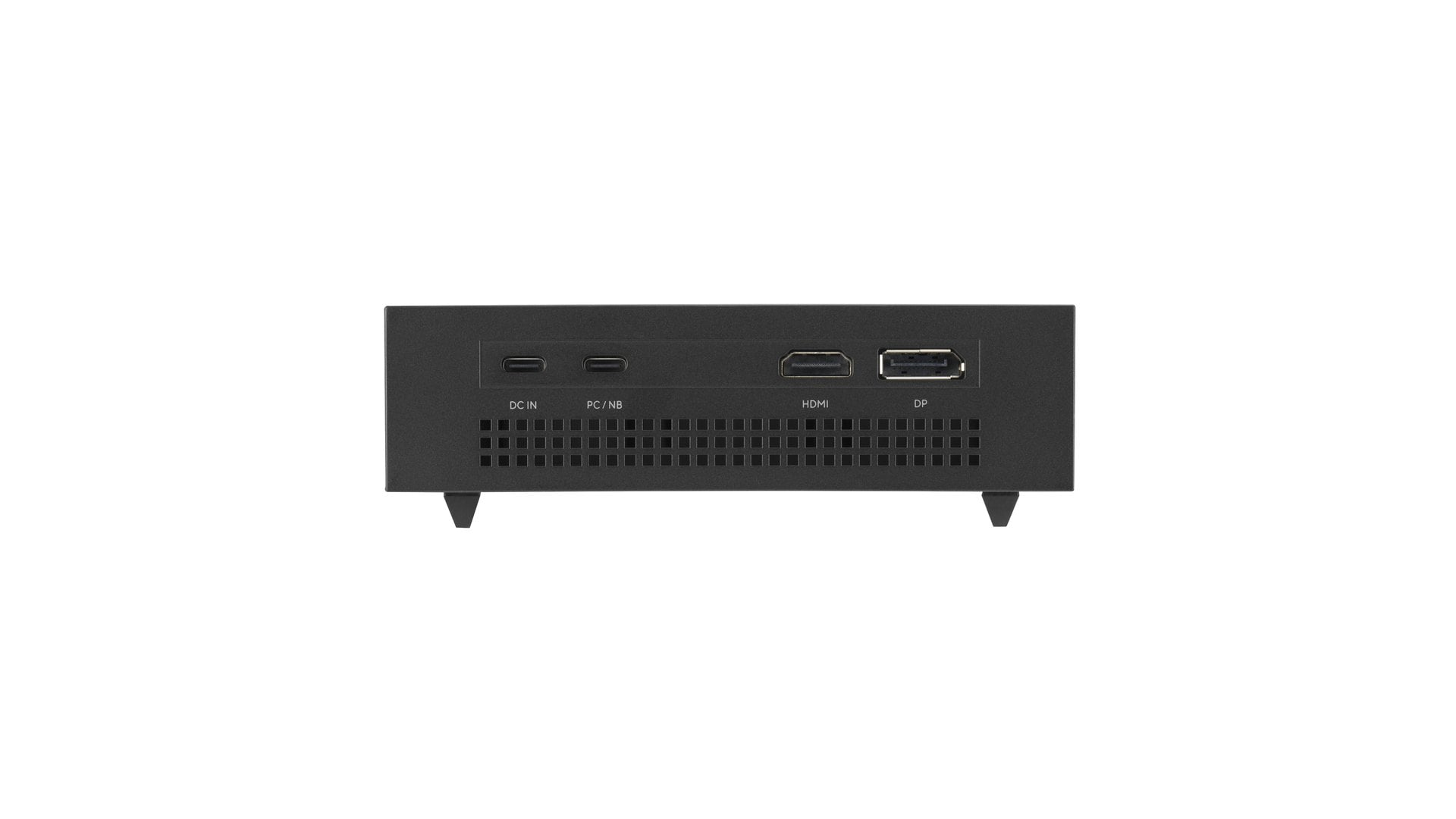
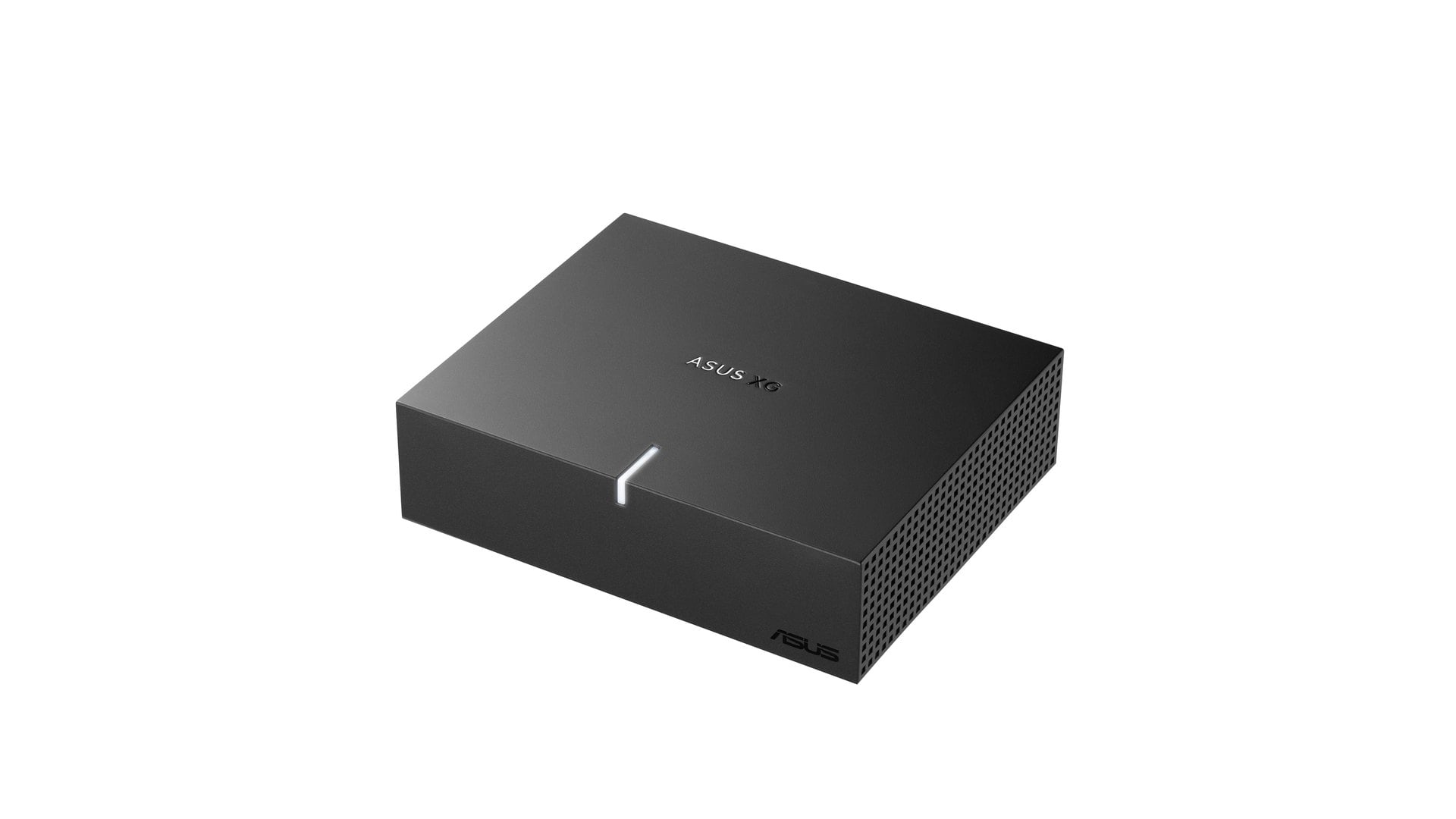
The box measures 144 x 117 x 39mm, about 5.7 by 4.6 by 1.5 inches. On the back sit two USB-C ports, one for power and one for the 40Gbps link to your device. Next to them are an HDMI 2.1b port and a DisplayPort 2.1a output for monitors up to 3840 x 2160.
That makes it a desk dock as much as a graphics upgrade. The handheld connects to the XG Core, and the monitor connects to the box. Nothing needs opening or modifying, though ASUS says host connectivity and external GPU support should be checked before use.
The 16GB of dedicated memory is also pitched at local AI work. ASUS names ComfyUI for image generation and LM Studio and Ollama for running language models, and adds that results depend on the workload, model and system.
XG Core or ROG XG Station 3: two very different ASUS eGPU routes
The XG Core arrived two days after the ROG XG Station 3, and the two sit at opposite ends. The XG Station 3 is an open-frame Thunderbolt 5 dock where you bring your own graphics card and your own SFX power supply.
The XG Core is sealed, with its graphics chip and power design already chosen for you. You give up the option to upgrade the card later, and in return you get a box small enough to travel. Enclosures such as the UGREEN LinkStation Pro follow the bring-your-own-card model too.
When the ASUS XG Core goes on sale, and at what price
ASUS has not announced a price, a release date or which countries will get the XG Core first, including whether it will reach the US. Its own fine print says the product may not be available in all markets.
The price will decide whether the trade makes sense. Graphics cards have not been getting cheaper, with Radeon RX 9000 prices rising through 2026. Once ASUS posts a figure, the fair comparison for a handheld owner is a desktop RX 9060 XT 16GB, since the XG Core uses the same chip and memory at about half the clock.


Discussion (0)
Be the first to comment.