




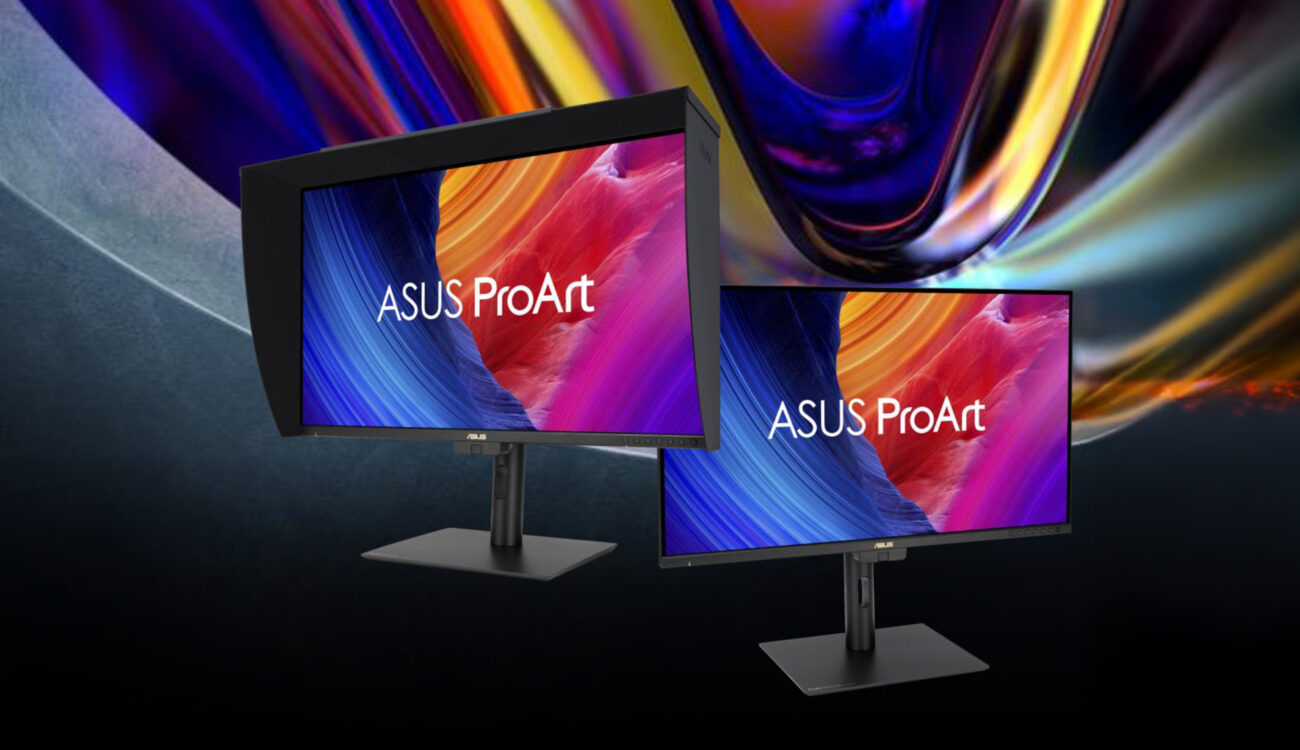
ASUS has expanded its professional monitor lineup with two new ProArt QD OLED displays aimed at content creators, photographers, video editors and other colour sensitive workflows.
The new models are the 26.5 inch ProArt PA279CDV and the 31.5 inch ProArt PA329CDV. Both use 4K QD OLED panels, support refresh rates of up to 120Hz and offer factory calibrated colour accuracy.
The smaller model is priced at $699 and is expected to be available now. The larger model costs $899 and is scheduled to arrive in September 2026.
Both monitors share most of their core specifications, so the main choice comes down to screen size, desk space and preferred working distance.
| Feature | ProArt PA279CDV | ProArt PA329CDV |
|---|---|---|
| Panel size | 26.5 inches | 31.5 inches |
| Panel type | QD OLED | QD OLED |
| Resolution | 4K | 4K |
| Refresh rate | Up to 120Hz | Up to 120Hz |
| Peak brightness | Up to 1,000 nits | Up to 1,000 nits |
| Price | $699 | $899 |
| Availability | Available now | September 2026 |
Both models target colour critical professional work
ASUS has equipped both displays with broad colour coverage and 10 bit colour depth.
The monitors cover 99 percent of the DCI P3 colour space, along with 100 percent of sRGB and 100 percent of Rec.709. They can display more than one billion colours, which should help reduce visible banding in gradients and detailed image work.
Both panels are factory calibrated with a claimed Delta E value below 1.5. A lower Delta E figure indicates a smaller difference between the intended colour and the colour shown on screen.
This level of accuracy makes the displays suitable for tasks such as colour grading, photography, illustration, video production and print preparation. Final results will still depend on the complete workflow, including ambient lighting, software settings and regular calibration.
The monitors also include an M Model P3 colour setting designed to provide more consistent colour behaviour when connected to macOS devices.
QD OLED provides strong contrast and vivid colour
QD OLED combines self illuminating OLED pixels with quantum dot colour conversion.
Each pixel can switch off independently, allowing the panel to produce deep black levels and strong contrast. The technology can also deliver vivid colours and fast response times compared with many conventional LCD displays.
Both ProArt models support peak brightness of up to 1,000 nits. That figure will likely apply to smaller highlighted areas rather than the entire screen, as is common with OLED monitors.
The 4K resolution provides a detailed working area for editing high resolution media, managing complex timelines and viewing several application panels at once.
The 120Hz refresh rate should also make scrolling, animation and general desktop movement appear smoother than on a standard 60Hz professional display. It gives the monitors some flexibility for gaming, although their main focus remains creative work.
ASUS adds stronger surface protection
OLED panels can be more vulnerable to surface damage than conventional displays, especially when they use glossy coatings.
ASUS says both new ProArt models include a protective film that provides 2.5 times greater scratch resistance than earlier QD OLED panels.
This added protection may reduce the risk of minor marks during cleaning, adjustment and everyday use. It does not make the screen immune to damage, so owners should still avoid harsh chemicals, abrasive cloths and excessive pressure.
The company has not detailed whether the monitors use a glossy or semi glossy finish. Surface treatment can affect reflections and perceived contrast, making it an important consideration for bright offices and studios.
USB Type C provides up to 96W charging
Both monitors include HDMI 2.1 and DisplayPort 1.4 connections, allowing them to work with desktop PCs, laptops, game consoles and professional workstations.
A USB hub is also included, with several USB Type A ports and USB Type C connectivity. The main USB Type C connection supports up to 96W power delivery.
This means a compatible laptop can receive video, data and charging through a single cable. For many creative notebooks, 96W should be enough for normal productivity work, although more powerful mobile workstations may require their original charger during demanding workloads.
| Connection | Purpose |
|---|---|
| HDMI 2.1 | PCs, consoles and media devices |
| DisplayPort 1.4 | High resolution desktop connection |
| USB Type C | Video, data and charging |
| 96W power delivery | Laptop charging |
| USB Type A hub | Accessories and storage devices |
The built in hub can also simplify desk setups by connecting keyboards, mice and external drives through the monitor.
The two sizes suit different workspaces
The PA279CDV offers higher pixel density because it places the same 4K resolution on a smaller panel.
This can make text, photographs and interface elements appear sharper, although some people may need display scaling for comfortable reading.
The larger PA329CDV provides more physical screen space and may be easier to use at native resolution. It could suit video editing, large creative timelines and workflows where several application windows remain open at once.
The 27 inch model is also more affordable and easier to fit on smaller desks. At $699, it provides the same resolution, colour coverage, refresh rate and connectivity as the larger version.
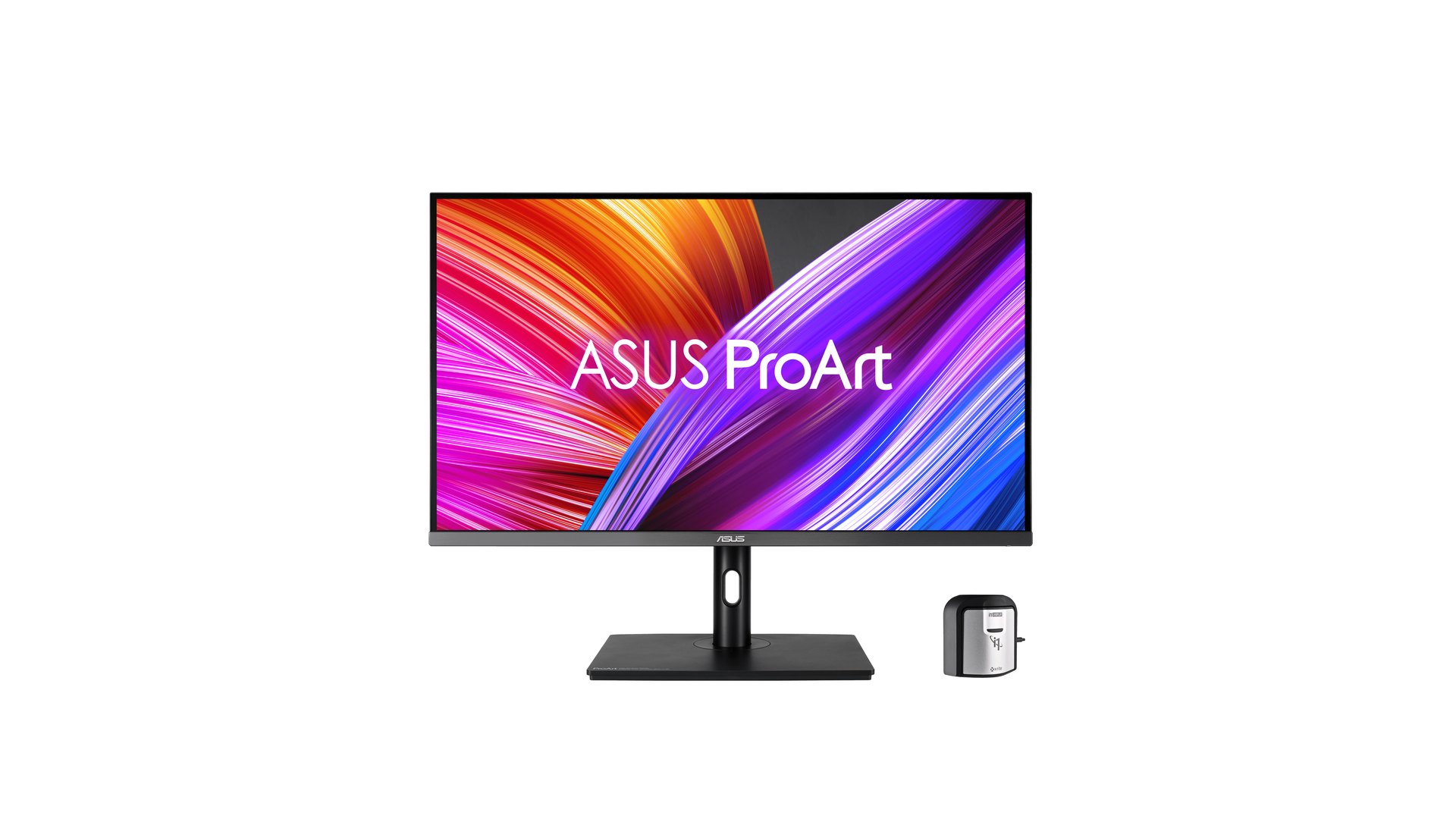
The 32 inch model costs $200 more, with the additional expense mainly paying for the larger viewing area.
ASUS has positioned both displays as high end professional options rather than dedicated gaming monitors. Their combination of 4K resolution, QD OLED contrast, broad colour coverage and USB Type C connectivity should make them suitable for creators who want accurate visuals without being limited to a 60Hz panel.


Discussion (0)
Be the first to comment.