



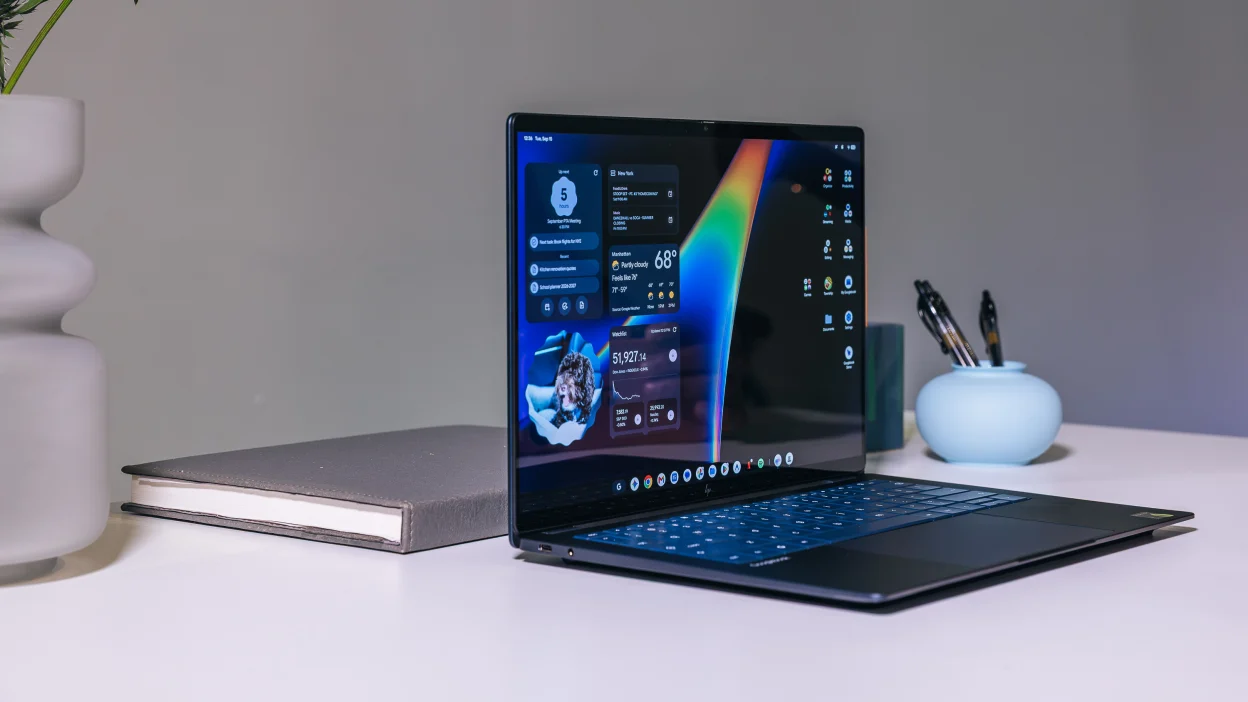
ASUS has officially introduced its Googlebook 14, adding another premium model to Google's new laptop platform with Intel Panther Lake processors, a 3K OLED touchscreen and configurations offering up to 64GB of memory.
The laptop weighs just 0.99kg and uses a CNC machined magnesium aluminum alloy chassis, putting portability at the center of its design.
ASUS plans to begin sales on October 4, with a Core Ultra 7 configuration expected to cost $1,299.
Intel Core Ultra Series 3 powers the Googlebook 14
ASUS has chosen Intel's Core Ultra Series 3 processors for its Googlebook rather than Qualcomm or MediaTek silicon used in some competing models.
Configurations will include up to the eight core Core Ultra 7 355, while a Core Ultra 5 325 option will also be available.
| Specification | ASUS Googlebook 14 |
|---|---|
| Processor | Up to Intel Core Ultra 7 355 |
| Alternative CPU | Core Ultra 5 325 |
| Memory | Up to 64GB LPDDR5X |
| Storage | Up to 1TB PCIe 4.0 |
| Display | 14 inch 3K OLED touchscreen |
| Aspect ratio | 16:10 |
| Refresh rate | 120Hz |
| Peak brightness | Up to 1,000 nits |
| Battery | 70Wh |
| Weight | 0.99kg |
| Starting highlighted price | $1,299 for Core Ultra 7 configuration |
| Availability | October 4, 2026 |
Up to 64GB of LPDDR5X memory gives the laptop considerably more headroom than typical lightweight consumer notebooks.
Storage options reach 1TB using a PCIe 4.0 interface.
3K OLED display supports 120Hz
The display is one of the main hardware highlights.
ASUS is using a 3K OLED touchscreen with a 16:10 aspect ratio and a 120Hz refresh rate.
The panel can reach up to 1,000 nits of peak brightness for HDR content.
It is protected by Corning Gorilla Glass Victus and also uses Gorilla Matte anti glare technology to reduce reflections.
That combination is aimed at keeping the display readable in brighter environments while preserving the contrast and color advantages associated with OLED technology.
A 120Hz refresh rate should also make scrolling, animations and general interface movement appear smoother than on conventional 60Hz laptop displays.
Chassis weighs under one kilogram
Despite the premium display and relatively large 70Wh battery, the Googlebook 14 weighs only 0.99kg.
ASUS achieves this using a magnesium aluminum alloy chassis made through CNC machining.
The company says the design provides enough rigidity without adding unnecessary weight.
The laptop comes in a Dusk Ash finish and uses Nano Ceramic Technology intended to improve resistance against scratches, stains and abrasion.
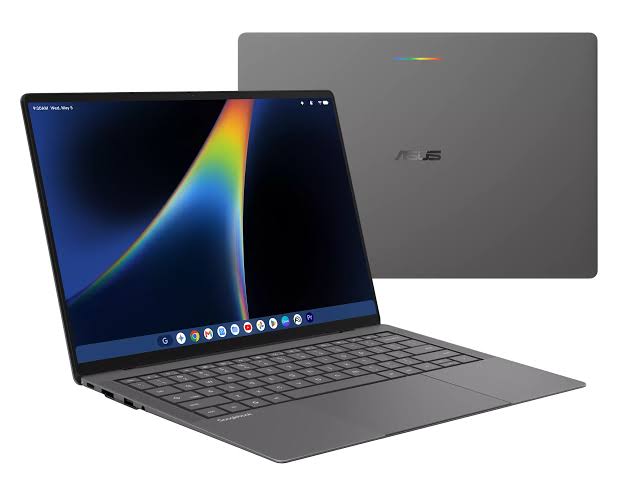
ASUS also says the machine meets MIL STD 810H durability requirements.
That does not make it rugged in the same sense as a specialized industrial laptop, but it indicates that the system has been tested against a defined set of environmental and durability conditions.
Gemini is central to the software experience
Like other Googlebook models, the ASUS machine is designed around Google's AI ecosystem.
It includes access to Gemini, Flow and Gemini Notebook, with ASUS also bundling 12 months of Google AI Pro.
The package includes 5TB of cloud storage.
Google is positioning these laptops as a more premium extension of its computing ecosystem, with local AI hardware and Gemini services forming a major part of the experience.
That also explains the use of Intel's newer Core Ultra platform, which includes dedicated hardware for AI workloads.
Battery capacity matches other premium Googlebooks
The Googlebook 14 uses a 70Wh battery.
That is the same capacity previously seen in another premium Googlebook design and is relatively large for a machine weighing less than one kilogram.
Actual battery life will depend on the processor configuration, display brightness, refresh rate and workload.
OLED panels can be efficient in some scenarios but may consume more power when displaying bright content, while running the screen at 120Hz can also increase energy use compared with lower refresh rates.
ASUS has not provided detailed real world endurance figures in the supplied material.
ASUS is targeting the premium end of the new platform
At an expected $1,299 for the Core Ultra 7 model, the Googlebook 14 sits well above the $899 entry point of the broader Googlebook range.
Its price reflects the use of a lightweight metal chassis, high resolution OLED display, larger memory options and premium processor configuration.
That makes it less of a direct replacement for an inexpensive Chromebook and more of a competitor to premium Windows ultrabooks and other high end thin and light laptops.
The Googlebook 14 will begin reaching shelves on October 4, 2026.
With a sub 1kg design, up to 64GB of RAM, a 120Hz 3K OLED touchscreen and Intel Core Ultra Series 3 processors, ASUS is clearly positioning its first Googlebook as one of the more premium machines in Google's new laptop lineup.



Discussion (0)
Be the first to comment.