



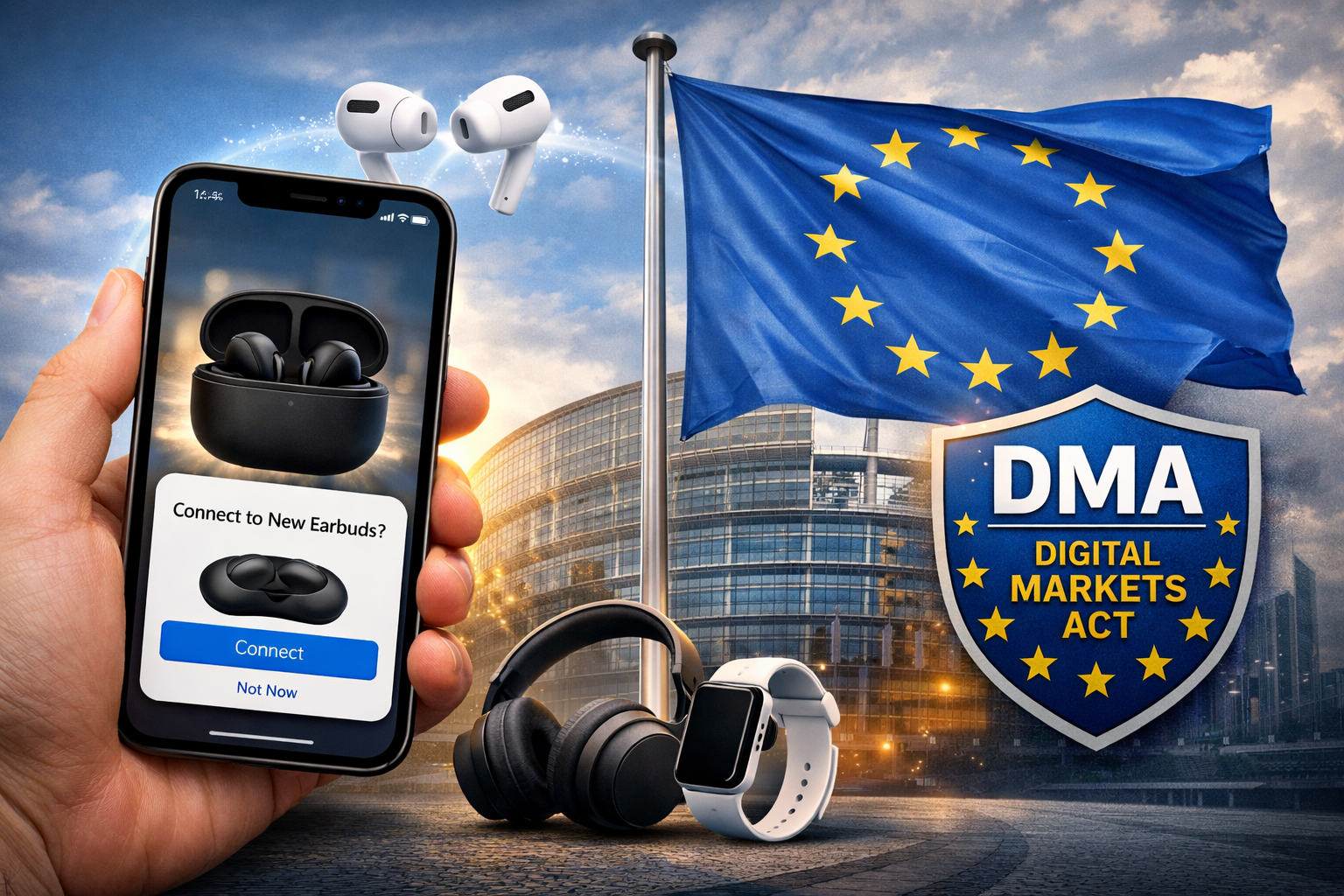
Apple is preparing to open its proximity-based pairing system to third-party accessories in the European Union, following new obligations under the Digital Markets Act. The change will allow non-Apple devices to pair with iPhones and iPads using the same near-instant setup experience currently reserved for AirPods and select Apple hardware.
DMA forces deeper platform access
The European Commission designates Apple as a gatekeeper under the Digital Markets Act, a regulation designed to curb anti-competitive behavior by dominant platforms. One key requirement pushes gatekeepers to grant rivals access to system-level features when exclusivity creates an unfair advantage.
In Apple’s case, regulators focused on proprietary Bluetooth pairing frameworks embedded in iOS and iPadOS, which gave Apple-branded accessories a smoother, faster setup process than competing products.
What will change on iPhone and iPad
Under the new rules, Apple will let qualifying third-party accessories tap into proximity pairing features that trigger automatic on-screen setup prompts when a device comes close to an iPhone or iPad.
This means compatible earbuds, headphones, and other accessories should pair faster and more intuitively, without requiring users to navigate through Bluetooth settings manually.
Benefits for accessory makers
For hardware manufacturers, the change removes a long-standing disadvantage inside Apple’s ecosystem. Third-party devices will gain access to system-level pairing flows that previously helped AirPods stand out during initial setup and daily use.
Apple will still enforce technical, privacy, and security requirements, but the exclusive user experience advantage will no longer apply in the EU.
EU-only rollout
Apple plans to roll out proximity pairing access exclusively in the European Union as part of its DMA compliance work. The company has not confirmed a specific iOS or iPadOS version tied to the feature, but implementation is expected through upcoming EU-focused software updates.
Apple does not plan to extend the change to other regions, where its pairing system will remain restricted to first-party accessories.
Why it matters
For users, the update promises a more consistent and friction-free pairing experience across Apple and non-Apple devices. For the broader market, it represents another concrete example of how the Digital Markets Act is reshaping platform control and forcing Apple to loosen long-guarded ecosystem features—at least within the EU.


Discussion (0)
Be the first to comment.