



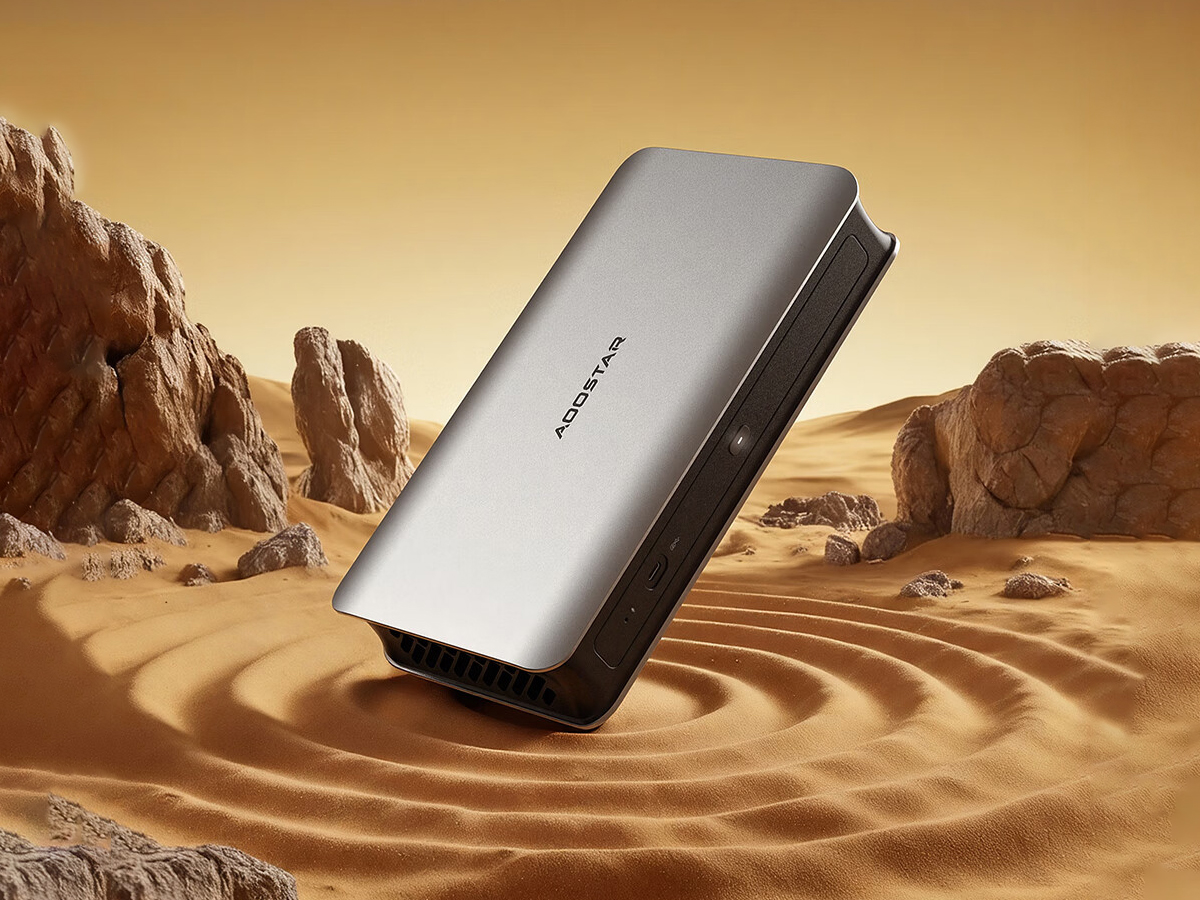
AOOSTAR has introduced a lower specification version of its NEX395 mini PC, reducing both memory and storage capacity as rising component costs continue to affect high performance systems.
The revised model includes 64 GB of LPDDR5X memory and a 1 TB SSD. The original configuration launched with 128 GB of memory and 2 TB of storage, making it significantly better suited to demanding workstation and local AI workloads.
The new version keeps the same AMD Ryzen AI Max+ 395 processor, so CPU and integrated graphics capabilities remain largely unchanged. The biggest compromise is the reduction in unified memory, which can have a direct effect on applications that need to keep large datasets or AI models in memory.
AOOSTAR NEX395 specifications compared
| Specification | Original model | New model |
|---|---|---|
| Processor | Ryzen AI Max+ 395 | Ryzen AI Max+ 395 |
| CPU cores | 16 Zen 5 cores | 16 Zen 5 cores |
| Integrated GPU | Radeon 8060S | Radeon 8060S |
| Memory | 128 GB LPDDR5X | 64 GB LPDDR5X |
| Memory speed | 8533 MT/s | 8533 MT/s |
| Storage | 2 TB SSD | 1 TB SSD |
| Additional M.2 slot | Yes | Yes |
| Launch price | 19,999 yuan | 12,999 yuan |
| Approximate launch price | $2,963 | $1,926 |
The 64 GB model reportedly launched in China at 12,999 yuan, equivalent to roughly $1,926. Retail listings are more commonly appearing around 13,599 yuan, or approximately $2,015.
By comparison, the original 128 GB and 2 TB version launched at 19,999 yuan, around $2,963 at the time.
Memory capacity was one of the NEX395's main strengths
The NEX395 is based on AMD's Ryzen AI Max+ 395, a powerful processor combining 16 Zen 5 CPU cores with Radeon 8060S integrated graphics.
One of the chip's main advantages is its unified memory architecture. CPU and GPU workloads can access the same large memory pool, which is particularly useful for local AI applications where model size can quickly exceed the capacity available on conventional graphics cards.
The original 128 GB configuration therefore offered an important benefit beyond simple multitasking.
Reducing the machine to 64 GB still leaves considerably more memory than a typical consumer mini PC, but it lowers the maximum size of AI models and datasets that can comfortably run entirely in memory.
For conventional productivity, gaming and general workstation workloads, 64 GB should remain generous. For buyers specifically interested in large local AI workloads, the original 128 GB configuration is considerably more flexible.
Storage has also been cut in half
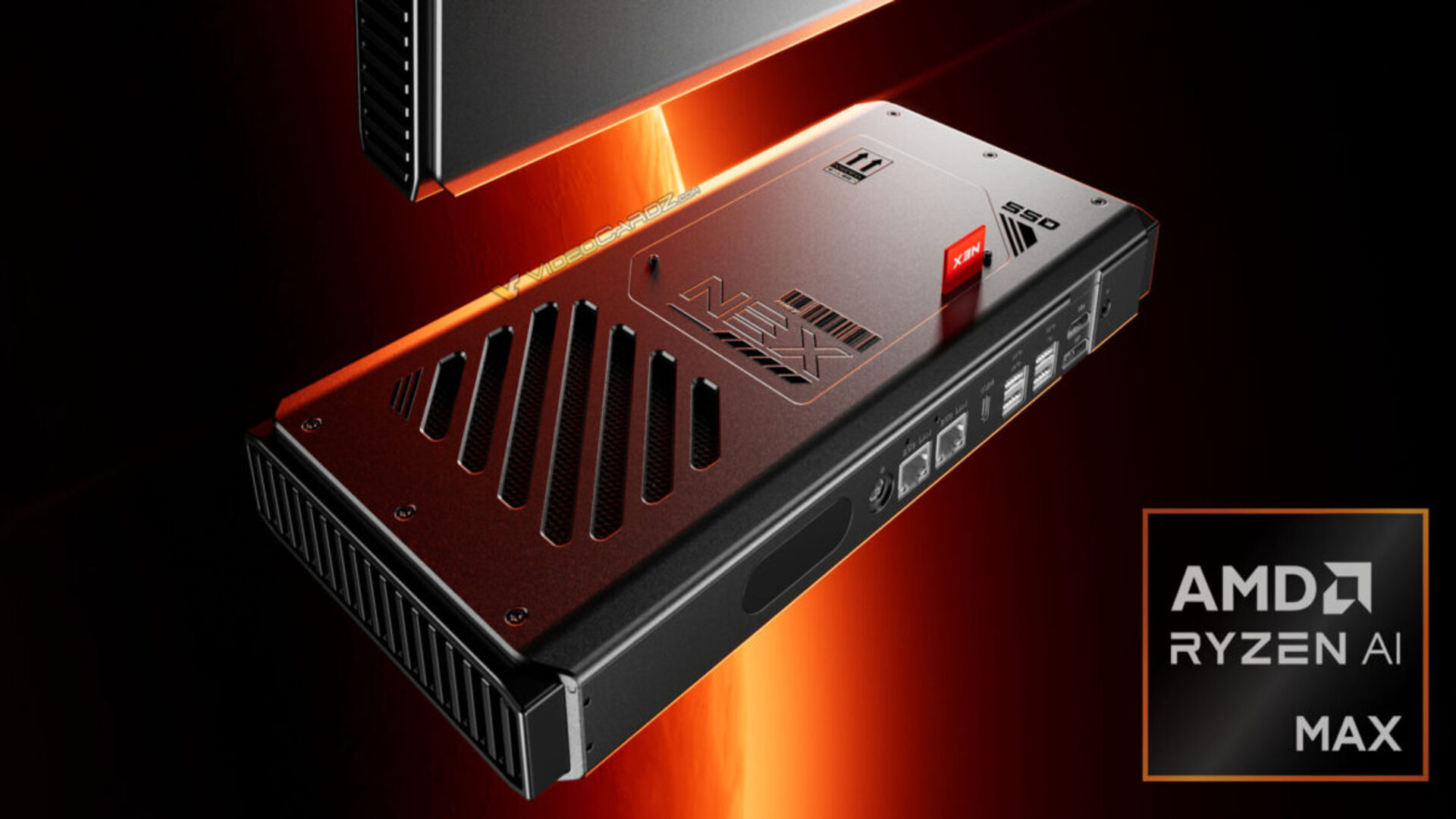
AOOSTAR has reduced the included SSD capacity from 2 TB to 1 TB.
That change is easier to manage because the NEX395 includes an additional M.2 slot for storage expansion. Buyers who need more space can therefore install another SSD later.
Memory is a different matter.
The NEX395 uses high speed LPDDR5X memory integrated into the system design rather than conventional replaceable desktop DIMMs. That means buyers generally need to choose the required memory capacity when purchasing the machine rather than planning to upgrade it later.
The move from 128 GB to 64 GB is therefore a more significant long term compromise than the smaller SSD.
Rising DRAM prices are putting pressure on workstation hardware
AOOSTAR has not publicly confirmed why the configuration was reduced, but the change comes during a period of higher memory and storage costs across the PC industry.
Strong demand from AI infrastructure has placed additional pressure on DRAM production, while manufacturers are prioritizing higher value memory used in data centers and accelerators.
That can leave less supply available for consumer PCs, laptops and compact workstations.
High capacity machines are particularly vulnerable because memory represents a larger portion of their total manufacturing cost. A system with 128 GB of fast LPDDR5X can become substantially more expensive when memory prices rise.
Maintaining the original NEX395 configuration could therefore push the final retail price considerably higher.
Lower price makes the NEX395 more accessible
The revised configuration also comes with a major reduction in price.
At around $1,926 to $2,015, the new NEX395 is roughly $1,000 cheaper than the original launch price of the 128 GB model.
That makes the machine easier to consider for buyers who want the Ryzen AI Max+ 395 but do not require extremely large amounts of unified memory.
The processor and Radeon 8060S graphics remain the main attractions, giving the compact system substantial CPU, graphics and AI capabilities without requiring a discrete GPU.
Still, the change illustrates how rising memory costs can alter product specifications rather than simply increase prices. Instead of selling the same machine for significantly more money, manufacturers may increasingly reduce RAM and storage to keep products within more familiar price ranges.
For the NEX395, that means a more affordable system but also a less capable one for memory intensive workloads. Buyers interested primarily in local AI should pay particular attention to the 64 GB limit, while those focused on general workstation use may find the lower priced configuration easier to justify.



Discussion (0)
Be the first to comment.