


An Anthropic mathematician has claimed that the company's Claude AI model helped him discover a proof of the Riemann Hypothesis, one of the most important unsolved problems in mathematics.
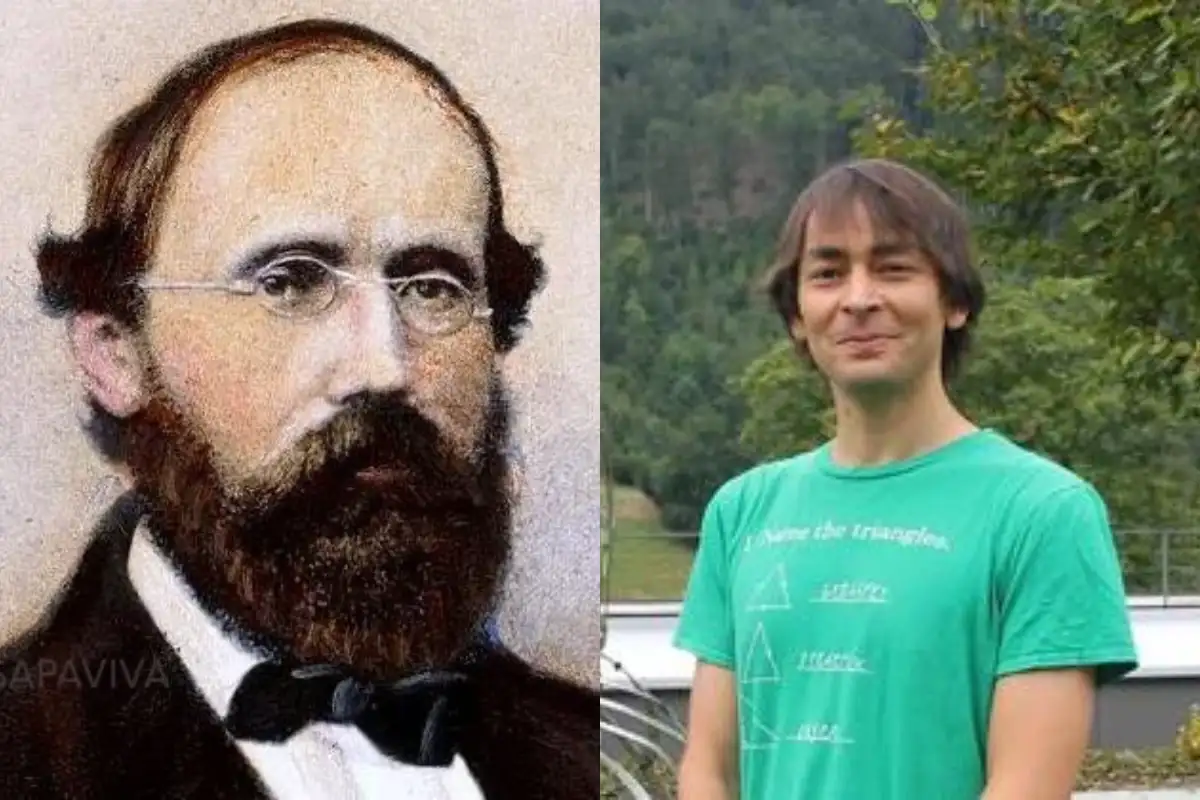
Levent Alpöge, a mathematician working at Anthropic, announced the possible breakthrough on November 20, 2026, in a written statement describing his research with Claude.
The Riemann Hypothesis has remained unsolved since German mathematician Bernhard Riemann proposed it in 1859. It concerns the mathematical structure underlying the distribution of prime numbers.
Alpöge believes the argument developed with Claude could resolve the original hypothesis and potentially extend to more general versions of the problem.
However, the claim has not yet received independent verification from the mathematical community. Until experts thoroughly examine the proposed proof and confirm its correctness, the Riemann Hypothesis remains an unsolved problem.
Claude Reportedly Helped Develop a Proof of the Riemann Hypothesis
Alpöge revealed the claim in a paper published during the week of November 20.
He said that his work with Claude had led him to believe he had discovered a valid proof of the Riemann Hypothesis.
The announcement is significant because the problem has resisted attempts by mathematicians for more than a century and a half.
Alpöge also suggested that the underlying mathematical approach could apply to the Generalized Riemann Hypothesis and the Extended Riemann Hypothesis.
These related problems concern broader classes of mathematical functions and would extend the significance of a successful proof.
In his statement, Alpöge acknowledged that the argument contains considerably more mathematics than he had originally anticipated.
However, the announcement does not establish that every step is correct.
Mathematical proofs must undergo careful examination, particularly when they involve a long sequence of complicated arguments.
Even a small logical error or unsupported assumption can invalidate an otherwise convincing result.
The mathematical community will therefore need to assess the work before the claim can be accepted.
What Is the Riemann Hypothesis and Why Does It Matter?
The Riemann Hypothesis concerns the Riemann zeta function, a mathematical function closely connected to the distribution of prime numbers.
Prime numbers are positive integers greater than one that are divisible only by one and themselves.
Although prime numbers appear irregularly distributed among other integers, mathematicians have discovered several patterns governing how frequently they occur.
The Riemann Hypothesis provides a precise mathematical statement about the nontrivial zeros of the zeta function.
Specifically, it proposes that every nontrivial zero of the function has a real part equal to one half.
This condition is often described as requiring all nontrivial zeros to lie on a particular vertical line in the complex number plane, known as the critical line.
Researchers have already checked enormous numbers of zeros computationally.
The hypothesis has been verified for at least the first 10 trillion relevant zeros, but checking individual cases cannot establish that the statement holds for every possible zero.
A complete mathematical proof would demonstrate that the property is universally true.
Such a result would have major implications for number theory, particularly for understanding the accuracy of estimates describing the distribution of prime numbers.
Riemann Hypothesis Is One of the Seven Millennium Prize Problems
The importance of the Riemann Hypothesis is reflected in its inclusion among the seven Millennium Prize Problems.
These problems were selected in 2000 as major mathematical challenges, with a $1 million prize associated with each.
The Riemann Hypothesis is among the most recognizable because of its connection to prime numbers and the wide range of mathematical results that depend on it.
Many existing theorems have been established under the assumption that the hypothesis is true.
A confirmed proof would allow mathematicians to use those conditional results without relying on an unresolved assumption.
However, solving the problem requires more than publishing a proposed mathematical argument.
The proof must be independently examined, withstand scrutiny, and gain acceptance within the mathematical community.
Consequently, Alpöge's announcement does not mean the Millennium Prize has been awarded or that the longstanding problem has officially been resolved.
AI Is Becoming More Involved in Advanced Mathematical Research
The claim arrives during a period of growing interest in using artificial intelligence to assist with difficult scientific and mathematical problems.
AI systems are increasingly being used to explore possible mathematical approaches, identify relationships, and help researchers develop or verify arguments.
Claude's reported involvement in the Riemann Hypothesis work represents a particularly ambitious example of this development.
The announcement also follows other AI assisted mathematical research involving difficult problems in fields such as fluid dynamics.
Earlier in 2026, OpenAI was associated with a proposed advance concerning the Navier Stokes equations, another major mathematical problem.
That work attracted attention but also became the subject of controversy surrounding research attribution and originality.
Such examples demonstrate why claims involving AI generated mathematical discoveries require careful independent assessment.
An AI system can assist researchers in exploring complicated arguments, but its output does not automatically constitute a valid proof.
The same standards of mathematical rigor apply regardless of whether an argument was developed by humans, AI systems, or a combination of both.
Alpöge Says the Discovery Could Change the Future of Mathematics
Alpöge's statement also reflects the personal significance of potentially resolving a mathematical problem that has guided researchers for generations.
He described mixed feelings about the possibility of completing work on such a longstanding challenge.
The Riemann Hypothesis has influenced mathematical research for decades, providing a central question around which numerous discoveries and techniques have developed.
Resolving it would represent the completion of one major objective while creating opportunities for additional research.
Alpöge suggested that the methods used during his work with Claude could indicate how artificial intelligence may contribute to future scientific discoveries.
However, the broader significance of the claimed breakthrough depends on whether the proposed argument is correct.
Independent mathematicians will need to investigate the assumptions, intermediate steps, and conclusions before determining whether the proof is valid.
Riemann Hypothesis Proof Still Needs Independent Confirmation
As of November 20, 2026, there is no confirmed mathematical consensus establishing that Alpöge and Claude have solved the Riemann Hypothesis.
The announcement represents a claim of a potential breakthrough rather than an officially recognized solution.
Given the importance and complexity of the problem, independent verification could require substantial effort.
Researchers will need to determine whether the argument establishes the required mathematical result without relying on unproven assumptions or invalid deductions.
The proposed extensions to the Generalized and Extended Riemann Hypotheses will also require separate scrutiny.
If the work is eventually confirmed, it would represent an important achievement in number theory and a significant example of artificial intelligence contributing to advanced mathematical research.
For now, Alpöge's announcement has raised the possibility that a 167 year old mathematical problem may finally have a solution, but its validity remains to be established.



Discussion (0)
Be the first to comment.